CIPP Lining Versus Pipe Replacement Compared
A sewer failure can put a property owner in a difficult position fast. Drains may back up, odors can spread, landscaping may be at risk, and a business may face interruptions it cannot afford. The choice between CIPP lining versus pipe replacement is not simply about finding the lowest initial price. It is about selecting the method that solves the actual pipe condition with the least disruption and the strongest long-term result.
For Denver-area homes, commercial sites, schools, restaurants, and municipal properties, the right answer begins with a professional video sewer inspection. The camera shows where the damage is, how extensive it is, whether the line has the proper slope, and whether the existing pipe can support a trenchless rehabilitation method.
CIPP Lining Versus Pipe Replacement: The Core Difference
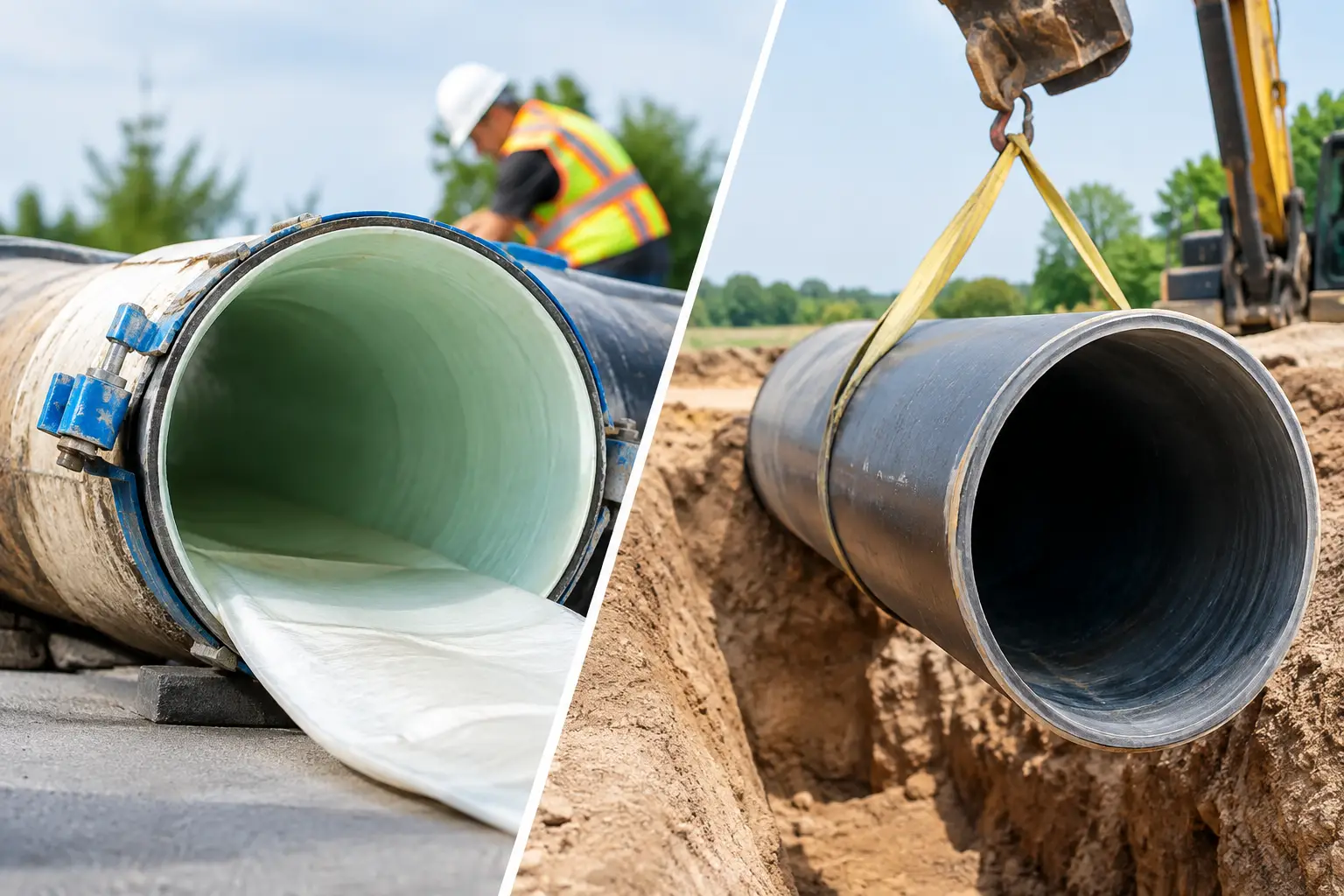
CIPP, or cured-in-place pipe lining, creates a new pipe inside an existing damaged pipe. A flexible liner saturated with epoxy resin is inserted through an existing access point, positioned along the damaged section, inflated, and cured. Once the resin hardens, it forms a continuous, joint-free pipe within the old line.
Pipe replacement removes the failed line and installs a new one. Depending on site conditions, replacement may involve traditional excavation or trenchless pipe bursting. With pipe bursting, a bursting head breaks apart the old pipe while pulling a new pipe into place, reducing the need for a long open trench.
Both methods can be highly effective. The key difference is that CIPP lining restores a structurally sound pipe that has localized damage, while replacement is needed when the existing line is too compromised to rehabilitate reliably.
When CIPP Pipe Lining Is the Better Option
CIPP lining is often the best fit when a sewer line has cracks, root intrusion, leaking joints, minor offsets, or corrosion but still maintains its general shape and flow path. It is especially valuable when excavation would require cutting through a finished basement floor, driveway, sidewalk, mature landscaping, parking lot, or customer-facing entry area.
The liner seals joints and cracks that allow roots or groundwater into the pipe. Because the finished liner has no joints, it also removes common entry points where roots often return. For older cast iron, clay, Orangeburg, and certain other aging pipe materials, lining can extend service life without disturbing the ground above the line.
Speed is another major advantage. A lining project can often be completed more quickly than a conventional excavation project, though the actual schedule depends on pipe length, access, cleaning requirements, curing conditions, and the number of branch connections involved. For a restaurant, hotel, medical facility, or occupied multifamily building, avoiding a large excavation can make a major operational difference.
CIPP is not a cosmetic patch. When installed after proper cleaning, inspection, and preparation, epoxy lining creates a durable internal pipe designed to restore flow and structural performance. It is a practical solution when the existing host pipe can serve as a stable pathway for the liner.
Where Lining Can Save More Than Digging
The cost of a sewer project is not limited to the pipe work itself. Open excavation can bring restoration expenses for concrete, asphalt, flooring, irrigation, landscaping, fences, hardscape features, and interior finishes. It can also create access restrictions, noise, dust, and business downtime.
For a homeowner, preserving a newly landscaped yard or a decorative driveway may be reason enough to consider lining. For a commercial property manager, keeping a parking lot, lobby entrance, kitchen, or tenant space operational can be the larger financial factor. CIPP lining often reduces those indirect costs because most of the work is performed through access points rather than an extended trench.
When Pipe Replacement Is the Right Call
Pipe replacement becomes the better solution when the sewer line has collapsed, severely bellied, lost its slope, or has major sections missing. A liner follows the existing pipe path. If that path is badly deformed or holding water because of a significant belly, lining may not correct the underlying grade problem.
Replacement is also appropriate when the pipe is undersized for the building’s needs, has widespread structural failure, or cannot be adequately cleaned and prepared for a liner. A pipe filled with heavy scale, separated sections, substantial offsets, or severe deterioration may not provide a dependable host for rehabilitation.
Traditional excavation is sometimes unavoidable, particularly when access is limited or a line must be rerouted. However, pipe bursting can provide a less invasive replacement option in many situations. This method installs a completely new pipe while minimizing surface disturbance compared with digging the entire length of the sewer line.
Replacement Corrects Problems Lining Cannot
A new sewer line can address conditions beyond the pipe wall itself. If poor slope is causing repeat backups, replacement allows the installer to regrade the line. If a line has recurring failures because it was installed too shallow, routed poorly, or built from deteriorated material, a new installation can correct those design issues.
This does not mean replacement is automatically the superior choice. It is more invasive, and the restoration work can be substantial. But when the underlying structure has failed, choosing replacement instead of forcing a lining solution protects the property from repeated repairs and avoidable expense.
Comparing Cost, Disruption, and Long-Term Value
The most accurate comparison is project-specific. CIPP lining may have a higher per-foot installation cost than some basic excavation estimates, but it can cost less overall when it avoids concrete removal, landscaping restoration, interior demolition, and extended labor. On the other hand, a short, easily accessible sewer line in an open yard may be more economical to replace directly.
Disruption usually favors lining. The process generally requires less digging, fewer restoration steps, and less impact on the property above the sewer line. That advantage is particularly strong for historic buildings, landscaped properties, facilities with limited access, and businesses that need to remain open.
Long-term value depends on whether the selected method matches the failure. A properly installed epoxy liner can provide decades of service for a pipe that remains structurally suitable for rehabilitation. A properly installed replacement provides a new line and can correct major alignment or grade issues. Neither method should be selected based on a one-size-fits-all promise.
Why Video Inspection Should Make the Decision
No contractor should recommend CIPP lining or replacement based only on a backup or a surface-level estimate. A high-quality video inspection is the starting point because it identifies root intrusion, cracks, corrosion, offsets, standing water, breaks, and collapsed sections. It also confirms the pipe material, diameter, and approximate location of the problem.
The inspection should be paired with an honest assessment of access, surface restoration, pipe condition, and the property’s future plans. A homeowner planning to sell may prioritize a documented, durable repair with minimal yard disturbance. A facility manager may need a solution that limits downtime. A municipality may need rehabilitation that preserves pavement and reduces public disruption.
At All Sewer and Plumbing Services, LLC, trained trenchless specialists use inspection findings to recommend the repair method that fits the line, not a generic answer for every property. That approach matters when a sewer problem affects a home, a tenant space, or an essential facility.
Questions to Ask Before Approving the Work
Ask whether the pipe has enough structural integrity for a liner, whether there are bellies or collapsed areas, and whether root intrusion has created offsets or separation. You should also ask what restoration is included if excavation is required, how branch connections will be handled, and whether a final camera inspection will verify the completed work.
For commercial and institutional properties, ask how the contractor will manage access, protect occupants, coordinate shutdowns, and maintain safe operations during the repair. The lowest estimate can become the most expensive option if it does not account for restoration, downtime, or a failure that should have been replaced from the start.
A sewer line does not need to become a major excavation project by default. Schedule a camera inspection at the first sign of recurring backups, slow drains, root problems, or unexplained sewer odors, then make the repair decision with clear evidence in hand.
FREE Estimates
How can we help you?

our services


contact our team today
Contact a service professional at All Sewer and Plumbing Services LLC today. We are here to answer all your questions.
OPEN 24 hours 7 days a week