Centennial No-Dig Sewer Lining: 47 Ft of Cast Iron
A homeowner who did his homework
This Centennial homeowner had read up on trenchless sewer repair before calling us. He knew there were two main options, pipe bursting and CIPP lining, and he wanted to know which one his pipe actually needed. That’s the right question, and only a camera inspection can answer it. For this Centennial line, the answer was no-dig sewer lining.
The inspection decided it
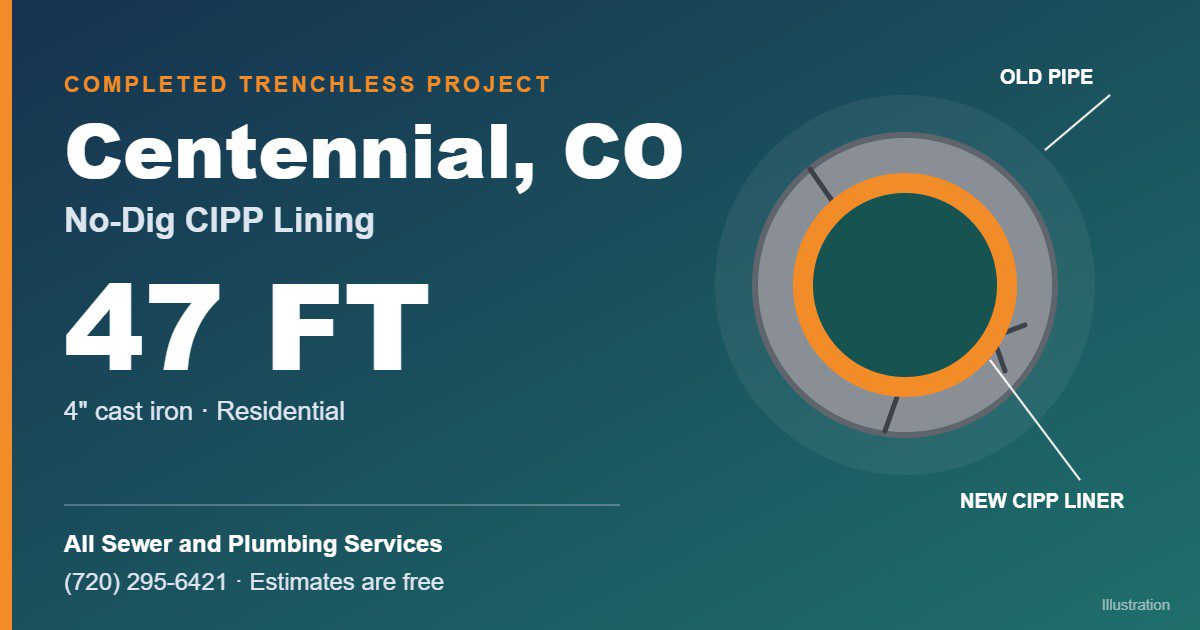
Our camera showed a cast iron lateral in the early stage of failure. The inside of the pipe was flaking away, and fine cracks had started to form along its length. Left alone, cast iron in that condition keeps thinning until it collapses. But there was no collapse yet, no missing sections and no separated joints. A pipe that is deteriorating but still continuous is exactly what a cured-in-place liner is designed for. Bursting would have replaced a pipe that could still hold a liner.
A true zero-excavation repair
Because the line was intact from the house to the street, we could do the whole job through an existing cleanout inside the home. We didn’t open a single hole in the yard.
- Our technician fed a resin-saturated liner from that indoor cleanout all the way out to the city main, about 47 feet.
- We inflated it against the old iron and left it to cure for several hours.
- A final camera pass showed a smooth, seamless pipe where the scaly cast iron had been.
The takeaway for Centennial homeowners
If your older home has cast iron and you’re comparing trenchless options, start with a camera inspection. When the pipe still has its shape, no-dig sewer pipe lining is often the least disruptive fix available. Read more about our trenchless pipe lining service.
All Sewer and Plumbing Services is a CIPP Verified Installer on CuredInPlacePipe.net.
FREE Estimates
How can we help you?

our services



contact our team today
Contact a service professional at All Sewer and Plumbing Services LLC today. We are here to answer all your questions.
OPEN 24 hours 7 days a week