Who Owns Sewer Laterals? Property Line Rules
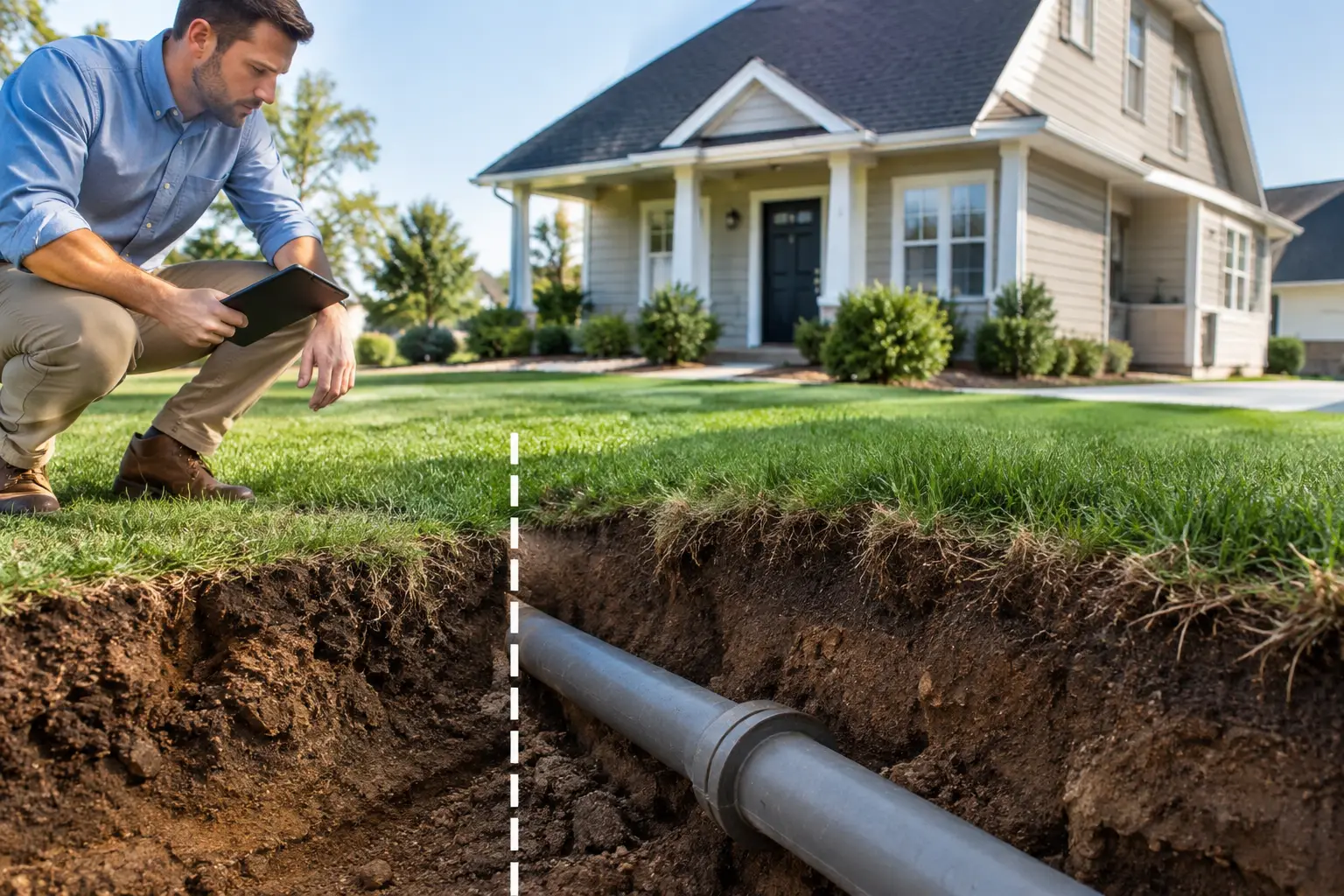
A sewer backup can turn a routine morning into a property emergency fast. Once a toilet backs up or wastewater appears at a floor drain, one question quickly determines who needs to act and who may pay for repairs: who owns sewer laterals? The answer is often the property owner, but the exact point of responsibility depends on local utility rules, the type of property, and where the damaged pipe is located.
A video sewer inspection and pipe locating service can establish where the problem sits before anyone starts digging. That matters because the visible cleanout, the edge of the property, and the public street are not always the ownership boundary.
Who Owns Sewer Laterals on a Typical Property?
A sewer lateral is the private pipe that carries wastewater from a building to the public sewer main. The main is the larger municipal pipe, usually located beneath a street, alley, or utility easement. In most Colorado communities, the public agency owns and maintains that main, while the property owner is responsible for the lateral serving their building.
The detail that surprises many owners is that their responsibility may continue beyond the property line. A lateral frequently crosses a sidewalk, alley, or public right-of-way before it reaches the main. Many cities place responsibility for the entire lateral, from the building connection all the way to the connection at the public main, on the property owner. Other jurisdictions maintain a portion of the pipe near the main or define a separate public-side segment.
There is no safe nationwide rule that says ownership changes at the curb, sidewalk, or property line. Local sewer ordinances control. Before authorizing a repair, confirm the responsibility boundary with the wastewater utility serving the address.
The public main is different from the lateral
If the defect is in the municipal main, the utility generally has responsibility for investigation and repair. A blockage in the main may affect several nearby properties, although that is not always the case. A blockage or broken section in one private lateral usually affects one building and is commonly the owner’s expense.
The connection point can be less clear. Terms such as tap, wye, upper lateral, lower lateral, and building sewer may appear in utility documents, but their definitions vary. A contractor should not make ownership assumptions based solely on those terms. The utility’s written policy is the controlling source.
Why Property Lines Do Not Always Set Sewer Responsibility
Sewer pipes do not follow real estate boundaries in a neat, visible way. They were often installed long before a current owner bought the property, before streets were widened, or before utility policies changed. In older Denver-area neighborhoods, it is common to find clay, cast-iron, Orangeburg, or other aging laterals running beneath driveways, landscaped areas, sidewalks, and public rights-of-way.
A cleanout near the sidewalk also does not prove that the city owns the pipe beyond it. It may simply be an access point for the private lateral. Likewise, a sewer problem beneath a street does not automatically belong to the municipality if the damaged lateral crosses beneath that street to reach the main.
Commercial and multifamily properties add another layer. The building owner may own the private lateral, while a tenant’s lease assigns certain maintenance costs to the tenant. A shopping center can also have private collection lines serving several suites before those lines connect to a public sewer. For operations and facilities teams, legal cost allocation and utility ownership are separate questions that both need answers.
How to Confirm Who Owns Your Sewer Lateral
Start with the local wastewater or public works department. Ask for the sewer lateral ownership policy for the specific address and request clarification on the connection point. Some agencies maintain service cards, tap records, maps, or as-built drawings that identify the approximate route and connection location.
A professional video inspection with electronic locating is the next practical step. The camera identifies the condition of the pipe, while locating equipment traces its route and measures the location and depth of the defect. This gives the property owner, utility, and contractor a factual basis for determining whether the failure is on a private or public segment.
Do not rely on a home inspection report, title paperwork, or a neighbor’s past repair as final proof. Those documents may be useful background, but they rarely define current sewer maintenance responsibility. Municipal policies can also change over time.
When the issue is near the public main or within a right-of-way, document the findings and ask the utility to verify its position before repair work begins. This can prevent a costly delay, a permit conflict, or duplicate work.
Common Sewer Problems That Are Usually the Owner’s Responsibility
Private sewer laterals fail for predictable reasons, especially on older properties. Tree roots enter joints and cracks, then catch paper and debris until the line blocks. Clay pipe can crack or separate at joints. Cast iron can corrode from the inside, restricting flow and eventually creating openings. Soil movement may create offsets, bellies, or collapsed sections.
Grease buildup is also a serious concern for restaurants, commercial kitchens, retirement communities, hotels, and high-use facilities. The pipe may be structurally sound but restricted enough to cause recurring backups. In that situation, drain cleaning may restore flow, but a camera inspection is still the right way to determine whether a deeper pipe defect is causing repeated trouble.
A public main backup can sometimes push wastewater toward a building. If that happens, preserve evidence where it is safe to do so. Note the timing, photograph visible conditions, and contact the utility promptly. The utility will need to inspect the main before responsibility can be determined.
What to Do When a Sewer Lateral Fails
First, limit water use. Stop running dishwashers, washing machines, showers, and faucets if fixtures are backing up. Continued use can force more wastewater into the building and increase cleanup damage.
Next, arrange for a sewer camera inspection rather than approving excavation based only on symptoms. A camera can show whether the issue is roots, grease, a break, a belly, an offset, or a collapse. Locating the defect also helps determine whether it is within the private lateral and whether the repair area is under landscaping, concrete, a driveway, or a public right-of-way.
Then contact the local sewer utility if the defect appears close to the main or if the backup may be related to a public system issue. Get clear direction on ownership, access requirements, and permit procedures. For commercial facilities, notify the appropriate property manager, risk team, or maintenance contact immediately so the repair decision does not stall.
Finally, discuss repair methods based on the pipe’s actual condition. The lowest initial price is not always the lowest total cost once concrete replacement, landscaping restoration, downtime, and repeat failures are considered.
Repair Options for Private Sewer Laterals
Trenchless repair can be the best option when the lateral is damaged but still has a usable path and enough structural integrity for rehabilitation. CIPP epoxy pipe lining creates a new, jointless pipe within the existing line. It can seal cracks, root intrusion points, and corroded sections while avoiding extensive excavation through lawns, floors, driveways, or landscaped areas.
Pipe bursting is often a strong choice when the existing pipe is too deteriorated for lining or when a full replacement is needed. This method pulls a new pipe through the old route while breaking apart the failing pipe. It can greatly reduce surface disruption compared with traditional open-trench replacement, although access pits are still required.
Excavation remains necessary in some cases. A severely collapsed line, improper slope, inaccessible configuration, or connection repair may require an open trench. A qualified sewer contractor should explain why a specific method fits the conditions, what restoration is included, and whether municipal approvals are required.
All Sewer and Plumbing Services uses video diagnostics and trenchless methods to help property owners solve lateral failures with less disruption to homes, landscaping, parking areas, and daily operations. The right repair begins with knowing exactly where the pipe fails and who is responsible for that section.
Does Homeowners Insurance Cover a Sewer Lateral?
Standard homeowners insurance policies often exclude normal wear, corrosion, root intrusion, and aging pipe failure. Some policies offer service line coverage as an endorsement, which may help with repair costs for a privately owned underground sewer lateral. Coverage limits, deductibles, exclusions, and cleanup coverage differ by policy.
Review your policy before a failure occurs if possible. After a backup, report the damage promptly and keep inspection footage, estimates, invoices, and utility communications. Insurance coverage does not change who owns the pipe, but it may reduce the financial impact of a covered private-line repair.
The practical next move is simple: verify local ownership rules, locate the defect, and choose a repair approach based on facts rather than assumptions. Acting early can keep a damaged lateral from becoming a larger wastewater backup, a disrupted business day, or an avoidable excavation project.
FREE Estimates
How can we help you?

our services


contact our team today
Contact a service professional at All Sewer and Plumbing Services LLC today. We are here to answer all your questions.
OPEN 24 hours 7 days a week