Best Trenchless Sewer Repair Methods Compared

Table of Contents
- How Trenchless Sewer Repair Methods Compare
- CIPP Pipe Lining: Best for Intact Pipes
- Pipe Bursting vs Pipe Lining: Which Wins?
- Signs You Need Sewer Repair Now
- Frequently Asked Questions
Last Updated: September 5, 2026
When a sewer line fails, the traditional fix means excavating your yard and tearing up landscaping. Trenchless sewer repair methods change that equation, allowing failed pipes to be rehabilitated from small access points with minimal digging. Choosing the best method comes down to pipe condition, material, and whether you need to preserve or increase flow capacity.
How Trenchless Sewer Repair Methods Compare
Trenchless sewer repair is the umbrella term for techniques that restore or replace underground pipes without a full open-cut trench. The two dominant approaches are cured-in-place pipe (CIPP) lining and pipe bursting, with variations like slip lining and epoxy coatings serving specific niches.
| Method | Best For | Pipe Condition Required | Diameter Impact | Access Needed |
|---|---|---|---|---|
| CIPP Pipe Lining | Intact pipes with cracks, root intrusion, or joint leaks | Structurally sound enough to hold its shape | Minimal reduction | One clean access point |
| Pipe Bursting | Collapsed pipes or upsizing needs | Beyond repair, must be broken apart | Increases or maintains diameter | Two access pits |
| Slip Lining | Long, straight gravity runs | Moderate damage, no bends | Reduces diameter | Two access points |
| Epoxy Coating | Preventative maintenance, minor pinhole leaks | No structural damage | None | One access point |
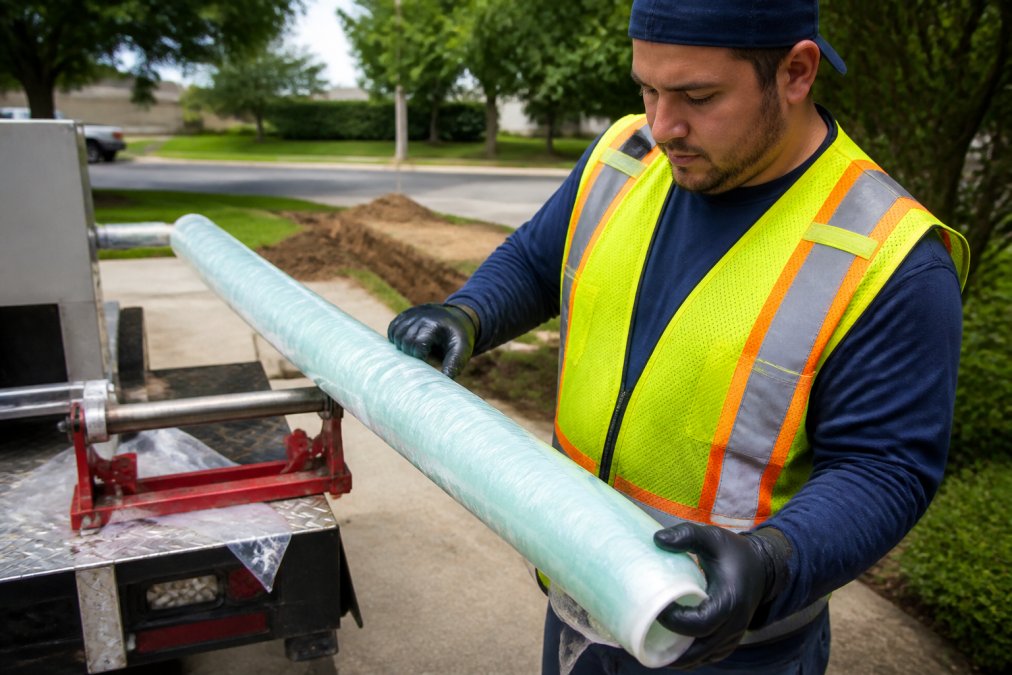
Open-cut replacement disturbs the entire pipe path and displaces soil. Trenchless installation preserves mature trees and hardscaping while eliminating the cost of hauling away excavated material.
CIPP Pipe Lining: Best for Intact Pipes
Cured-in-place pipe lining is the most widely applied trenchless method for pipes that still hold their structural shape (the EPA). A resin-impregnated liner is pulled into the damaged pipe, then inflated and cured to form a seamless pipe within the old one.
This approach shines for clay, cast iron, and older concrete lines with cracks, offset joints, or moderate root intrusion. The finished liner is corrosion-resistant and typically extends the line’s life by decades.
The limitation is straightforward: CIPP cannot fix a collapsed pipe, as the liner needs a stable host pipe to hold its shape.
Pipe Bursting vs Pipe Lining: Which Wins?
Pipe bursting is the answer when the existing pipe is too far gone for lining. A bursting head is pulled through the old pipe, shattering it while drawing a new high-density polyethylene (HDPE) pipe into place.
The comparison is not about which is superior overall, but which matches the failure mode. Lining preserves the existing pipe and requires a single access point. Bursting requires two access pits but delivers a completely new pipe, making it right for collapsed lines or upsizing capacity.
drainage pipe material comparison.
Lifespan is comparable between the two methods when properly installed, with both rated for decades of service. A CCTV sewer inspection is essential before either method, as it reveals the exact failure mode and confirms which approach will hold.
Signs You Need Sewer Repair Now
Catching sewer failure early separates a straightforward lining job from a full replacement. Slow drains, gurgling toilets, and sewage odors in the yard are the earliest warnings. More serious indicators include recurring backups, patches of lush or sunken grass over the pipe path, and visible cracks near the sewer lateral.
Root intrusion is the leading cause of failure in older clay pipes, and a single root can expand a hairline fracture into a full collapse within a few growing seasons (peer-reviewed research).
Do not wait for a complete sewer line collapse before calling for an assessment. A collapsed line turns a lining job into a bursting job, and it can allow soil to enter the pipe, creating voids under your foundation or driveway that lead to sinkholes. The cost difference between early intervention and emergency replacement is significant.
Acting on early warning signs also protects your property value, as realtors and inspectors routinely flag sewer issues during transactions. If you suspect a problem, a camera inspection is the only reliable way to confirm pipe condition and determine which trenchless method fits.
Frequently Asked Questions
Is trenchless sewer repair as effective as traditional replacement?
Yes, for most failure scenarios. Cured-in-place pipe (CIPP) creates a seamless, jointless epoxy pipe inside your old line that prevents root intrusion and resists corrosion. Pipe bursting installs a brand-new HDPE pipe, which is often stronger than the original clay or cast iron. Both restore structural integrity without the cost and landscape damage of full excavation. The key is matching the method to the pipe’s condition.
How long does a trenchless sewer repair last?
A properly installed CIPP liner or a new HDPE pipe from pipe bursting typically lasts 50 years or more. The trenchless sewer repair lifespan depends on soil conditions, water chemistry, and installation quality. Epoxy resins and polyethylene are corrosion-resistant, so the new pipe avoids the rust and degradation that destroyed your original line. This long lifespan makes trenchless repair a permanent fix, not a temporary patch.
When is pipe bursting better than pipe lining?
Pipe bursting is the right choice when your old pipe has fully collapsed, is severely deformed, or needs a larger diameter to handle increased flow. Lining cannot fix a collapsed pipe because the liner needs a stable host structure. If you have a 1920s home with original clay pipes that are misaligned, bursting replaces them entirely with a new seamless polyethylene pipe, restoring full flow and structural strength.
FREE Estimates
How can we help you?

our services


contact our team today
Contact a service professional at All Sewer and Plumbing Services LLC today. We are here to answer all your questions.
OPEN 24 hours 7 days a week