Pipe Bursting Versus Open Excavation: Which Wins?
A failed sewer line beneath a driveway, mature landscaping, restaurant patio, or hospital access route creates a decision that affects far more than plumbing. Pipe bursting versus open excavation is not simply a choice between two construction methods. It is a choice about property disruption, schedule risk, restoration costs, and the long-term performance of the new line.
For many Denver-area properties, trenchless pipe bursting is the better replacement option because it can install a new pipe with limited digging. But open excavation remains the right answer in certain site conditions. A qualified inspection should determine the method, not a one-size-fits-all sales pitch.
How Pipe Bursting Replaces a Sewer Line
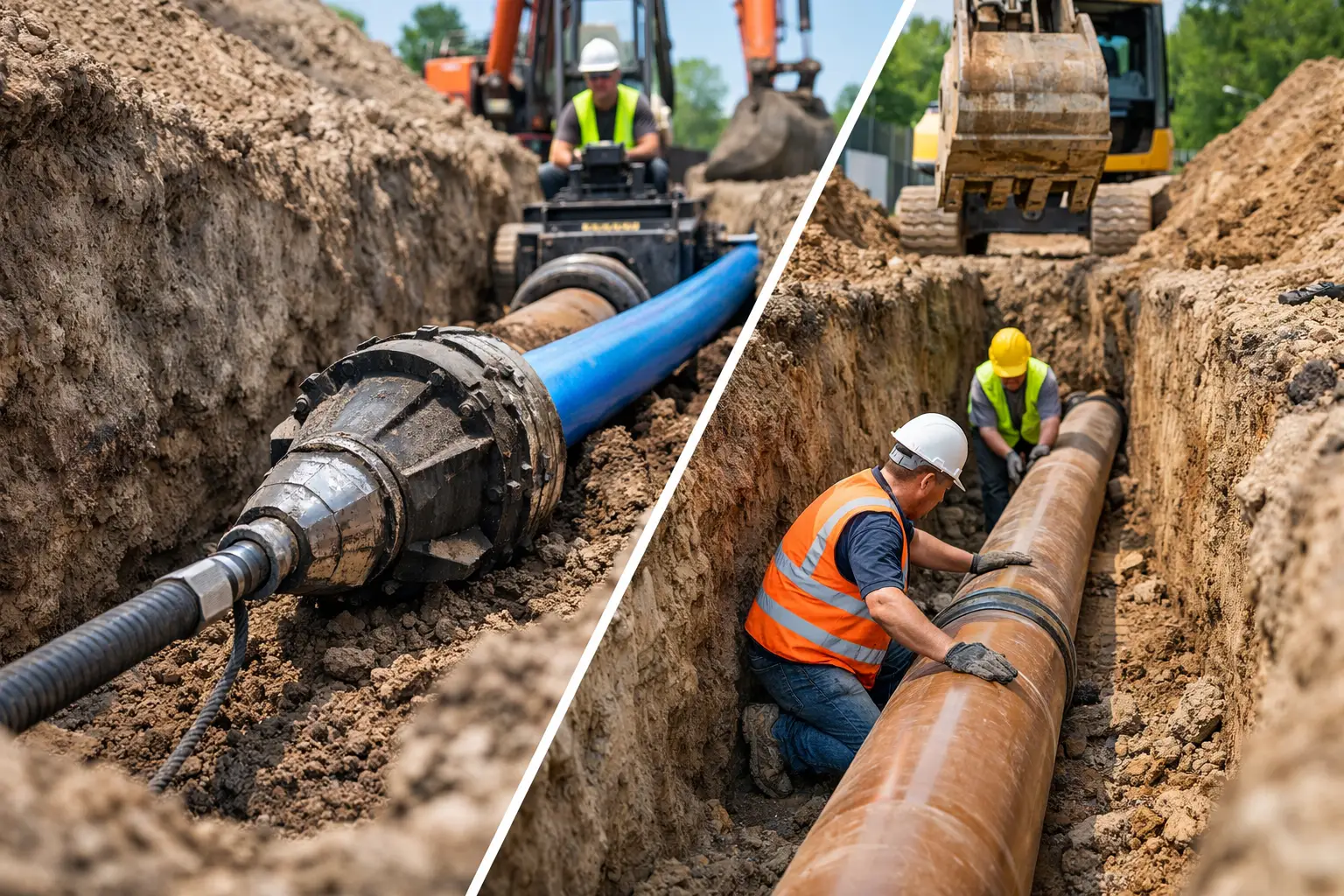
Pipe bursting is a trenchless replacement method used when an existing sewer pipe is too damaged for a repair lining or needs a full replacement. Instead of opening a continuous trench along the entire pipe path, technicians create small access pits at strategic locations, typically at the beginning and end of the affected line.
A bursting head is pulled through the failed pipe. As it moves forward, it breaks apart the old pipe and pushes the fragments into the surrounding soil. At the same time, it pulls a new, durable high-density polyethylene pipe into place. The result is a continuous replacement line with no joints along the run, which helps reduce future root intrusion and leak points.
The work still requires planning, equipment, and excavation at the access locations. Trenchless does not mean no digging. It means avoiding the long, destructive trench that conventional replacement often requires.
Pipe bursting can be especially valuable when a sewer line runs under hardscape, landscaping, parking areas, sidewalks, interior flooring, or other surfaces that would be expensive and disruptive to remove and restore. It can also allow a contractor to replace an undersized line with a larger-diameter pipe when site conditions permit.
What Open Excavation Involves
Open excavation is the traditional replacement method. A crew excavates a trench from the building connection to the sewer connection, exposes the failed pipe, removes it, installs new piping, performs required testing, and backfills the trench. Any disturbed surfaces are then restored.
This approach gives the contractor direct visual and physical access to the entire pipe run. That access can be necessary when the line has major alignment issues, extensive structural collapse, poor slope, multiple utility conflicts, or a route that must be changed. It is also often necessary when a sewer line is too shallow, too deep, or configured in a way that prevents trenchless equipment from completing the replacement safely.
Open excavation is not an inferior method. It is a proven construction approach and, in the right situation, the most direct path to a dependable result. The concern for property owners is the broader impact: the trench can cross lawns, gardens, driveways, sidewalks, parking lots, and building access areas. Restoration may become a major part of the total project scope.
Pipe Bursting Versus Open Excavation: The Real Differences
The biggest difference is surface disruption. Pipe bursting generally limits excavation to access pits, preserving much more of the property above the line. Open excavation requires access along the pipe route, which can mean removing and later rebuilding surface features.
That difference affects time as well. A trenchless replacement may reduce the amount of demolition, hauling, backfill, compaction, concrete work, asphalt work, and landscaping required after the new sewer is installed. On a commercial property, less disruption can mean fewer interruptions for customers, tenants, staff, deliveries, and daily operations.
Cost requires a more careful comparison. Pipe bursting equipment and specialized labor can carry a higher direct installation cost than basic trenching on an uncomplicated, open site. However, the total cost can be lower when a conventional trench would cross expensive hardscape, mature landscaping, finished flooring, retaining walls, or heavily used pavement.
A line installed beneath a clear backyard may be economical to excavate. A line running under a newly paved parking lot or a historic courtyard is a different calculation. The right comparison includes both the pipe replacement cost and the cost of putting the property back together afterward.
Long-Term Performance of the New Pipe
Both methods can provide an excellent long-term result when the line is properly designed, installed, and tested. The key question is whether the selected method corrects the actual problem.
Pipe bursting installs a new pipe rather than patching isolated damage. It is often a strong choice for old clay, cast iron, Orangeburg, or deteriorated sewer lines affected by cracks, root intrusion, offsets, or recurring failures. The new HDPE pipe is resistant to corrosion and roots, and its fused connections create a continuous system.
Open excavation may offer more control when the existing line has an incorrect slope, has settled in several locations, or needs to be rerouted. If the problem is not just pipe condition but pipe geometry, exposing the line may be the best way to build the correct grade from end to end.
When Pipe Bursting Is Usually the Better Option
Pipe bursting is often a strong fit when the old sewer line follows a workable route and has enough continuity for the bursting equipment to pass through. It is particularly useful where preserving the surface is a priority.
For homeowners, that may mean protecting a driveway, patio, lawn, or established trees. For a property manager, it may mean avoiding closure of a parking area or limiting tenant disruption. For schools, hospitals, hotels, restaurants, and municipal facilities, reducing open-trench hazards and keeping access routes functional can be a major operational advantage.
It can also be the preferred option when the existing pipe needs complete replacement rather than lining. CIPP epoxy pipe lining rehabilitates many pipes from within, but it is not the appropriate solution for every collapsed, severely offset, undersized, or structurally compromised line. Pipe bursting bridges the gap between rehabilitation and full conventional excavation.
When Open Excavation Is the Better Choice
Open excavation is generally the better choice when the sewer line must be rerouted, regraded, or substantially redesigned. A video sewer inspection may reveal bellies, reverse slope, sharp changes in direction, severe collapse, or connections that were installed improperly decades ago. In those cases, pulling a new pipe through the old route may reproduce a problem that should be corrected.
Excavation may also be necessary where there is insufficient room for access pits, where underground utility congestion creates risk, or where the pipe material and surrounding soil conditions make bursting unsuitable. Colorado properties can present challenging depth, soil, access, and weather conditions. A method that works well on one lot may not be practical on the next block.
For a straightforward line in an open, easily restored area, excavation can be efficient and cost-effective. The goal is not to avoid digging at all costs. The goal is to select the method that delivers a safe installation, proper flow, and the least unnecessary disruption.
Start With the Inspection, Not the Method
A reliable recommendation begins with a thorough camera inspection and site evaluation. The inspection identifies the pipe material, diameter, depth, route, structural condition, root intrusion, offsets, bellies, and potential access points. It also helps determine whether the line can be lined, burst, or should be excavated.
Property conditions matter just as much as pipe conditions. A contractor should consider surface improvements, landscaping, nearby utilities, access for equipment, local permitting requirements, and how the work will affect occupants or operations. For commercial and institutional properties, planning may include traffic control, safety barriers, after-hours work, and coordination with facility staff.
A clear estimate should explain the proposed method, where any excavation will occur, what replacement material will be installed, how testing will be handled, and who is responsible for restoration. If a recommendation does not account for these details, it is not complete enough to support a major sewer decision.
Choose the Method That Protects the Entire Property
The best sewer replacement is the one that solves the underground failure without creating avoidable problems above ground. Pipe bursting can preserve valuable surfaces and shorten the path to a new, durable sewer line. Open excavation provides the access needed to correct difficult grades, reroute piping, and resolve conditions trenchless equipment cannot safely address.
At All Sewer and Plumbing Services, LLC, the practical next step is a professional camera inspection and an honest assessment of the line, the site, and the total restoration impact. A well-informed decision now can prevent repeated backups, emergency closures, and unnecessary damage later.
FREE Estimates
How can we help you?

our services


contact our team today
Contact a service professional at All Sewer and Plumbing Services LLC today. We are here to answer all your questions.
OPEN 24 hours 7 days a week