Sewer Line Replacement Cost: What Affects Price
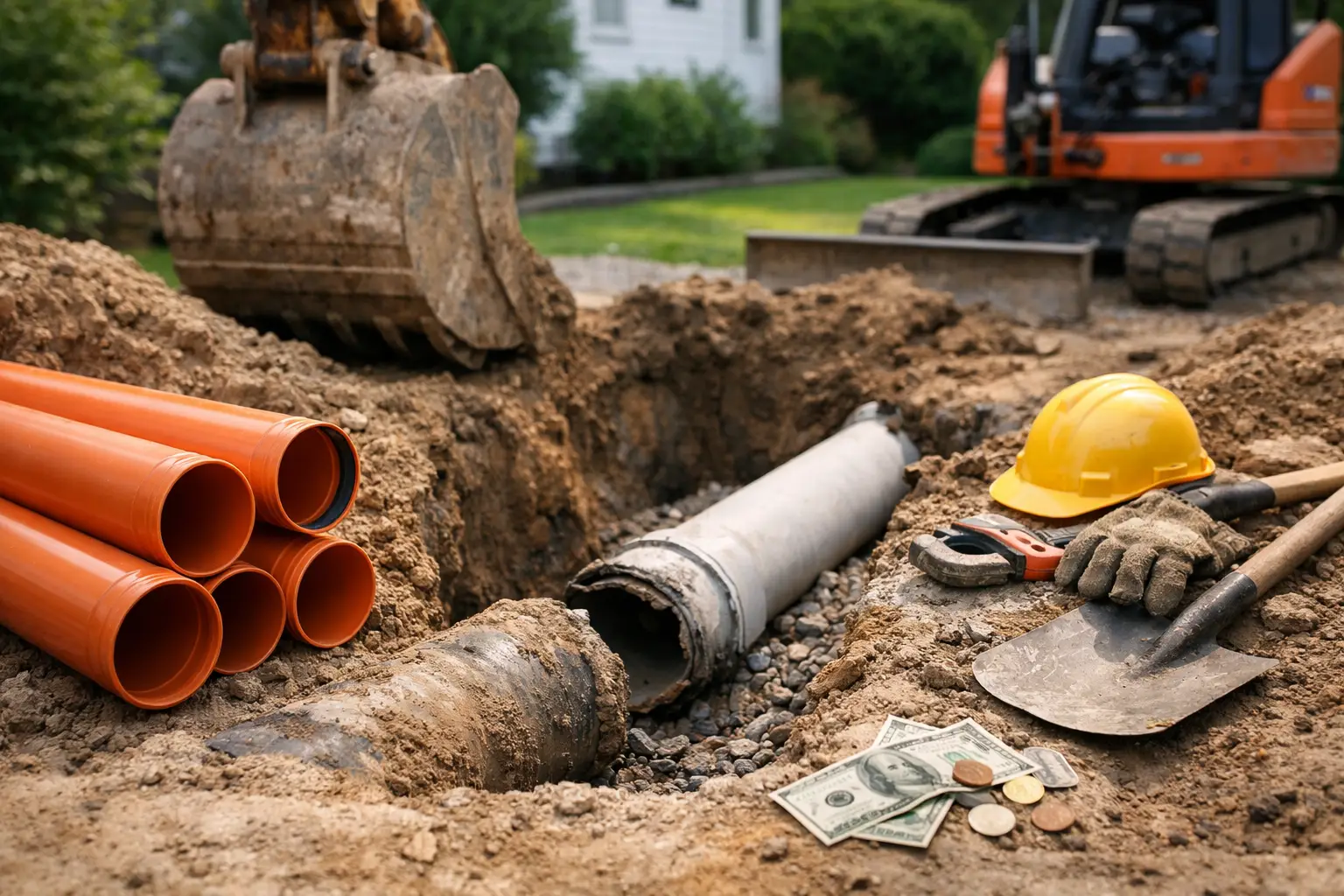
A sewer problem rarely starts as a budgeting exercise. It starts with slow drains, sewage odors, wet spots in the yard, or a backup that cannot wait. When that happens, sewer line replacement cost becomes the question fast – and the answer depends on more than pipe length alone.
For homeowners, facility managers, and property operators in Colorado, the biggest pricing mistake is assuming every sewer replacement is the same. It is not. The cost can shift significantly based on how the line failed, how deep it sits, what sits above it, and whether the job can be completed with trenchless methods instead of full excavation. A qualified inspection is what turns a vague number into a reliable estimate.
What affects sewer line replacement cost most?
The condition of the pipe is only one part of the equation. Access, depth, material, and replacement method usually have just as much impact on the final number.
If a sewer lateral is shallow, easy to reach, and runs through open soil, replacement is typically more straightforward. If the line passes beneath concrete, landscaping, a parking lot, a building slab, or a busy commercial area, labor and restoration demands increase. That is why two properties with the same pipe length can receive very different quotes.
Pipe depth matters because deeper lines take more time, more equipment, and more safety controls to expose. Soil conditions also matter. Rocky ground, groundwater, frozen conditions, and unstable excavation areas can all raise labor requirements. In older parts of Denver and other Colorado communities, aging infrastructure and mixed legacy materials can add another layer of complexity.
The repair method changes the price structure
One of the biggest variables in sewer line replacement cost is whether the project is performed through traditional excavation or a trenchless process.
Traditional replacement often requires digging a continuous trench to remove and replace the damaged pipe. That can be the right solution for certain failures, especially when the line has collapsed badly, has major offsets, or the pipe route needs to be reconfigured. But the visible pipe work is only part of the bill. Surface restoration often becomes a major cost driver. Replacing sod, landscaping, sidewalks, driveways, flooring, or pavement can push the total much higher.
Trenchless replacement methods shift the cost structure. Instead of paying for widespread excavation and restoration, the investment goes toward specialized equipment, trained crews, and targeted access points. In many cases, that reduces property disruption, shortens downtime, and lowers the indirect costs that owners often overlook.
Traditional excavation vs. trenchless sewer line replacement cost
If you are comparing bids, it helps to look past the line item total and ask what is included.
A lower excavation quote may not fully account for restoration after the pipe work is complete. If a yard, driveway, parking area, or landscaped frontage must be rebuilt, the true project cost rises. For commercial sites, the impact can be even broader. Access restrictions, customer disruption, and operational downtime have real financial consequences.
Trenchless solutions often make the most sense where preserving the property matters. Pipe bursting can replace a damaged line by pulling a new pipe through the old path while fracturing the existing pipe outward. CIPP lining can restore an existing sewer from the inside by creating a new structural pipe within the old one. These approaches are not interchangeable in every situation, but both can reduce digging substantially.
For many customers, the practical question is not just, “Which option is cheaper on paper?” It is, “Which option delivers the best outcome with the least disruption?” That is especially true for hospitals, schools, restaurants, hotels, municipal properties, and occupied commercial buildings where digging across active spaces creates its own costs.
When trenchless methods can save money
Trenchless work is often most cost-effective when the line runs under valuable or difficult-to-replace surfaces. That includes decorative landscaping, mature trees, patios, sidewalks, roads, tenant areas, and customer-facing spaces.
It can also save money when speed matters. A faster job reduces labor hours, shortens closures, and limits interruptions to daily operations. For facilities leaders and property managers, that can be just as important as the construction price itself.
That said, trenchless is not always the lowest-cost answer in every case. If the pipe is severely misaligned, fully collapsed in multiple sections, or unsuitable for lining or bursting, excavation may still be the correct solution. An experienced contractor should explain why a specific method fits the condition of the line instead of forcing one approach onto every project.
Typical sewer line replacement cost ranges
Sewer line replacement cost is usually presented as a range because site conditions vary so much. National averages can offer rough context, but they are not a substitute for a local inspection. In Colorado, factors like frost conditions, older infrastructure, municipal requirements, and access constraints can shift pricing quickly.
For a residential property, replacement may range from several thousand dollars for a relatively direct, accessible job to substantially more where depth, restoration, or major structural failure are involved. Commercial and institutional sites can span much wider ranges because pipe size, traffic control, access planning, and continuity of operations become part of the project.
The most accurate pricing starts with a video sewer inspection. That identifies the pipe material, confirms the failure point, measures the affected run, and helps determine whether replacement is truly needed or whether a trenchless rehabilitation option can solve the problem at a lower total cost.
Why estimates vary so much between contractors
If one estimate comes in far below the others, caution is warranted. Sewer replacement is not a commodity service. The contractor’s experience, diagnostic capability, crew training, equipment, and understanding of trenchless methods all affect the quality of the outcome.
A thorough estimate should reflect real site conditions, permit requirements, cleanup, testing, and the selected replacement method. It should also make clear whether surface restoration is included. Some low bids look attractive until the additional costs start appearing later.
This is where working with a dedicated sewer specialist matters. A contractor focused on underground pipe diagnostics and trenchless restoration is more likely to identify efficient solutions that a generalist might miss. In many cases, that leads to lower total disruption and a more durable repair.
How to know whether replacement is really necessary
Not every sewer problem requires a full replacement. That is an important point because many symptoms overlap.
A backup may be caused by grease buildup, root intrusion, a localized break, scaling, or a sag in the line. Some of these issues can be addressed with cleaning, spot repair, or trenchless lining. Others point to a pipe that has reached the end of its service life.
A camera inspection is the best starting point. It removes guesswork and allows the contractor to show you exactly what is happening inside the pipe. For property owners and facility teams, that visibility matters. You can make a decision based on evidence instead of assumptions.
Signs replacement may be the right call
Replacement is more likely when the sewer line has repeated backups, extensive cracking, severe root intrusion, corrosion, belly sections that hold waste, or full collapses. Older clay, cast iron, Orangeburg, or other deteriorated materials often become recurring problems once failures start appearing in multiple areas.
At that point, repeated service calls can become more expensive than correcting the main issue. Spending less on temporary fixes may feel easier in the short term, but it can cost more over time if the line continues to fail.
What property owners should ask before approving the job
Before moving forward, ask what method is being recommended and why. Ask whether trenchless options are viable, what prep work is required, how access will be managed, and what restoration is included in the estimate.
You should also ask about warranties, timeline, and whether the contractor has direct experience with your property type. A sewer replacement for a single-family home is different from one serving a restaurant, school, retirement community, or municipal facility. The right contractor should be able to manage both the pipe work and the operational realities around it.
For many customers, the best value comes from a team that can diagnose accurately, explain options clearly, and complete the project with minimal disruption. That is where specialized providers such as All Sewer and Plumbing Services, LLC bring a measurable advantage.
Sewer work is never convenient, but the right estimate should give you clarity instead of more uncertainty. When you understand what drives sewer line replacement cost, you can compare options based on real value, protect your property, and choose a solution that solves the problem the first time.
FREE Estimates
How can we help you?

our services


contact our team today
Contact a service professional at All Sewer and Plumbing Services LLC today. We are here to answer all your questions.
OPEN 24 hours 7 days a week