Trenchless Repair for Historic Properties: A How-To Guide

Table of Contents
- Why Trenchless Repair Matters for Historic Properties
- Understanding Your Sewer Line: Inspection and Assessment for Historic Homes
- How Trenchless Sewer Repair Works: CIPP Lining and Pipe Bursting
- Step-by-Step Process: Preparing Your Historic Property
- Trenchless Pipe Repair Duration and Timeline Expectations
- Best Practices for Historic Sewer Maintenance After Repair
- Common Mistakes to Avoid When Repairing Historic Sewer Lines
- Frequently Asked Questions
Last Updated: September 4, 2026
Why Trenchless Repair Matters for Historic Properties
Historic properties face a unique challenge when sewer lines fail. Traditional excavation can destroy original landscaping, damage foundation elements, and compromise the architectural integrity that makes these buildings valuable. Trenchless repair for historic properties offers a solution that preserves what makes these structures worth saving.
When a 1920s Victorian or mid-century commercial building needs sewer work, you’re protecting irreplaceable features. Trenchless methods preserve character; traditional digging often causes permanent damage.
All Sewer and Plumbing Services, LLC has spent over two decades on properties where standard excavation isn’t viable. Preservation boards, sensitive soil, and protected landscaping make trenchless repair the only practical option.
Trenchless repair for historic properties eliminates the need for large-scale excavation, protecting irreplaceable architectural features, original landscaping, and foundation integrity while restoring full sewer function.
Understanding Your Sewer Line: Inspection and Assessment for Historic Homes
Before repair begins, you need to know what’s underground. Historic properties often contain clay pipe or cast iron that behave differently than modern PVC. Inspection determines the problem location and whether your pipe material can handle trenchless methods.
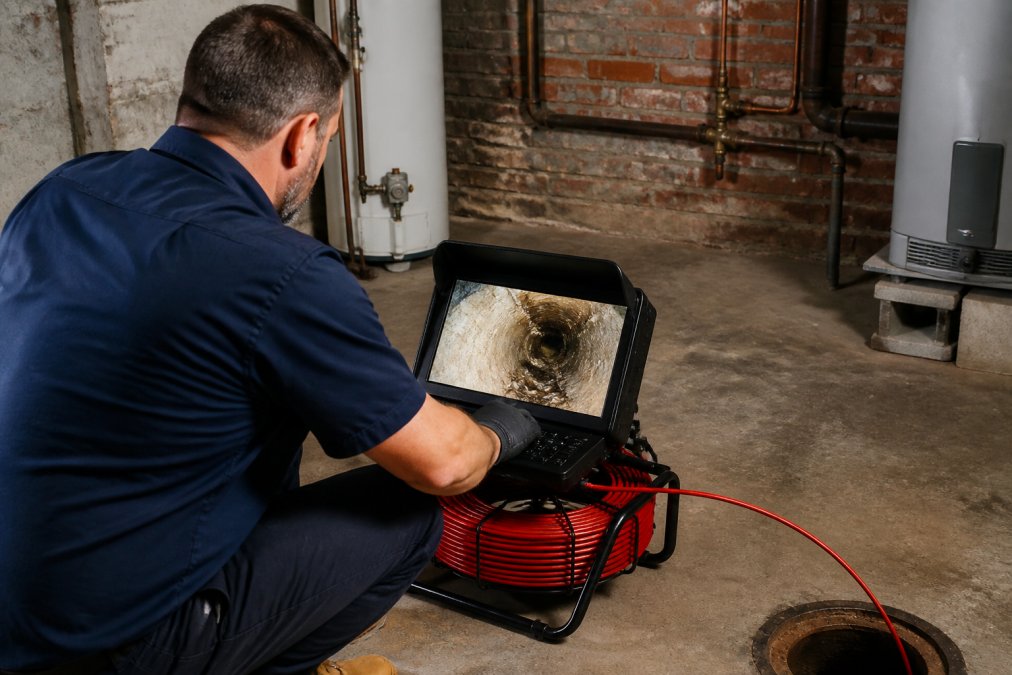
The Role of Camera Inspection and As-Built Drawings
Sewer camera inspection is essential for trenchless repair decisions. A waterproof camera travels through your line and displays real-time video, showing exact locations of breaks, cracks, root intrusion, and blockages without surface disruption.
For historic properties, as-built drawings are critical. Combined with camera inspection data, they reveal pipe diameter, material composition, depth, and complications unique to your property’s age and construction.
Identifying Clay Pipe, Cast Iron, and Material Compatibility Issues
Historic homes frequently contain clay pipe or cast iron, requiring different handling than modern alternatives. Both can be successfully repaired with trenchless methods, but the approach differs.
Material compatibility is critical. The epoxy used in CIPP lining must bond properly to the host pipe. A qualified contractor tests this during assessment to prevent repair failure.
How Trenchless Sewer Repair Works: CIPP Lining and Pipe Bursting
Two primary trenchless technologies dominate the industry: CIPP epoxy lining and pipe bursting. Each solves different problems and suits different pipe conditions.
Cured-in-Place Pipe (CIPP) Epoxy Lining
CIPP lining inserts a felt tube saturated with epoxy resin into the damaged pipe. The tube inverts and presses against interior walls as epoxy cures, creating a new pipe within the old one, no excavation, no disruption.
For historic properties, CIPP is often the first choice. It handles root intrusion, cracks, and corrosion without removing the original pipe, creating a smooth surface that improves flow and resists future penetration.
CIPP works best for pipes with minor to moderate damage. If your camera inspection shows extensive collapse or severe offset joints, pipe bursting may be necessary instead.
Pipe Bursting for Complete Replacement
Pipe bursting solves severely damaged pipes. A cone-shaped tool fractures the old pipe outward while laying new pipe behind it, no separate removal required.
Pipe bursting requires access points at both ends, meaning limited excavation, far less invasive than traditional full-line excavation. New pipe can be HDPE or other modern materials, restoring full capacity.
Step-by-Step Process: Preparing Your Historic Property
The path from problem identification to completed repair follows a structured process. Each step protects your property and ensures compliance with local requirements.
Step 1: Schedule a Professional Sewer Camera Inspection
Contact a qualified trenchless contractor for camera inspection. The technician accesses your line through existing clean-outs or a small access point, typically taking 1-2 hours. You’ll receive a video report showing condition, problem locations, and severity ratings. historic restoration contractors.
Step 2: Coordinate with Preservation Boards and Local Permitting
Historic properties often require preservation board approval before work begins. These boards protect historic character by ensuring repairs don’t damage exterior elements or alter appearance.
Contact your local preservation office early with camera inspection results and proposed repair method. Trenchless repair typically receives faster approval due to minimal surface disruption. Check with your local public works department for permit requirements.
Step 3: Review Material Compatibility and Structural Assessment
Your contractor should provide a written assessment confirming CIPP epoxy or new pipe material will perform correctly in your situation.
For unusual construction or multiple pipe materials, a structural engineer may verify the repair won’t compromise foundation stability.
Step 4: Confirm Access Points and Minimize Excavation Areas
Trenchless methods require sewer line access. CIPP uses existing clean-outs; pipe bursting requires small access pits at endpoints. Discuss access strategy with your contractor before work begins.
Minimize excavation by using existing clean-outs. Call 811 before digging to mark underground utilities and prevent costly damage.
Trenchless Pipe Repair Duration and Timeline Expectations
Timeline depends on pipe length, damage severity, repair method, and preservation board approval.
Work Schedule: CIPP Lining vs. Pipe Bursting
CIPP Epoxy Lining typically requires 2-4 days:
- Day 1: Access preparation, pipe cleaning, epoxy tube insertion
- Day 2: Epoxy curing (24 hours)
- Day 3-4: Final inspection and site restoration
Work occurs during business hours with minimal noise. The system is out of service only during curing, after which normal use resumes.
Pipe Bursting typically requires 3-5 days:
- Day 1: Access pit excavation at both ends
- Day 2-3: Pipe bursting and installation
- Day 4-5: Backfill and restoration
For commercial properties where downtime creates financial impact, CIPP is often preferable because it completes faster.
Total Project Timeline: Inspection Through Completion
From initial inspection to completed repair, budget 4-8 weeks. Historic properties with preservation board requirements add 4-6 weeks due to review periods. Address sewer problems early to avoid emergency repairs at premium rates.
The Cost-Benefit Analysis: Avoided Expenses That Justify Trenchless Investment
Traditional excavation often costs more than trenchless methods when accounting for restoration expenses, making trenchless repair a cost-effective choice.
Landscaping Restoration Costs:
Traditional excavation destroys lawns, gardens, shrubs, and hardscaping. Restoration costs can be significant. Trenchless repair eliminates these costs.
Foundation and Structural Concerns:
Excavation near historic foundations can destabilize soil and drainage. Structural repairs can be costly. Trenchless methods avoid this risk.
Property Value and Historic Designation:
Historic properties benefit from tax credits and designation status. Visible excavation damage complicates these. Trenchless repair preserves appearance and avoids complications.
Timeline and Occupancy Costs:
Traditional excavation takes longer, causing disruption and noise. For commercial properties, downtime translates to lost revenue. Trenchless repair completes in days.
Real-World Example: Cost Comparison
Consider a 1920s Victorian home with a 100-foot clay sewer line that has developed root intrusion and minor cracks:
Traditional Excavation Approach:
- Sewer repair labor and materials: Pricing depends on the scope of work.
- Landscaping restoration: Can be significant.
- Potential foundation assessment (if excavation is deep): Pricing depends on the scope of work.
- Project timeline: 3-4 weeks
- Total cost: Pricing depends on the scope of work. Contact us for a free estimate.
Trenchless CIPP Lining Approach:
- Sewer camera inspection: Pricing depends on the scope of work.
- CIPP lining labor and materials: Pricing depends on the scope of work.
- Preservation board coordination (if required): Included in contractor scope
- Project timeline: 4-8 weeks (including board approval) or 3-4 days for work itself
- Total cost: Pricing depends on the scope of work. Contact us for a free estimate.
The trenchless approach can offer significant savings while completing faster and preserving the property’s appearance and historic character.
When Delays Occur and How to Budget for Contingencies
Delays can occur if camera inspection reveals complications not initially visible: severe offset joints, multiple breaks in different sections, unexpected pipe material changes, or structural issues requiring engineer assessment. Budget an extra 1-2 weeks for these contingencies.
Preservation board delays are the most common cause of extended timelines. Early coordination with the preservation office prevents crisis-mode decisions.
Schedule your camera inspection and preservation board coordination during seasons when contractors have availability. Spring and fall are peak seasons; winter and summer often have shorter wait times.
Best Practices for Historic Sewer Maintenance After Repair
After repair, regular camera inspections every 3-5 years catch developing issues. Root intrusion is the most common post-repair problem; trees near sewer lines eventually penetrate cracks.
Avoid planting trees with aggressive root systems over sewer lines. Discuss root-control options with your contractor if roots are present. Prevention through landscaping management is the best long-term strategy.
Avoid pouring grease, harsh chemicals, or non-biodegradable items down drains. These damage the epoxy lining and reduce system lifespan. Educate building occupants about what belongs in the sewer system, this simple step prevents many costly repairs.
Common Mistakes to Avoid When Repairing Historic Sewer Lines
The most frequent mistake is choosing a contractor unfamiliar with historic property requirements. Interview contractors about their experience with historic properties before hiring.
Delaying repair after discovering a problem is costly. A small crack becomes a major break requiring expensive emergency repair. Early intervention saves money.
Failing to obtain proper permits causes complications when selling or facing municipal inspections. Permits protect both property and public infrastructure.
Don’t assume your property’s conditions without professional assessment. Every historic building is unique. Camera inspection provides facts for correct decisions.
Historic properties deserve repair methods that respect their age and character. Trenchless repair for historic properties makes this possible by restoring sewer function without sacrificing what makes these buildings valuable. All Sewer and Plumbing Services, LLC brings over two decades of experience coordinating with preservation boards, assessing material compatibility, and executing CIPP and pipe bursting projects that protect your property’s integrity. When your historic sewer line needs attention, contact us for a free inspection and assessment, we’ll show you how trenchless methods preserve both your pipes and your property’s future.
Frequently Asked Questions
Can trenchless pipe repair really work on my 1920s clay pipes, or will I need full excavation?
CIPP epoxy lining works effectively on clay pipe, cast iron, and other historic materials. The epoxy creates a new structural layer inside the existing pipe without removing it. A sewer camera inspection and material compatibility assessment confirm whether your specific pipes are candidates. Pipe bursting, another trenchless method, can replace pipes entirely if lining isn’t suitable. Most historic properties qualify for trenchless repair, avoiding the excavation damage that threatens foundations and landscaping.
How long does trenchless pipe lining actually last on historic properties?
CIPP epoxy lining can last for decades, depending on pipe material, water chemistry, and maintenance. Historic properties with proper sewer line inspection and preventive maintenance often see a long lifespan. Unlike temporary fixes like snaking, trenchless repair restores structural integrity rather than clearing blockages temporarily. Routine camera inspections every 5-7 years help catch root intrusion or new cracks early, extending the repair’s life and protecting your foundation.
What’s the typical timeline for trenchless pipe repair on a historic home?
Most trenchless sewer repairs complete in 1-3 days, depending on pipe length and access point locations. CIPP lining cures within 24 hours. Permitting and Preservation Board coordination may add 1-2 weeks before work begins. Unlike traditional excavation, trenchless repair minimizes business downtime and allows tenants or occupants to remain on-site during the process. Your contractor will provide a detailed schedule after the sewer camera inspection identifies the exact scope.
How do I know if trenchless repair is a real fix or just a Band-Aid like snaking?
Snaking clears blockages temporarily; trenchless repair restores structural integrity permanently. CIPP lining seals cracks, stops root intrusion, and reinforces the pipe’s structural capacity. Pipe bursting replaces failed sections entirely. Both methods address the root cause, not just symptoms, and are backed by as-built drawings, sewer camera documentation, and professional assessment. A reputable contractor provides a detailed inspection report and warranty, giving you proof the repair solves the problem, not just postpones it.
This article was written using GrandRanker
FREE Estimates
How can we help you?

our services


contact our team today
Contact a service professional at All Sewer and Plumbing Services LLC today. We are here to answer all your questions.
OPEN 24 hours 7 days a week