Guide to Clay Sewer Pipes for Denver Homes
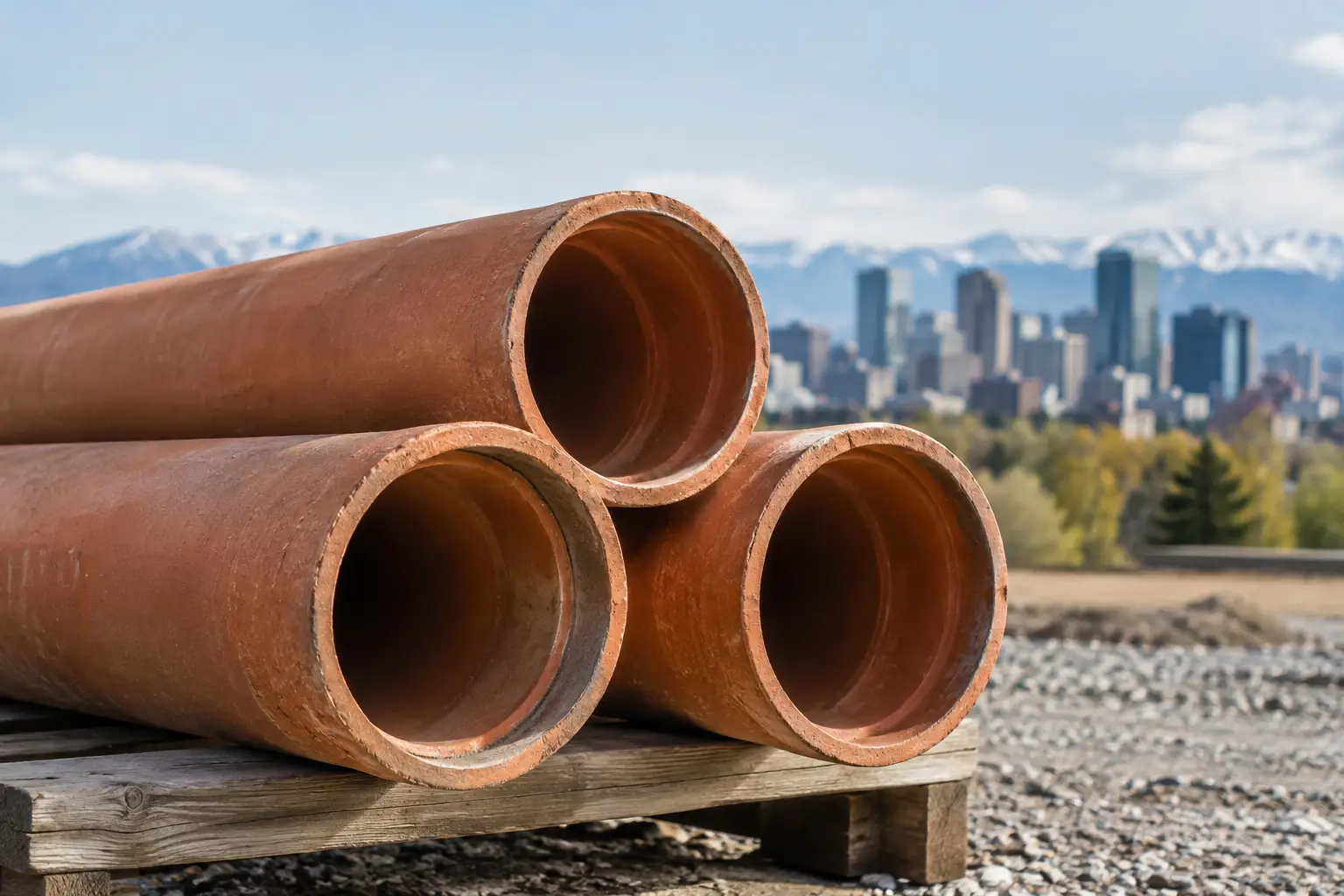
Clay sewer pipe is common beneath older Denver-area homes, historic buildings, and established commercial properties. A practical guide to clay sewer pipes starts with one fact: clay can last for decades, but age, shifting soil, root growth, and failed joints eventually create problems that do not resolve on their own.
If drains are backing up, toilets gurgle, or sewage odors are appearing around the property, the goal is not to guess whether the line needs replacement. The goal is to inspect the pipe, identify the failure, and select the repair method that restores reliable flow with the least disruption possible.
What Clay Sewer Pipes Are and Why They Fail
Vitrified clay pipe, often called clay sewer pipe or terra cotta pipe, was a standard sewer material for many years. It is resistant to corrosion, handles wastewater well, and can remain structurally sound for a long time. That does not mean every original clay line is a candidate for another several decades of service.
Unlike modern PVC pipe, clay sewer systems are assembled in short sections with joints. Those joints are the usual weak point. Mortar, tar, or older joint materials can deteriorate, creating small openings that allow roots to enter and soil to shift around the pipe.
Colorado conditions can add stress. Freeze-thaw cycles, expansive soils, heavy irrigation, mature trees, and gradual ground movement may cause separated joints, cracks, or misaligned sections. A clay pipe can also develop a belly – a low area where wastewater and debris collect instead of moving toward the municipal connection or septic system.
Clay itself is hard but brittle. It does not flex well when the ground moves. One localized crack may be repairable; widespread fractures, collapse, or severe offsets can point to replacement.
Warning Signs Your Clay Sewer Line Needs Attention
A single slow sink does not automatically mean a damaged main sewer line. Repeated symptoms across multiple fixtures are more concerning, especially in an older property with known clay piping.
Watch for recurring drain clogs, backups in tubs or showers when toilets flush, gurgling fixtures, sewage odors, or wet and unusually green areas in the yard. Commercial and institutional properties may notice recurring restroom closures, kitchen drain issues, or frequent service calls that disrupt operations.
Root intrusion is particularly common. Roots naturally seek moisture and nutrients, and even a narrow opening at a clay-pipe joint is enough to attract them. Cutting roots during drain cleaning can restore flow temporarily, but it does not seal the opening that allowed the roots in. When the same obstruction returns, a camera inspection is the next practical step.
Do not wait for a complete blockage if symptoms are repeating. Sewer damage is usually less costly to address before wastewater backs up into finished living areas, customer spaces, or critical facilities.
A Guide to Clay Sewer Pipes Starts With a Camera Inspection
A professional video sewer inspection provides the information needed to make a sound repair decision. A camera is sent through an accessible cleanout or drain line, allowing the technician to view the pipe interior in real time and locate the issue.
The inspection can show whether the problem is root intrusion, scale buildup, cracked clay, open joints, a belly, a collapsed section, or a connection issue. It also helps determine the pipe diameter, depth, route, and whether the line has enough structural integrity for trenchless rehabilitation.
This step matters because identical symptoms can have very different causes. A line packed with roots may be a strong candidate for cleaning and epoxy lining. A line with major collapse or severe grade problems may need pipe bursting or targeted excavation. Treating both conditions the same can waste money and delay a lasting repair.
For property managers and facility leaders, inspection footage also creates a clearer record for maintenance planning, budgeting, and communication with stakeholders.
Repair Options for Clay Sewer Pipe
The right solution depends on the line’s condition, not on a one-size-fits-all recommendation. After the camera inspection, a qualified trenchless contractor should explain what is damaged, what can be restored, and what requires replacement.
Drain Cleaning for Active Root and Debris Blockages
Professional drain cleaning can remove roots, grease, scale, and accumulated debris that are restricting flow. It is often the first step when the line is backed up or when the pipe must be cleaned before a repair.
Cleaning is valuable, but it is maintenance rather than a structural repair when open joints or cracks remain. If roots are entering through deteriorated clay-pipe joints, expect them to return unless those entry points are sealed or the line is replaced.
CIPP Epoxy Pipe Lining for Repairable Clay Lines
Cured-in-place pipe, or CIPP lining, creates a new pipe inside the existing host pipe. After cleaning and preparing the line, an epoxy-saturated liner is installed and cured in place. The finished liner is jointless, corrosion-resistant, and designed to seal cracks, failed joints, and root entry points.
For many clay sewer lines, lining is an excellent option because it can be completed through existing access points without digging a continuous trench across landscaping, driveways, floors, or customer-facing areas. It is especially useful where the pipe alignment is generally sound and the original line is not crushed or badly collapsed.
There are trade-offs. Lining slightly reduces the inside diameter of the pipe, although the smooth interior can improve flow. It also cannot correct every severe belly or restore pipe sections that no longer have enough shape and stability to support the liner.
Trenchless Pipe Bursting for Failed or Undersized Lines
Pipe bursting replaces the old line by pulling a new pipe through the same path while breaking apart the existing pipe. This method can be the better choice when clay pipe has widespread cracking, significant offset joints, collapse, or a condition that makes lining unreliable.
Compared with conventional excavation, pipe bursting usually requires only small access pits at strategic points. That can protect mature landscaping, hardscape, parking areas, and building entrances. It may also allow an upgrade to a properly sized modern pipe when the existing line is too small for the property’s needs.
Pipe bursting is not appropriate in every location. Nearby utilities, limited access, the line route, and the connection points must all be evaluated before work begins.
Excavation When It Is the Best Answer
Trenchless repair is often the least disruptive solution, but it is not a promise that excavation will never be needed. A localized collapsed section, a pipe with severe slope failure, inaccessible connections, or conflicts with other underground infrastructure may require excavation.
The right contractor will recommend excavation when it produces the most dependable result, not force a trenchless method where it does not fit. The objective is a sewer line that performs reliably after the crew leaves, not simply the shortest initial repair.
How to Protect a Clay Sewer Line After Repair
Once a clay sewer line has been cleaned, lined, or replaced, use it with long-term performance in mind. Avoid flushing wipes, paper towels, hygiene products, or grease. These materials can catch on root growth or damaged joints and create blockages even in pipes that otherwise appear sound.
If mature trees are close to the sewer route, ask about a maintenance schedule based on the camera findings and the chosen repair method. Routine inspections can be particularly useful for multi-unit properties, restaurants, schools, and older commercial buildings where a sewer backup can interrupt operations quickly.
Keep records of inspection footage, repair details, permits, and line locations. This documentation is useful for future maintenance, property sales, insurance discussions, and capital planning.
When to Call a Sewer Specialist
Call for a professional inspection when backups recur, multiple drains are slow, or you have an older property with no clear record of sewer-line work. Acting early gives you more options and more time to compare a targeted repair, trenchless lining, pipe bursting, or replacement.
For Denver and Colorado property owners, All Sewer and Plumbing Services, LLC can evaluate clay sewer lines with video inspection and recommend the least disruptive method that fits the actual condition of the pipe. A clear diagnosis turns an uncertain underground problem into a repair plan you can act on with confidence.
FREE Estimates
How can we help you?

our services


contact our team today
Contact a service professional at All Sewer and Plumbing Services LLC today. We are here to answer all your questions.
OPEN 24 hours 7 days a week