Can Tree Roots Crush Pipes? What Really Happens
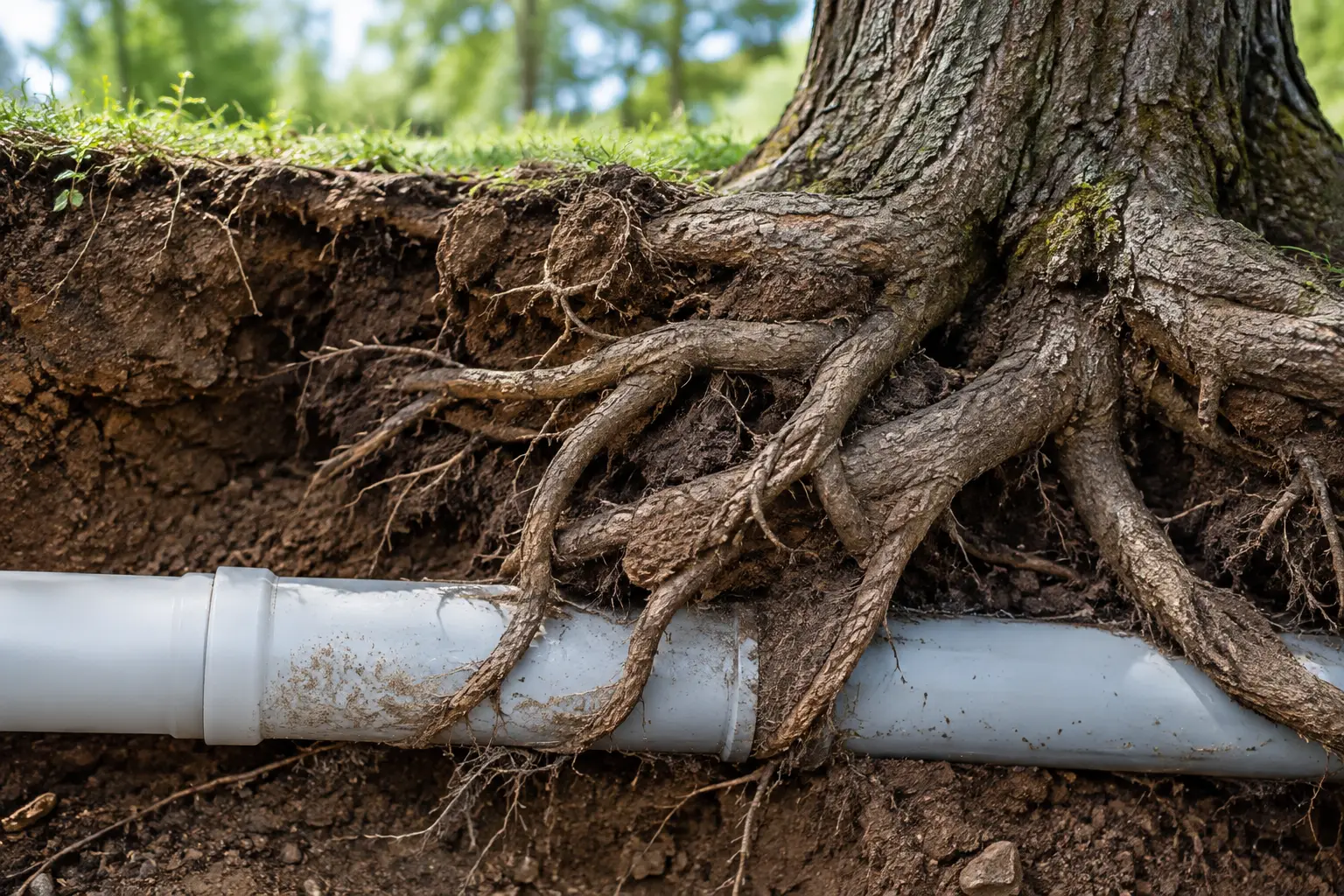
A sewer line can work without trouble for years, then suddenly begin backing up after a mature tree’s roots reach the pipe. So, can tree roots crush pipes? Yes, but not usually in the way most property owners imagine. Roots rarely break into a sound, modern pipe by brute force alone. More often, they find a small opening, grow toward the moisture inside, and steadily turn a minor defect into a blocked, shifted, or collapsed sewer line.
For Denver-area homes and commercial properties with aging clay, cast-iron, concrete, or Orangeburg sewer lines, root intrusion is one of the most common causes of recurring drain trouble. The right response depends on the actual pipe condition. Clearing roots may restore flow, but a damaged line needs a lasting repair before the problem returns.
Can Tree Roots Crush Pipes or Just Enter Them?
Tree roots are naturally drawn to water, oxygen, and nutrients. A sewer line provides all three when a joint has separated, a seal has deteriorated, or a small crack has formed. Fine feeder roots can enter openings that appear insignificant from above ground. Once inside, they expand into dense root masses that catch toilet paper, grease, waste, and other debris.
In many cases, roots do not create the first opening. Older pipe materials are especially vulnerable to shifted joints, corrosion, cracks, and age-related deterioration. Ground movement, freeze-thaw cycles, settling soil, and heavy surface loads can also weaken a buried line. Roots take advantage of those existing defects.
That said, larger roots can exert substantial pressure as they grow. If a pipe is already brittle, thin-walled, corroded, or poorly supported, root growth can worsen a crack, force apart pipe joints, push sections out of alignment, or contribute to a collapse. This is why the question is not simply whether a nearby tree is the problem. The critical question is whether the sewer pipe already has vulnerabilities that roots can exploit.
Why Sewer Lines Become Root Targets
A healthy, watertight sewer line should not leak enough moisture to attract roots. When roots repeatedly enter a line, the pipe is typically signaling a condition that needs attention.
Clay tile sewer pipes are a frequent concern in older neighborhoods because each pipe section has a joint. Over time, those joints can separate or lose their seal. Cast-iron lines can rust from the inside and outside, leaving rough surfaces, cracks, and weak points. Orangeburg pipe, a fiber-based material used in some mid-century properties, can deform, blister, and deteriorate as it ages.
Even newer PVC lines can develop root issues if joints were improperly installed, the pipe was damaged during construction, or soil movement placed stress on connections. Pipe depth, local soil conditions, and the location of large trees all affect the risk.
Warning Signs of Root Damage in a Sewer Pipe
The first sign is often a slow drain that seems to improve temporarily after plunging or using a drain cleaner, then returns. Because the main sewer line serves the entire building, root intrusion commonly affects more than one fixture. A toilet may gurgle when a shower drains, or water may rise in a basement floor drain when the washing machine empties.
Watch for recurring backups, especially when they occur at the same time of year. Roots grow actively during warmer months, but a root-filled pipe can back up in any season once debris catches in the intrusion. Foul sewer odors outside, unusually green patches of grass, soft soil, or wet areas near the sewer route may also point to a leaking underground line.
For commercial facilities, the signs may include repeated restroom closures, slow kitchen drains, unpleasant odors near customer areas, or disruptions during peak operating hours. Restaurants, schools, hotels, healthcare facilities, and multi-unit properties should treat recurring main-line stoppages as an infrastructure issue, not a routine drain-cleaning problem.
A Camera Inspection Shows What Is Actually Happening
Root intrusion cannot be diagnosed accurately from symptoms alone. A professional video sewer inspection allows a trained technician to see inside the line, locate the blockage, identify the pipe material, and determine whether the pipe remains structurally sound.
The camera can reveal whether roots are limited to one joint or present throughout the line. It can also show cracks, offset joints, corrosion, bellies where the pipe has sagged, scale buildup, and collapsed sections. This distinction matters because the repair approach should match the condition of the pipe.
If the line is intact apart from a manageable root blockage, professional root cutting and drain cleaning may restore flow. If roots are entering through multiple failed joints or the pipe has lost its structural integrity, cleaning alone is a short-term measure. The roots will grow back as long as water can escape and the access points remain open.
Repair Options for Pipes Damaged by Roots
The most effective solution protects the property while addressing the reason roots got into the line. Traditional excavation remains necessary in some situations, particularly when there is a severe collapse, poor access for trenchless equipment, or a section of pipe must be regraded. But excavation is not the only option.
CIPP Epoxy Pipe Lining
Cured-in-place pipe, or CIPP, lining creates a new pipe inside the existing host pipe. After the line is cleaned and prepared, a resin-saturated liner is installed and cured in place. The finished liner is jointless, corrosion-resistant, and sealed against root entry.
For a pipe with cracks, failed joints, or widespread root intrusion that still has a usable pathway, lining can avoid extensive digging through landscaping, driveways, flooring, or sidewalks. It is particularly valuable for properties where surface restoration would add significant cost and disruption.
Lining is not the right choice for every sewer line. A pipe that is badly collapsed, severely back-pitched, or missing major sections may require a different solution. A camera inspection and proper evaluation determine whether the existing line can support a liner.
Trenchless Pipe Bursting
Pipe bursting replaces a failed pipe by pulling a new pipe through the underground route while breaking apart the old line. It is often a strong option when the existing pipe has deteriorated beyond repair but the route can still be accessed through strategically placed entry and exit points.
Compared with a full open trench, pipe bursting can greatly reduce disruption to lawns, hardscapes, parking areas, and building operations. It also provides a new, continuous pipe rather than relying on a deteriorated host pipe. This can be the better long-term answer for extensively damaged clay, cast-iron, or Orangeburg lines.
Targeted Excavation
A localized excavation may be the most efficient option when damage is limited to one accessible area. The goal is not to avoid digging at all costs. It is to use the repair method that provides dependable results with the least necessary impact on the property.
Preventing Repeat Root Intrusion
Removing a tree does not automatically solve a root problem. Existing roots can remain in the soil and in the sewer line for some time, while the pipe’s cracks and failed joints remain open. Likewise, chemical root treatments may slow regrowth in certain situations, but they do not repair a leaking or broken pipe.
The most reliable prevention is a sealed sewer line. If a camera inspection identifies early root entry before major damage occurs, timely cleaning and repair can prevent an emergency backup. Property managers should also keep records of prior sewer issues, repair locations, and inspection findings. That history helps identify whether a line has a one-time blockage or an escalating failure pattern.
Large trees do not have to be viewed as an automatic threat to every sewer line. The concern is the combination of mature roots and a pipe that is no longer watertight. A professional inspection replaces guesswork with clear evidence, allowing you to choose a repair that restores dependable flow without unnecessary disruption to your property.
FREE Estimates
How can we help you?

our services


contact our team today
Contact a service professional at All Sewer and Plumbing Services LLC today. We are here to answer all your questions.
OPEN 24 hours 7 days a week