Top Causes of Drain Backups and What to Do
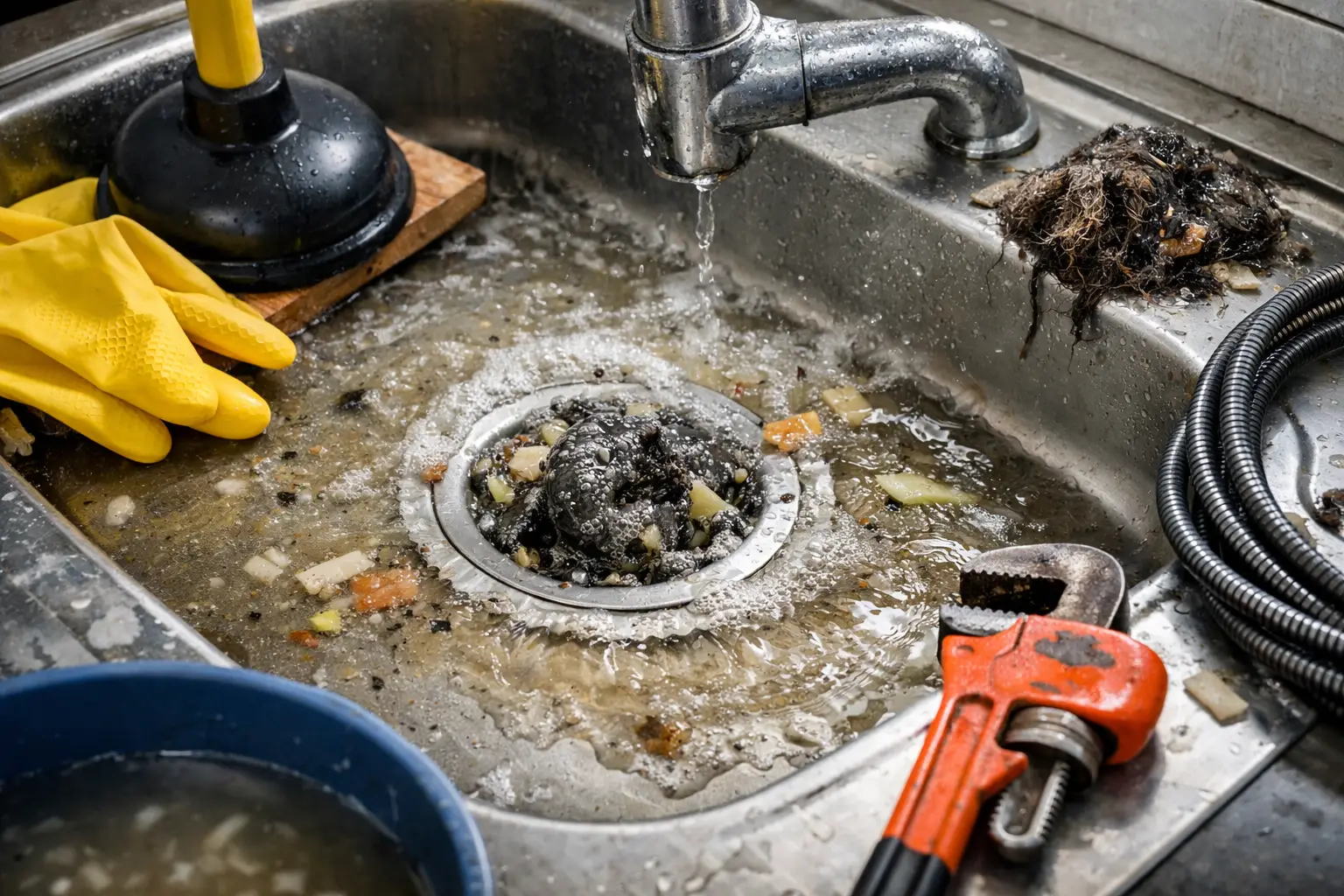
A drain backup rarely begins with a dramatic overflow. More often, it starts with a toilet that gurgles when the washing machine drains, a shower that holds water around your feet, or a floor drain that smells unpleasant. Understanding the top causes of drain backups helps property owners act before wastewater reaches finished spaces, customer areas, equipment rooms, or landscaping.
For a single slow sink, the problem may be close to the fixture. When several fixtures are slow, gurgling, or backing up at once, the concern is usually farther down the building drain or main sewer line. That distinction matters because repeated plunging or chemical drain products will not repair a damaged underground pipe.
Top Causes of Drain Backups in Homes and Buildings
Drain problems can be caused by everyday use, aging infrastructure, ground movement, or a combination of all three. A professional diagnosis identifies where the restriction is located and whether cleaning, repair, or replacement is the right solution.
1. Grease, wipes, and other built-up debris
The most familiar source of a backup is a blockage caused by material that should not have entered the drain. In residences, grease, food scraps, soap residue, hair, paper products, and so-called flushable wipes can collect inside pipes. In restaurants, hotels, schools, and commercial kitchens, grease buildup can become a serious operational issue if grease interceptors and drain lines are not properly maintained.
Grease may go down warm and liquid, but it cools as it travels through the system. It then sticks to pipe walls and catches other debris. Over time, the line diameter narrows until normal water use is enough to cause a backup.
Drain cleaning can often restore flow when buildup is the central issue. However, recurring clogs in the same line may indicate rough pipe interiors, offset joints, root intrusion, or structural damage that continues to trap debris.
2. Tree root intrusion
Tree roots are one of the leading causes of main sewer backups in Denver-area properties. Roots naturally seek moisture and nutrients. Even a small opening at a pipe joint, crack, or deteriorated connection can attract fine roots, which expand inside the line and create a dense obstruction.
Older clay, cast-iron, and concrete sewer lines are especially vulnerable, but roots can enter newer systems when joints separate or a pipe is damaged. Root cutting can reopen a blocked line, but it does not seal the openings that allowed roots in. If roots return after cleaning, a video sewer inspection can show whether the pipe needs spot repair, epoxy lining, or replacement.
This is where a long-term approach matters. Repeated emergency drain cleaning may keep a line moving temporarily, while trenchless rehabilitation can restore the pipe and reduce the likelihood of future root entry without digging through lawns, driveways, patios, or interior floors.
3. Aging, cracked, or collapsed sewer pipes
No pipe lasts forever. Many Colorado properties have sewer lines installed decades ago, using materials that can corrode, crack, shift, or degrade with time. Cast iron can rust from the inside out. Clay pipe joints can separate. Orangeburg pipe, used in some older construction, can deform and deteriorate. Ground pressure and traffic loads can also contribute to pipe failure.
A cracked pipe may allow soil to enter the line. A separated joint can create a lip that catches toilet paper and waste. In more severe cases, a partially collapsed pipe restricts flow so significantly that backups become frequent and unpredictable.
These conditions cannot be confirmed from above ground. A camera inspection provides a direct view of the pipe interior, identifies the exact location of damage, and helps determine whether the line is a candidate for trenchless pipe lining or pipe bursting. The right method depends on the pipe’s condition, diameter, access points, and how much of the line has failed.
4. Pipe bellies and poor drainage slope
Sewer lines rely on gravity. If a section of underground pipe settles, the line can develop a low area often called a belly. Water and solids remain in that section instead of moving consistently toward the municipal sewer or septic connection.
A small belly does not always require immediate replacement, particularly if the pipe remains structurally sound and the line flows adequately after cleaning. But a pronounced sag can hold waste, accelerate buildup, and create repeat backups. Video inspection is useful because it reveals standing water, sediment, and the extent of the affected section.
Correcting a significant belly may require replacement of that portion of the sewer line. Trenchless pipe bursting can be a practical option in many cases, allowing a new pipe to be installed with substantially less excavation than conventional replacement.
5. Heavy water use and overloaded drain systems
Some backups occur when a compromised line is pushed beyond its capacity. A washing machine discharge, multiple showers, a dishwasher cycle, and several toilet flushes can expose a partial blockage that seemed manageable during lighter use.
Commercial facilities can see the same pattern at a larger scale. Restaurants may experience problems during a busy service period, while hotels, hospitals, and schools can put substantial demand on shared drain lines during peak occupancy. The high water volume is not necessarily the root cause. It is often the event that reveals an existing restriction, undersized line, or deteriorated sewer connection.
If backups occur only during heavy use, avoid assuming the system is simply overloaded. A camera inspection and professional evaluation can determine whether the line needs cleaning, maintenance changes, or structural repair.
6. Municipal sewer issues and exterior drainage problems
Not every backup begins on private property. A blockage or surcharge in a municipal sewer can force water back toward connected buildings. Heavy rain, debris, damaged public infrastructure, or an overwhelmed sewer system can all contribute, depending on how the local system is configured.
There can also be drainage issues around the building that are separate from the sanitary sewer but still create costly water intrusion. Poor grading, clogged exterior drains, and damaged storm drainage components can send water toward foundations and lower-level entries. A qualified inspection helps separate a private sewer line failure from a public sewer or site drainage issue, so the responsible repair is addressed first.
Warning Signs That Call for Prompt Action
A backup is easiest to manage before wastewater reaches a floor drain or lower-level fixture. Watch for slow drainage in more than one fixture, toilet bubbling, gurgling sounds, sewage odors, water appearing in a tub when a toilet flushes, or a floor drain that backs up after laundry or dishwashing.
For property managers and facility leaders, repeated service calls in the same area deserve attention even if each event appears minor. A recurring clog can interrupt operations, create sanitation concerns, and cause avoidable damage when the line eventually fails during a high-demand period.
If sewage is backing up, stop using water fixtures whenever possible. Do not run laundry, dishwashers, or garbage disposals in an attempt to clear the issue. Avoid chemical drain cleaners, which can damage certain pipes, create hazards for technicians, and rarely solve a main line obstruction. Protect the affected area, keep people away from contaminated water, and arrange professional service promptly.
Why Video Inspection Changes the Repair Decision
The symptoms of a backup do not tell the full story. A drain cable may break through roots or debris, but it cannot show whether the pipe behind the blockage is cracked, offset, corroded, or collapsed. Video sewer inspection removes that uncertainty by documenting the condition of the line from the inside.
With accurate diagnostics, the repair can match the problem. A line with grease or scale may need professional cleaning. A pipe with root intrusion at otherwise stable joints may benefit from targeted rehabilitation. A deteriorated line can often be restored using CIPP epoxy pipe lining, which creates a new, jointless pipe within the existing host pipe. Where a line is severely damaged, undersized, or collapsed, trenchless pipe bursting may allow replacement with less disruption to the property.
The goal is not to recommend the largest repair by default. It is to identify the solution that delivers dependable flow, protects the structure, and limits unnecessary excavation.
Reduce the Risk Before the Next Backup
Good habits help, but they do not replace professional evaluation when warning signs are present. Keep grease, wipes, paper towels, hygiene products, and food scraps out of drains. Maintain grease interceptors where required. Schedule preventive cleaning for high-use commercial lines, and consider a camera inspection for older properties, properties with mature trees, or any building with repeated backups.
All Sewer and Plumbing Services, LLC provides diagnostic inspections, drain cleaning, and trenchless sewer repair for Colorado property owners who need a clear answer and a durable path forward. When a drain begins sending warning signs, early inspection can protect far more than the pipe – it can protect the spaces and operations that depend on it.
FREE Estimates
How can we help you?

our services

contact our team today
Contact a service professional at All Sewer and Plumbing Services LLC today. We are here to answer all your questions.
OPEN 24 hours 7 days a week