Minimizing Business Downtime During Sewer Repairs
Table of Contents
- Why Sewer Failure Threatens Business Operations
- Trenchless Sewer Repair Benefits for Business Continuity
- How the CIPP Epoxy Pipe Lining Process Works
- Commercial Sewer Line Replacement Timeline and Scheduling
- Emergency vs. Scheduled Maintenance: Which Approach Protects Your Business
- Preventative Maintenance and System Monitoring to Avoid Shutdown
- Temporary Bypass Solutions and Operational Continuity Planning
- Conclusion
- Frequently Asked Questions
Last Updated: August 25, 2026
Why Sewer Failure Threatens Business Operations
A failing sewer line is a business continuity crisis. When pipes fail, operations stop, tenants lose access to facilities, and revenue evaporates. Traditional excavation-based sewer repair requires tearing up parking lots, shutting down access roads, and displacing tenants for weeks, translating directly to lost income for commercial properties and service interruptions for municipal systems.
This guide from All Sewer and Plumbing Services, LLC covers how to minimize business downtime during sewer repairs through modern trenchless technology, strategic scheduling, and operational continuity planning.
Trenchless Sewer Repair Benefits for Business Continuity
Trenchless sewer repair technology solves the downtime problem at its root. Technicians access the sewer line through existing cleanouts or small access points, then rehabilitate the pipe from the inside. The most common method is cured-in-place pipe (CIPP) epoxy pipe lining, which creates a new pipe within the old one without excavation.
The business continuity advantages are immediate:
Minimal Site Disruption, Only small work areas are needed. Parking lots stay intact, customer access remains open, and tenants continue normal operations.
Faster Completion, What might take 3-4 weeks of excavation can be completed in days, reducing total downtime costs.
No Landscape Damage, Your property’s landscaping and aesthetic integrity are preserved, which matters enormously for historic buildings and specialty commercial facilities.
Operational Continuity, Employees, tenants, and customers experience minimal interruption. Restrooms remain accessible and water service stays on during most phases of work.
Reduced Liability Exposure, Trenchless methods eliminate the hazards of open trenches and heavy equipment, potentially lowering insurance costs.
The real value is the difference between a minor inconvenience and a business-halting crisis.
How the CIPP Epoxy Pipe Lining Process Works
CIPP epoxy pipe lining creates a structural pipe inside your existing sewer line without excavation.
Step 1: Video Pipe Inspection, A camera travels through your sewer line to identify cracks, breaks, offsets, and debris, determining whether CIPP lining is suitable.
Step 2: Debris Removal and Cleaning, The line is cleaned using hydro-jetting or mechanical methods to remove buildup, roots, and debris, ensuring proper epoxy bonding.
Step 3: Epoxy Saturation, A felt tube saturated with epoxy resin is inserted through an access point and pulled through the damaged section, coating interior walls.
Step 4: Curing, The epoxy hardens, creating a new structural pipe inside the old one. Curing typically takes 24-48 hours depending on temperature and epoxy formulation.
Step 5: Final Inspection and Testing, A second camera inspection confirms the lining is complete and properly bonded before the pipe returns to service.
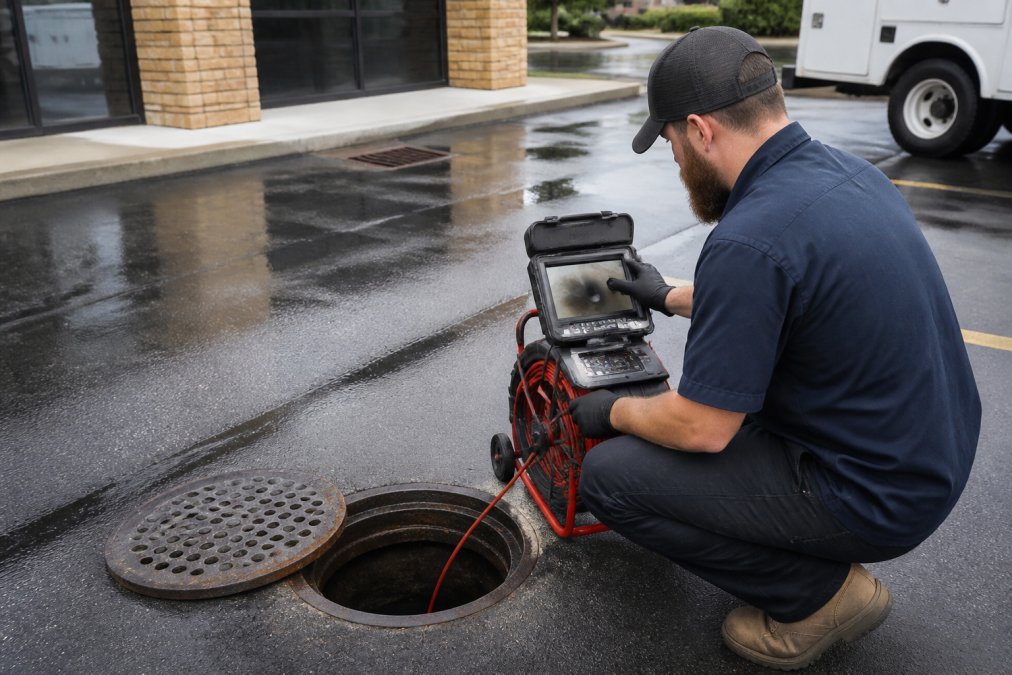
The entire process is non-invasive. No excavation, traffic disruption, or landscape damage means operations continue almost uninterrupted. CIPP epoxy lining works on clay pipes, PVC, concrete, and cast iron, with a lifespan of 50+ years. All Sewer and Plumbing Services, LLC uses advanced CIPP technology.
Commercial Sewer Line Replacement Timeline and Scheduling
Understanding the timeline for commercial sewer line replacement helps you plan operations and minimize disruption.
Typical Timeline Breakdown:
Pre-Work Assessment (1-2 days), Video inspection, site evaluation, and access point preparation.
Cleaning and Preparation (1 day), Debris removal and hydro-jetting.
CIPP Lining Installation (1 day), The saturated epoxy tube is inserted and positioned.
Epoxy Curing (24-48 hours), The epoxy hardens; the sewer line is out of service during this period.
Final Inspection (1 day), Camera verification and testing confirm completion.
Total Project Duration: 4-7 days, Most commercial sewer repairs using trenchless methods are completed within a week, compared to 3-4 weeks or longer for traditional excavation.
Scheduling Considerations:
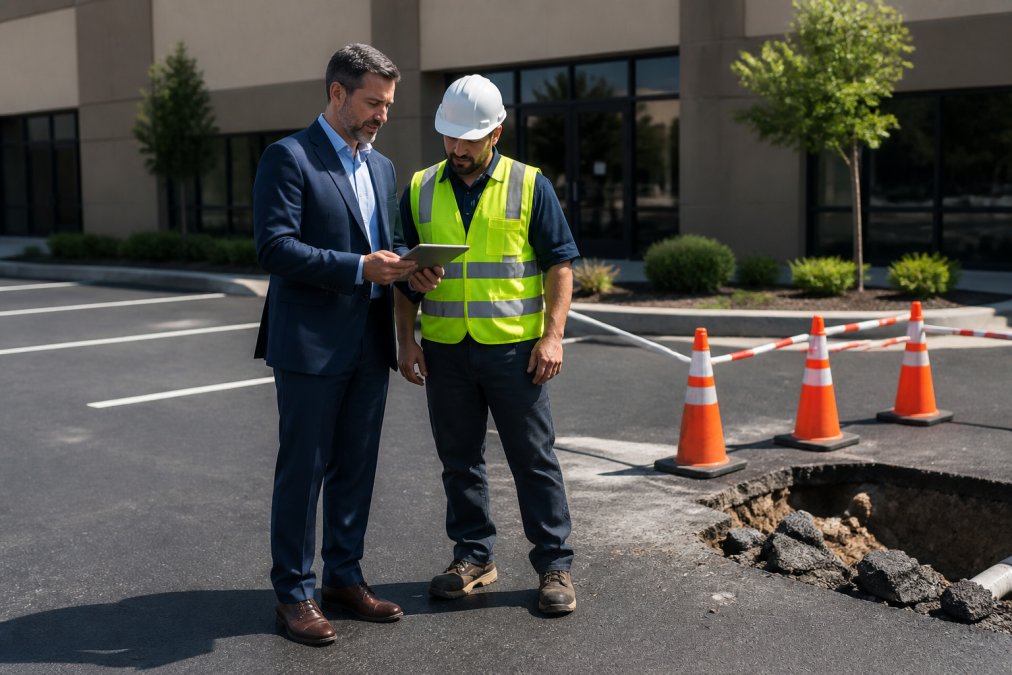
Schedule the curing phase during nights or weekends when business operations are minimal. Weather impacts timeline too, cold temperatures extend curing time. For properties with multiple tenants, coordinate with lease agreements and occupancy schedules.
All Sewer and Plumbing Services, LLC works with your operational calendar to find the optimal repair window.
Emergency vs. Scheduled Maintenance: Which Approach Protects Your Business
The difference between emergency repairs and scheduled maintenance is the difference between crisis management and business continuity planning.
Emergency Repairs happen when a sewer line fails completely. The problem is urgent and non-negotiable. Emergency repairs are expensive because you’re paying premium rates for rapid response, and the repair scope is often larger than it would have been if caught earlier. For businesses, emergency repairs mean immediate operational shutdown with no time to plan, no opportunity to schedule around business hours, and damage extending beyond the repair cost.
Scheduled Maintenance is proactive. You identify problems through video inspection before they become failures and schedule repairs during windows that minimize operational impact. Scheduled maintenance costs less because problems are smaller, a crack caught early costs far less than a collapsed section discovered during an emergency.
For commercial properties, the math is simple: a scheduled repair taking 5 days causes minimal revenue loss, while the same problem discovered as an emergency might require 3 weeks of shutdown.
All Sewer and Plumbing Services, LLC recommends video inspections every 3-5 years for commercial properties with older infrastructure to catch problems while they’re still manageable.
Preventative Maintenance and System Monitoring to Avoid Shutdown
Preventative maintenance is the most cost-effective strategy for avoiding sewer emergencies.
Video Pipe Inspection is the foundation of preventative maintenance. Inspections should happen every 3-5 years for commercial properties with older infrastructure, every 5-7 years for newer systems in good condition, annually for properties with a history of problems, and before purchasing a property.
Debris Removal and Hydro-Jetting prevent blockages before they stop flow. For commercial kitchens and food service facilities, quarterly hydro-jetting is standard practice.
System Monitoring tracks performance metrics including flow rates, backup frequency, fixture performance, and odors. Patterns in these metrics signal emerging problems, a gradual increase in backup frequency suggests root intrusion or debris accumulation.
Root Control prevents root intrusion before it damages pipes through barriers and preventative treatments.
Documentation and Trending reveals patterns that predict problems. A crack that grows annually will eventually fail; catching that trend means you schedule repair before failure.
A property that implements preventative maintenance avoids emergency repairs, maintains consistent operations, and avoids the costs and disruptions that come with failures. All Sewer and Plumbing Services, LLC provides comprehensive system monitoring and preventative maintenance programs designed for commercial and municipal clients.
Temporary Bypass Solutions and Operational Continuity Planning
When sewer repairs are necessary, temporary bypass solutions keep your business operational during the work.
Portable Restroom Facilities provide essential services when main fixtures are out of service. Portable units should be positioned for convenient access and regular servicing.
Temporary Water Rerouting diverts flow away from the damaged section, allowing continued use of fixtures in unaffected areas.
Grease Trap Bypass Systems are essential for food service facilities, preventing grease and solids from entering the damaged line while repairs proceed.
Operational Continuity Planning should happen before repairs begin: identify critical fixtures and operations, determine acceptable downtime windows, arrange backup facilities if needed, communicate the timeline to tenants and customers, and establish contingency plans if work extends beyond schedule.
Communication is essential. Tenants and customers need to know what’s happening, how long it will take, and what services remain available.
Insurance and Liability Documentation protects your business during repairs. Ensure your insurance covers business interruption losses and document the repair scope, timeline, and temporary solutions in writing.
All Sewer and Plumbing Services, LLC coordinates temporary solutions as part of comprehensive repair planning.
Conclusion
Minimizing business downtime during sewer repairs comes down to three strategic choices: use trenchless technology instead of excavation, schedule repairs proactively instead of reacting to emergencies, and plan operational continuity before the work begins.
Trenchless methods like CIPP epoxy pipe lining eliminate the excavation that causes extended disruptions. Proactive maintenance catches problems early, when repairs are smaller and faster. Operational continuity planning ensures your business keeps running while your sewer system is restored.
The cost of a sewer failure extends far beyond the repair bill. Lost revenue, displaced customers, and reputation damage compound quickly. All Sewer and Plumbing Services, LLC specializes in trenchless sewer repair and CIPP epoxy pipe lining that protects your landscape, preserves your operations, and restores your sewer system to optimal functioning order. With over two decades of experience serving commercial, residential, and municipal clients, we understand that for your business, downtime is the real expense.
EPA guidance on wastewater system maintenance
ASTM standards for pipeline rehabilitation
National Association of Plumbing-Heating-Cooling Contractors best practices
Frequently Asked Questions
Q: How does trenchless sewer repair reduce business downtime?
A: Trenchless technology like CIPP epoxy pipe lining and pipe bursting eliminates the need for extensive excavation, which means your business stays operational during repairs. Traditional methods require digging trenches that disrupt parking, access, and utility lines. Trenchless methods are completed in days rather than weeks, allowing you to maintain normal operations, keep customer access open, and avoid revenue loss from closures or service interruptions.
Q: What is the typical timeline for commercial sewer line replacement with trenchless methods?
A: Most trenchless sewer repairs are completed within a few days, depending on pipe length and damage severity. Initial video pipe inspection takes a few hours, followed by pipe cleaning and lining installation. This compressed timeline means your business experiences minimal disruption compared to traditional excavation, which can take 2-3 weeks or longer. Off-peak scheduling options allow work to happen during closed hours or low-traffic periods, further protecting your operations.
Q: Can my business stay open during a sewer line replacement?
A: Yes. With trenchless technology, your business can remain operational. Unlike traditional excavation that requires property closure, trenchless methods work from small access points and don’t disrupt your facility’s layout or customer access. Your tenants or customers experience minimal interruption to water service or facility use. This is especially valuable for retail, restaurants, offices, and multi-tenant properties where downtime directly impacts revenue and tenant satisfaction.
Q: How long does CIPP epoxy pipe lining actually last?
A: CIPP epoxy pipe lining is designed to last 50+ years when installed correctly. The cured epoxy creates a new structural pipe inside the existing damaged pipe, restoring full integrity without replacing the original infrastructure. This durability makes it a permanent solution rather than a temporary fix like snaking, which only clears blockages temporarily. The long lifespan protects your capital investment and eliminates repeat repair costs for the same section of pipe.
This article was written using GrandRanker
FREE Estimates
How can we help you?

our services

contact our team today
Contact a service professional at All Sewer and Plumbing Services LLC today. We are here to answer all your questions.
OPEN 24 hours 7 days a week