Trenchless Sewer Repair for Historic Homes: 2026 Guide

Table of Contents
- Why Historic Homes Need a Different Sewer Repair Approach
- Trenchless Sewer Repair vs. Traditional Excavation for Older Properties
- How Long Does CIPP Pipe Lining Last in a Historic Home
- Frequently Asked Questions
Last Updated: September 8, 2026
Why Historic Homes Need a Different Sewer Repair Approach
Trenchless sewer repair for historical homes requires a specialized understanding of legacy materials and preservation constraints. At All Sewer and Plumbing Services, LLC, we’ve spent over two decades restoring sewer lines in properties built long before modern PVC piping standards existed.
Most houses built before 1970 feature original clay or cast iron pipes that have had decades to settle and accumulate mineral buildup. Traditional excavation can destabilize the very foundation that has supported the structure for a century or more.
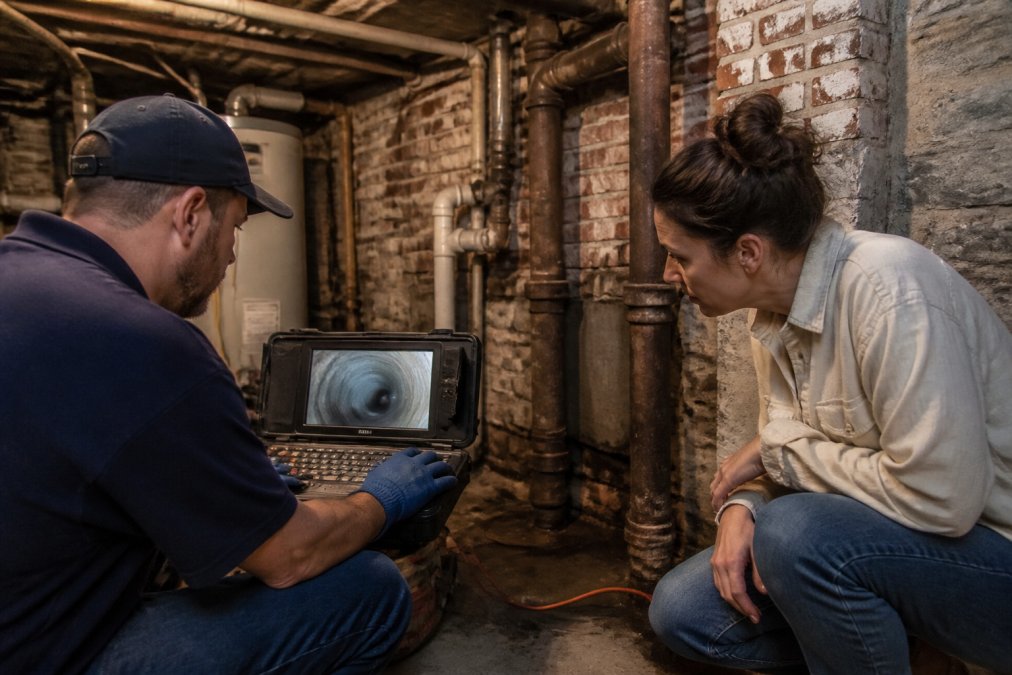
Digging a massive trench disturbs settled soil, causing cracks in walls, shifted door frames, and damaged walkways. Trenchless sewer repair avoids this by accessing the pipe through small entry points rather than open-cut excavation.
Trenchless Sewer Repair vs. Traditional Excavation for Older Properties
Traditional excavation requires digging along the entire failing pipe, removing mature landscaping, destroying original brick walkways, and potentially undermining foundation walls. Trenchless methods access the line through two small pits, leaving the rest untouched.
| Factor | Traditional Excavation | Trenchless Sewer Repair |
|---|---|---|
| Landscaping impact | Complete removal along trench line | Minimal disturbance at access points |
| Timeline | 3-5 days typical | Often completed in 1 day |
| Structural risk | Potential foundation settlement | No disturbance to surrounding soil |
For sewer line replacement for homes built before 1970, the preservation argument alone often decides the matter. When a home is subject to historic preservation easements, excavation may be severely restricted or require extensive review before any ground disturbance begins. The National Park Service’s technical preservation guidance notes that minimizing ground disturbance is a primary consideration when working on historic properties, as original grading and soil composition contribute to structural integrity.
Trenchless sewer repair may appear to have a higher initial cost, but factoring in landscape restoration, hardscaping replacement, and the extended timeline of excavation can narrow the gap considerably. For current pricing, please schedule an assessment.
How Long Does CIPP Pipe Lining Last in a Historic Home
Cured-in-place pipe (CIPP) lining is the most common trenchless method for historic properties because it preserves the original pipe structure. Properly installed liners routinely function for decades. home repair costs.
Historic homes present unique conditions that affect liner longevity. Clay pipes with minor offset joints can be lined successfully, but pipes with severe collapse or extensive root intrusion may require assessment standards from the American Society of Civil Engineers before lining is recommended. The liner essentially becomes a pipe within a pipe, meaning the structural integrity of the original line still matters for long-term performance.
Do not assume every sewer line in a historic home qualifies for CIPP lining. Pipes with significant belly (sagging), severe crushing, or advanced deterioration may need pipe bursting or full replacement instead. A sewer camera inspection is the only way to determine whether lining will provide a lasting solution.
For homeowners concerned about longevity, the maintenance pattern shifts after lining. The smooth epoxy interior resists the buildup that typically leads to clogs in older pipes, reducing the frequency of hydro-jetting and snaking. Most manufacturers provide warranties that reflect confidence in the product’s durability, and the EPA’s information on trenchless rehabilitation technologies documents CIPP as a proven method for extending the service life of existing sewer infrastructure.
CIPP lining can provide a durable solution when the original pipe is structurally sound and the installation is performed by experienced technicians. The key variable is honest assessment of the existing line before committing to the method.
Annual sewer scope inspections catch minor issues early, and the smooth liner surface means fewer root intrusion opportunities. This reduced maintenance burden is why historic property owners increasingly choose trenchless methods.
Schedule a sewer camera inspection every 12 to 18 months after lining a historic home’s sewer line. The early warning system catches small cracks in the liner or new root activity at the pipe ends before they compromise the full rehabilitation.
Trenchless methods typically receive faster approval under historic preservation easements because they do not alter the site’s character. This combination makes trenchless sewer repair the clear choice for historic properties.
Historic homes demand repair approaches that respect both their structural systems and regulatory protections. Trenchless sewer repair preserves original materials while providing a modern, durable solution. At All Sewer and Plumbing Services, LLC, our team brings over two decades of experience with CIPP epoxy pipe lining and pipe bursting technologies. We provide free estimates and work with local realtors and property managers to ensure your historic home’s sewer system is restored without compromising what makes it special. Schedule your assessment now and see how trenchless technology protects your investment.
Frequently Asked Questions
Is trenchless sewer repair compatible with clay or cast iron pipes in older homes?
Yes. CIPP lining and pipe bursting are specifically designed to rehabilitate the clay, cast iron, and Orangeburg pipes commonly found in homes built before 1970. A sewer camera inspection first confirms the pipe’s condition. The epoxy liner bonds to the interior of these materials, creating a new structural pipe. Pipe bursting works well when the existing pipe is too damaged for lining. Both methods avoid the need to dig up your foundation or landscape.
What are the downsides of trenchless sewer repair for historic properties?
The main limitation is access. Technicians need a clean entry point, usually a cleanout or small excavation pit, to insert the liner or bursting head. Severe collapses or misaligned pipes may not qualify for lining, though pipe bursting can handle many of these cases. Trenchless repair addresses the root cause permanently rather than providing a temporary fix. For pricing information, please schedule an assessment.
FREE Estimates
How can we help you?

our services



contact our team today
Contact a service professional at All Sewer and Plumbing Services LLC today. We are here to answer all your questions.
OPEN 24 hours 7 days a week