7 Pipe Corrosion Signs You Should Never Ignore
A sewer line rarely fails without leaving clues. The problem is that many pipe corrosion signs appear gradually, then become urgent when a drain backs up, wastewater reaches the property, or a section of pipe collapses. For Denver-area homes and facilities with aging cast iron, galvanized steel, or metal sewer piping, recognizing those clues early can mean the difference between a targeted trenchless repair and a disruptive emergency replacement.
Corrosion is not limited to one type of building or one kind of pipe. It can affect older residential properties, commercial kitchens, hospitals, schools, hotels, industrial sites, and municipal systems. The right response depends on the pipe material, the location of the damage, how much of the line is affected, and whether the pipe still has enough structural strength for rehabilitation.
1. Recurring Slow Drains or Backups
A single slow sink may be a localized clog. Slow drainage in several fixtures, recurring main-line backups, or toilets that gurgle when other fixtures drain point to a larger issue farther down the system. Corrosion can create a rough, scaled interior surface that catches debris, grease, paper, and solids. Over time, the usable diameter of the line becomes smaller even if the pipe looks intact from the outside.
Drain cleaning may restore flow temporarily, and it is often the appropriate first step. But when the same backup returns, the line needs more than another surface-level clearing. A video sewer inspection can identify whether the restriction is caused by buildup, roots, cracks, a separated joint, or corroded pipe walls.
2. Rust-Colored Water, Stains, or Metal Flakes
Rust-colored water, reddish-brown staining around fixtures, or visible metallic flakes can indicate corrosion in water supply piping. These symptoms should be addressed promptly because deteriorating supply lines can develop leaks or restrict water flow.
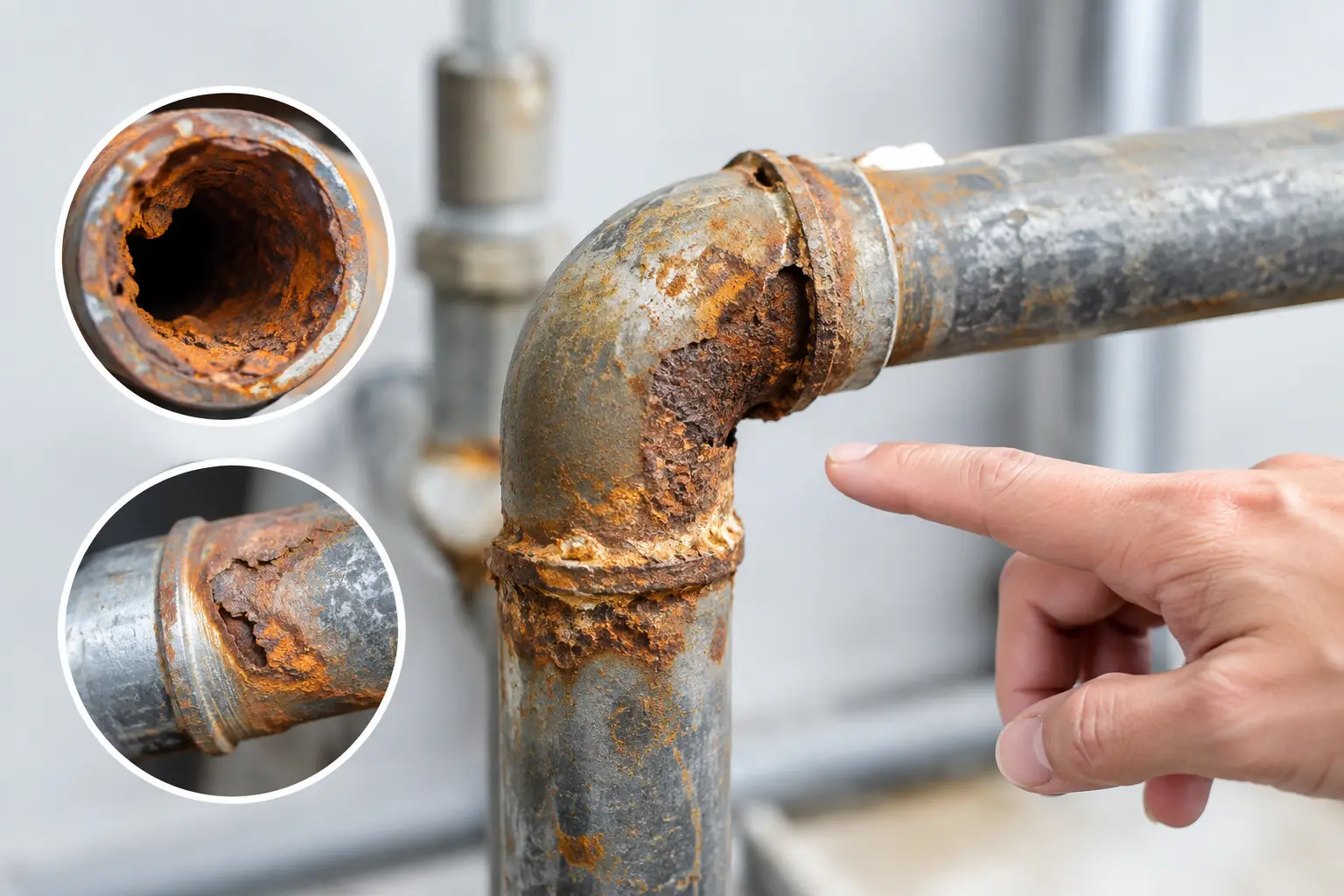
For sewer piping, the evidence is usually different. Cast iron sewer lines may develop orange-brown rust on exposed sections, especially near joints, hangers, cleanouts, or areas with chronic moisture. A rusty exterior does not automatically mean the entire line has failed. Still, it is a reason to inspect the pipe’s condition rather than assume the issue is cosmetic.
3. Sewage Odors That Keep Returning
A persistent sewer odor is not normal, particularly when traps contain water and drains appear to be working. Corrosion can create pinholes, cracks, and open joints that allow sewer gases to escape before wastewater reaches the main line. In commercial and multifamily properties, odors may surface in utility rooms, lower-level restrooms, kitchen areas, hallways, or near floor drains.
Do not mask the smell and wait. Sewer gas can signal a damaged line, a failed vent connection, or a drainage issue that requires diagnosis. Finding the source quickly protects indoor air quality, helps prevent operational disruption, and reduces the risk of wastewater leaks that can damage finishes or equipment.
4. Wet Areas, Mold, or Unexpected Foundation Moisture
A corroded underground pipe can leak for months before it causes a full backup. Watch for damp spots on floors, unexplained mildew, mold growth, water-stained walls, unusually lush patches of grass, or soft soil near the sewer route. Outside, a low spot in the yard or pavement may develop as leaking water erodes supporting soil around the pipe.
Inside a building, moisture around a slab, basement, crawlspace, or mechanical room deserves immediate attention. The source may be a plumbing leak rather than a sewer line, but the distinction matters. An accurate inspection prevents unnecessary excavation and ensures the repair addresses the actual failure.
5. A Sudden Increase in Drain Noise
Gurgling, bubbling, or burping sounds from toilets and drains occur when air cannot move properly through the drainage system. Partial blockages caused by scale, corrosion debris, root intrusion, or a pipe section that has begun to deform can disrupt normal flow and pressure.
These noises are especially concerning when paired with slow drains or sewage odors. A building may still be usable at this stage, but continued use can push a partial obstruction into a complete backup. For restaurants, hotels, schools, and healthcare facilities, early inspection is often the best way to avoid an interruption that affects customers, occupants, or daily operations.
6. Frequent Leaks Around Exposed Pipe Sections
Pinhole leaks, repeated drips, and patches on the same aging pipe are clear warning signs. Corrosion weakens metal from the inside and outside, so repairing one visible hole does not necessarily solve the broader problem. The surrounding pipe may be thin, brittle, and close to failing as well.
This is where material and pipe location matter. A short exposed section may be practical to replace conventionally. A long section beneath landscaping, a driveway, a finished basement, or a commercial floor may be a strong candidate for trenchless restoration. Cured-in-place pipe lining creates a new, jointless pipe within an existing host pipe when the original line is stable enough to support the process. If the pipe is collapsed or severely misaligned, pipe bursting or replacement may be the better option.
7. An Older Cast Iron or Galvanized Pipe System
Age alone is not a diagnosis, but it changes the risk calculation. Many older Colorado properties still have cast iron sewer laterals or galvanized steel plumbing. These materials can provide long service lives, yet they are vulnerable to internal scaling, soil conditions, moisture, and years of chemical or wastewater exposure.
If the property has a history of drain cleaning, previous root intrusion, sewer odor, or intermittent backups, waiting for a complete failure is rarely the cost-effective choice. A camera inspection provides a direct view of the pipe interior, including scale buildup, channeling in the bottom of cast iron pipe, cracks, offsets, root entry points, and standing water caused by a sagging section.
Why Pipe Corrosion Develops
Corrosion is an electrochemical process, but the practical causes are familiar. Moisture, oxygen, mineral content, soil chemistry, wastewater gases, and age all play a role. In cast iron sewer pipe, hydrogen sulfide gases can contribute to deterioration above the wastewater flow line. That means a pipe can look relatively clear at the bottom while the upper walls and crown are weakening.
Drain cleaners and harsh chemicals can also be a factor, particularly when they are used repeatedly to manage a recurring problem. They may not be the original cause of corrosion, but they can worsen vulnerable piping and do not correct a structural defect. For commercial properties, grease, food waste, high-volume use, and cleaning practices can accelerate buildup and expose weaknesses in an aging line.
Colorado’s freeze-thaw conditions can add another complication where shallow or poorly protected exterior piping is involved. Ground movement and temperature changes can stress joints and damaged sections, allowing leaks and corrosion-related failures to progress.
What a Professional Inspection Should Determine
The most useful next step is not guessing from a stain or a slow drain. It is determining the pipe’s actual condition and the scope of the repair. A professional video inspection should establish where the damage is located, whether the pipe has structural integrity, how much of the line is affected, and whether roots, offsets, bellies, or obstructions are contributing to the problem.
For a homeowner, that information supports a practical repair decision. For a property manager or facilities leader, it helps with scheduling, budgeting, tenant communication, and risk management. It also allows the contractor to select the least disruptive method that will provide a durable result.
All Sewer and Plumbing Services uses diagnostic camera inspections and trenchless methods to evaluate damaged sewer lines without treating excavation as the default answer. When conditions allow, epoxy pipe lining can restore a failing line while preserving landscaping, hardscapes, floors, and customer-facing areas. When lining is not appropriate, trenchless pipe bursting or targeted replacement can provide a dependable path forward.
Do Not Wait for a Collapse
Pipe corrosion does not always require immediate full replacement, but it does require an informed response. Ignoring early symptoms can lead to a blocked or collapsed sewer line, property damage, sanitation concerns, and a repair that must be completed on an emergency timeline.
If recurring drain issues, sewer odors, wet areas, or visible rust are showing up at your property, schedule an inspection before the line makes the decision for you. A clear camera diagnosis gives you options, protects the property, and puts the repair plan on your schedule rather than in the middle of a backup.
FREE Estimates
How can we help you?

our services


contact our team today
Contact a service professional at All Sewer and Plumbing Services LLC today. We are here to answer all your questions.
OPEN 24 hours 7 days a week