How to Clear Grease Buildup From Kitchen Drains
A kitchen sink that drains slowly after every meal is rarely a mystery. Cooking grease, oil, butter, sauces, and food residue can coat the inside of the drain line a little at a time until water has only a narrow path left to travel. Knowing how to clear grease buildup early can restore normal drainage and help prevent a complete backup into your sink, dishwasher, or commercial kitchen.
Grease clogs are especially common in Denver-area homes, restaurants, schools, and facilities where kitchen drains handle frequent use. The right response depends on where the grease has collected and how severe the restriction has become. A light buildup near the sink is often manageable with basic cleaning. A recurring or widespread blockage requires professional diagnostic equipment and drain cleaning that removes the material rather than simply punching a temporary hole through it.
Why Grease Buildup Causes Drain Problems
Hot grease looks harmless when it goes down the sink because it is liquid at that moment. Once it reaches cooler pipes, it begins to thicken and stick to the pipe walls. Soap residue and food particles adhere to that coating, creating a dense, sticky layer that steadily reduces the pipe’s inside diameter.
This is not limited to obvious frying oil. Bacon drippings, meat fat, salad dressing, gravy, mayonnaise, dairy products, and oily sauces all contribute. Even a garbage disposal cannot solve the problem. It breaks food into smaller pieces, but those particles can become trapped in grease farther down the line.
Over time, grease may collect in the P-trap below the sink, the branch drain serving the kitchen, or the larger line leading to the main sewer. In commercial settings, a poorly maintained grease interceptor can allow fats, oils, and grease to move into downstream piping. The farther the blockage travels, the less likely a household remedy will provide a dependable fix.
How to Clear Grease Buildup Safely
Start by stopping the habits that are feeding the clog. Do not pour more grease, oil, or greasy food scraps into the sink while drainage is slow. Wipe pans, plates, and utensils with a paper towel before washing them, and place cooled cooking grease in a sealed container for disposal in the trash.
For a mildly slow kitchen drain, remove any standing water from the sink and clean the visible debris from the strainer. Then run hot tap water for several minutes while using a small amount of dish soap. Dish soap can help loosen fresh oil residue, while the water carries it through the line. This approach works best on minor buildup and should not be treated as a solution for a drain that is already fully blocked.
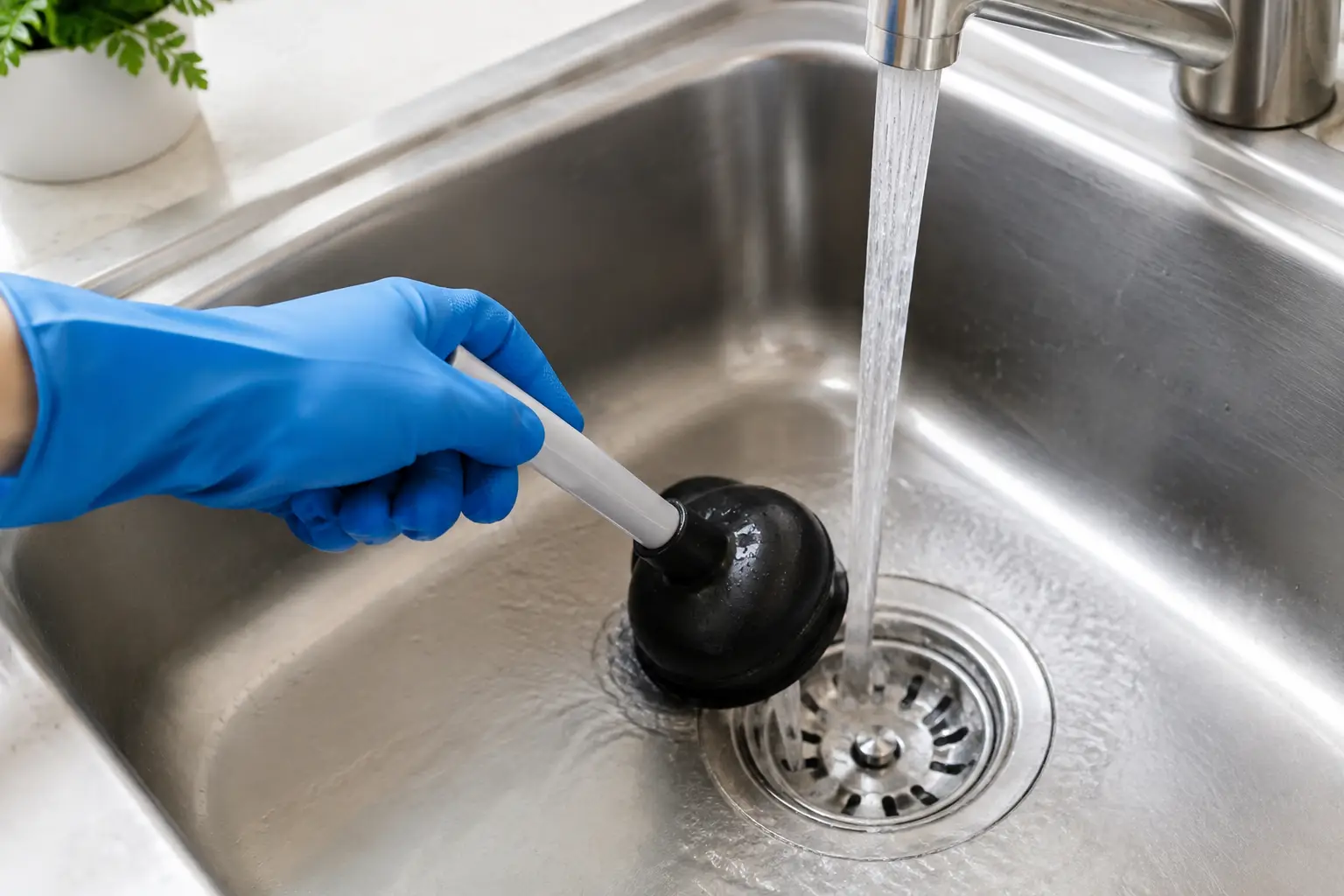
If the sink remains slow, a sink plunger can sometimes dislodge a soft restriction close to the fixture. Cover the second basin if you have a double sink, add enough water to cover the plunger cup, and make several firm plunges. Avoid excessive force on older plumbing or loose fittings. If water backs up into the other basin or rises instead of draining, stop and move to a more thorough inspection.
You may also clean the P-trap if you are comfortable working beneath the sink. Place a bucket underneath, carefully loosen the slip nuts, and remove the trap. Grease and food debris often accumulate in this curved section. Clean it completely, inspect the washers, reinstall it securely, and run water while checking for leaks.
What Not to Put Down a Greasy Drain
Chemical drain cleaners are a poor choice for grease-related blockages. Many are highly caustic and can damage certain pipes, fittings, seals, and fixtures. They may also create a safety hazard for anyone who later opens the drain or uses professional cleaning equipment. More importantly, chemicals often fail to remove the thick grease layer along the full length of the pipe.
Boiling water is another common recommendation, but it has limits. It can help liquefy a small amount of fresh grease near the sink. It can also push melted grease farther into the plumbing, where it cools and hardens again. Boiling water may damage porcelain fixtures, PVC piping, or glued joints depending on the system. Hot tap water is the safer option for basic maintenance, not a cure for a developed clog.
Baking soda and vinegar are generally safe for routine deodorizing, but they do not have the strength to clear heavy grease deposits. If a drain is repeatedly slow, relying on home mixtures can delay the service needed to prevent a larger backup.
Signs the Grease Clog Is Beyond a DIY Fix
A single slow sink may indicate a local kitchen line restriction. Several slow fixtures, sewage odors, gurgling drains, or water backing up in a lower-level drain point to a more serious issue. Those symptoms can mean the blockage has reached a larger branch line or the main sewer line.
Call for professional drain cleaning when the sink clogs again shortly after plunging, water backs up into another fixture, or the blockage returns despite careful grease disposal. Restaurants and commercial kitchens should act quickly when drains slow down, since interrupted kitchen operations, sanitation concerns, and grease interceptor issues can escalate into costly downtime.
A qualified plumbing contractor can use a video sewer inspection to locate the restriction and determine whether grease is the only concern. Camera inspection is valuable because grease buildup can hide other issues, including scale, root intrusion, pipe offsets, cracks, or a sagging section of sewer line. Cleaning a line without identifying the underlying condition may leave the property facing another backup sooner than expected.
Professional Drain Cleaning Removes More Than a Path Through the Clog
When grease has coated a substantial length of pipe, professional mechanical cleaning or hydro jetting may be the best option. The method depends on the pipe material, pipe condition, location of the blockage, and the type of debris present.
Drain cabling can break through certain obstructions and restore flow. However, it may not fully remove a thick grease coating from the pipe walls. Hydro jetting uses controlled high-pressure water to scour grease, sludge, food residue, and other buildup from inside the line. When performed by trained technicians after evaluating the pipe, it can provide a more complete cleaning than simply opening a narrow channel through the blockage.
For aging or damaged sewer lines, the goal is not just to clear the drain today. It is to determine whether the pipe can reliably remain in service. If inspection reveals structural defects or repeated intrusion, trenchless sewer repair options such as epoxy pipe lining or pipe bursting may restore the system with far less disruption than conventional excavation. This is particularly valuable for properties with finished landscaping, parking areas, historic features, or active business operations.
Prevent Grease From Building Up Again
Prevention is less expensive and less disruptive than emergency drain service. At home, scrape dishes into the trash or compost container before rinsing. Collect cooking oils and fats in a can or heat-safe container, let them cool, and throw them away rather than pouring them into the sink. Run the dishwasher only after removing heavy food and grease residue from plates.
For commercial kitchens, grease control needs to be part of regular facility maintenance. Train staff on proper disposal, schedule grease interceptor service on the correct interval, and address slow drains before they become an after-hours emergency. The right maintenance schedule depends on kitchen volume, menu type, plumbing layout, and local requirements.
All Sewer and Plumbing Services, LLC uses advanced diagnostic and drain-cleaning methods to identify where the restriction is located and recommend the most effective repair path. That means property owners and facility managers can make decisions based on the actual condition of the line, not guesswork.
If your kitchen drain is slowing down, treat it as an early warning rather than an inconvenience. Removing grease before it becomes a complete obstruction protects your plumbing system, reduces the risk of water damage, and keeps your home or operation moving without an avoidable backup.
FREE Estimates
How can we help you?

our services


contact our team today
Contact a service professional at All Sewer and Plumbing Services LLC today. We are here to answer all your questions.
OPEN 24 hours 7 days a week