How to Clear Grease Clogs Without Pipe Damage
A kitchen sink that drains slowly after dinner is rarely just a minor inconvenience. Grease can coat the inside of a drain line, capture food particles and soap residue, and gradually reduce a pipe’s usable diameter. Knowing how to clear grease clogs safely can prevent a messy backup, but the wrong approach can push the blockage deeper or damage older plumbing.
For Denver homeowners, restaurants, property managers, and facilities teams, the goal is not simply to get water moving for the moment. It is to remove the buildup, identify whether the line has a larger issue, and prevent the same drain from becoming an emergency again.
Why grease clogs form in kitchen drains
Cooking oils, meat drippings, butter, sauces, and greasy food residue may look liquid when they go down the drain. As they cool, they thicken and stick to the pipe wall. Dish soap can temporarily break grease into smaller droplets, but it does not make grease disappear. Once that material reaches a cooler section of pipe, it can solidify and begin collecting everything else flowing through the drain.
Food scraps, coffee grounds, rice, flour, eggshells, and fibrous vegetables make the problem worse. In garbage-disposal drains, grease often combines with ground food waste and forms a dense paste inside the trap arm or branch line. In commercial kitchens, repeated grease discharge can build up farther down the line, including in shared building drains and grease interceptors.
A slow kitchen drain is the most common early warning sign. Gurgling, foul odors, water backing up into a second sink basin, or a dishwasher that leaves standing water can indicate that the restriction is becoming more significant. If multiple fixtures are draining slowly, the issue may extend beyond the kitchen line.
Safe first steps to clear grease clogs
Before using any drain-cleaning method, stop running water into a drain that is already backing up. Continuing to use the sink, dishwasher, or garbage disposal can overflow the cabinet area or force contaminated water into nearby fixtures.
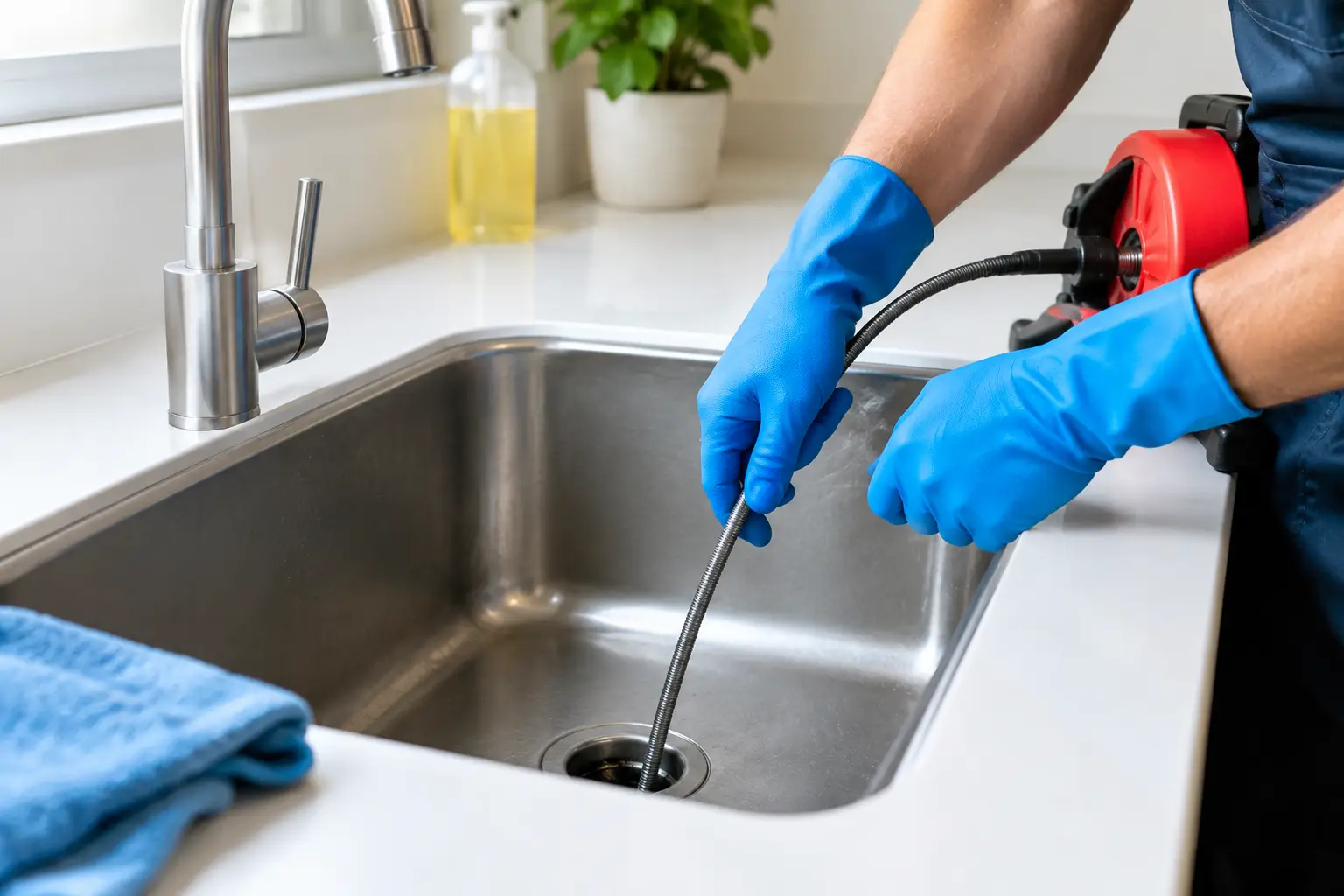
If the drain is slow but still flowing, start with the simplest mechanical options. Remove the sink stopper or disposal splash guard if accessible, then clear visible debris from the opening. A small hand auger or drain snake can often break apart food buildup close to the sink. Work carefully around garbage disposals and do not place hands or tools into a unit unless power has been disconnected at the breaker.
Warm water can help loosen fresh grease near the fixture, especially when followed by a modest amount of dish soap. Avoid pouring boiling water into a fully blocked drain or repeatedly into older plastic piping. Boiling water can soften some PVC connections, and it may simply sit above a solid blockage until it cools.
A plunger may help if the restriction is close to the sink trap. For a double-bowl sink, seal the second drain opening before plunging so pressure reaches the clog instead of escaping through the other basin. Use controlled strokes rather than aggressive force, particularly in older homes where worn fittings may be more vulnerable.
Do not rely on chemical drain cleaners as a grease-clog solution. Caustic products can generate heat, damage certain pipe materials, weaken seals, and create a hazardous condition for anyone who later opens the drain or uses a cable machine. They also rarely remove heavy grease buildup from the full length of a line.
When a simple clog is not simple
A drain that slows again within days or weeks is telling you that grease may not be the only issue. Recurrent backups can result from buildup farther down the branch line, a sagging pipe that holds waste, deteriorated cast iron, root intrusion near an exterior sewer connection, or a damaged main sewer line.
This is especially relevant in older Denver-area properties. Aging drain systems may have rough interior pipe surfaces that trap grease more easily than newer piping. In commercial buildings, a kitchen line may also be undersized for the volume of use, improperly maintained, or connected to a grease interceptor that needs service.
Warning signs that call for professional drain cleaning include water backing up into another fixture, sewage odors, repeated overflow from a floor drain, slow drains throughout the building, or a clog that returns after plunging or snaking. Restaurants, hotels, schools, hospitals, and multifamily properties should treat recurring kitchen drainage problems as an operational risk, not a minor maintenance item.
Professional methods for clear grease clogs
Professional drain cleaning begins with determining where the blockage is and what it contains. A trained technician may use a cable machine to open a localized obstruction, but grease-heavy lines often need more than a hole punched through the center of the buildup.
Hydro jetting uses high-pressure water delivered through a specialized hose and nozzle to scour grease, sludge, scale, and debris from the pipe wall. When performed by an experienced drain specialist, it can clean a much larger portion of the line than a basic cable. It is often an effective choice for commercial kitchen drains and recurring residential grease clogs.
The right method depends on pipe material, pipe condition, line diameter, and the nature of the obstruction. Hydro jetting is not automatically appropriate for every older or compromised pipe. A video sewer inspection gives the technician a direct view of the interior condition, helping confirm whether the line is coated with grease, cracked, offset, root-damaged, or holding standing water because of a low spot.
That diagnostic step matters. Clearing a blockage without addressing a broken pipe or severe buildup may restore flow temporarily, but it does not protect the property from the next backup. All Sewer and Plumbing Services uses advanced inspection and drain-cleaning equipment to identify the actual source of recurring drain problems and recommend the least disruptive repair path.
Preventing grease buildup after the drain is open
The best prevention is simple: keep cooking grease out of the drain. Let oil and drippings cool in a heat-safe container, then dispose of them in the trash according to local requirements. Wipe greasy pans and plates with a paper towel before washing them, especially after cooking bacon, ground beef, fried foods, or heavy sauces.
Garbage disposals are not designed to process large amounts of grease or dense food waste. Use them sparingly, and run cold water while the disposal operates so small particles move through the line. Cold water helps grease remain more solid as it travels, but it is not a solution for grease poured directly into the drain.
For restaurants and commercial kitchens, grease interceptor maintenance should follow the facility’s actual volume of use rather than a calendar alone. A busy kitchen may require more frequent cleaning than a low-volume operation. Staff training also matters: one shift disposing of fryer oil or food scraps improperly can undo routine maintenance quickly.
When pipe repair becomes the practical answer
If a camera inspection shows cracked, collapsed, root-intruded, or severely deteriorated pipe, repeated drain cleaning may become an expensive cycle. The line may need repair or replacement to restore reliable drainage.
Trenchless solutions can be a strong option when the damaged pipe runs beneath landscaping, driveways, finished floors, parking areas, or customer-facing spaces. CIPP epoxy pipe lining creates a new pipe within the existing line, while pipe bursting replaces a failed pipe underground with far less excavation than conventional digging in many situations.
The appropriate solution depends on access, pipe condition, code requirements, and the extent of damage. A professional inspection provides the information needed to choose between cleaning, localized repair, trenchless rehabilitation, or replacement without guessing.
A grease clog should not have to become a flooded kitchen, a business interruption, or a sewer emergency. Address slow drainage early, avoid chemical shortcuts, and get the line inspected when backups return. Prompt, informed action keeps your plumbing working and protects the property around it.
FREE Estimates
How can we help you?

our services


contact our team today
Contact a service professional at All Sewer and Plumbing Services LLC today. We are here to answer all your questions.
OPEN 24 hours 7 days a week