Can CIPP Line Cast Iron? What Owners Need
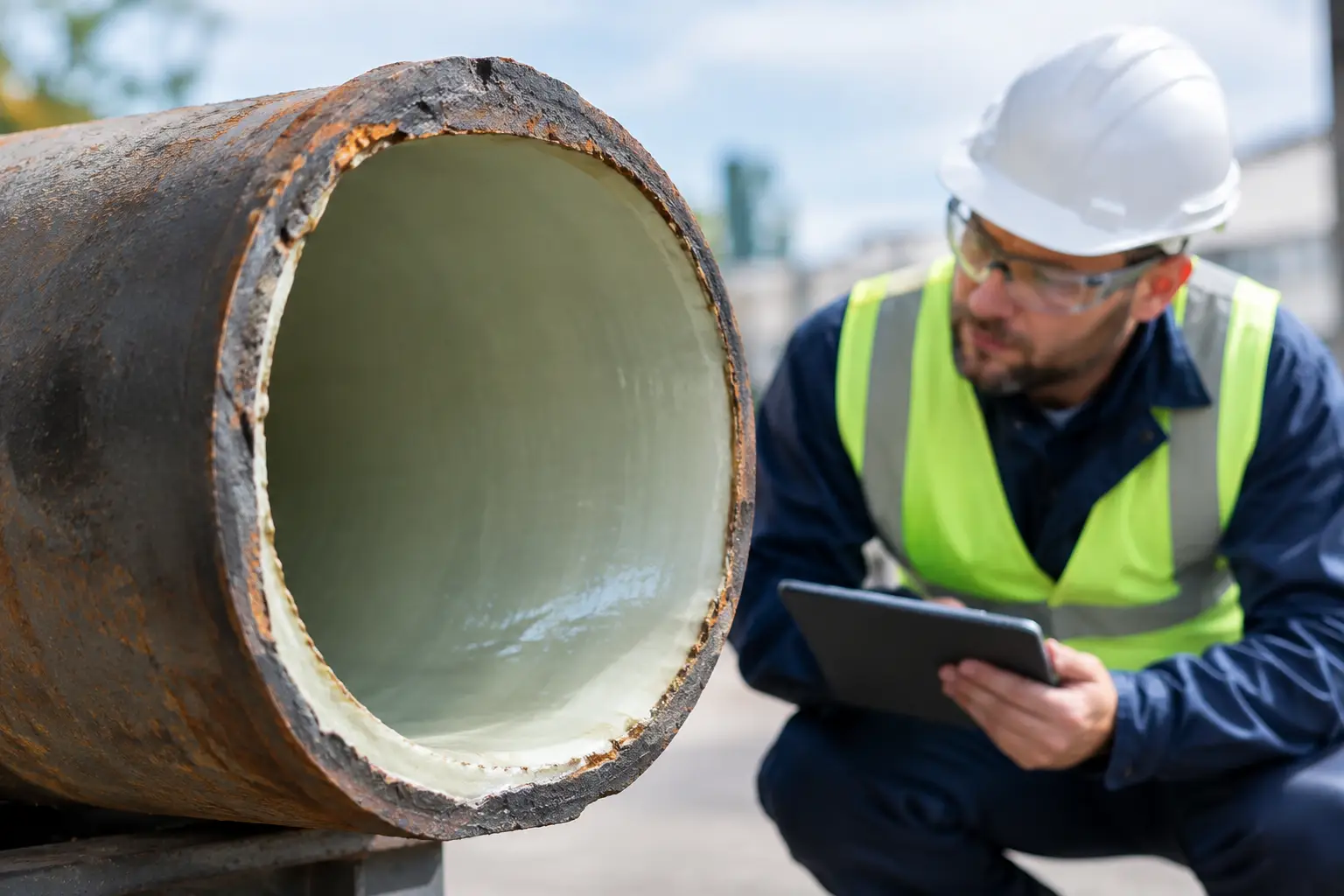
A cast iron sewer line can look beyond repair from the outside while still being a strong candidate for trenchless restoration. The practical question is: can CIPP line cast iron that is scaled, corroded, leaking, or invaded by roots? In many cases, yes. Cured-in-place pipe lining can create a new, jointless pipe inside an existing cast iron line without digging up a yard, slab, parking lot, or finished floor.
That answer is not automatic. The condition of the existing pipe, the severity of deterioration, access points, pipe layout, and local code requirements all determine whether lining is the right repair. A professional camera inspection is the step that turns a costly unknown into a clear repair plan.
Can CIPP Line Cast Iron Successfully?
CIPP, or cured-in-place pipe, is one of the most effective trenchless repair methods for aging cast iron sewer and drain lines. A flexible liner saturated with epoxy resin is installed through an existing access point, positioned inside the damaged pipe, and cured. Once cured, the liner forms a durable new pipe within the old one.
Cast iron is a common candidate because it often fails gradually. Decades of wastewater, soil movement, mineral buildup, and corrosion can leave the inside surface rough, pitted, and narrowed. Joints may separate. Roots may enter through gaps. In older Denver-area homes and commercial properties, these issues can cause recurring backups long before the pipe completely collapses.
When the host pipe still provides a usable path for the liner, CIPP can restore the line without full excavation. The finished liner seals cracks and joints, smooths the flow path, and prevents roots from entering through old connection points. It also resists the corrosion that commonly affects unprotected cast iron.
When Cast Iron Pipe Lining Is a Good Fit
Pipe lining works best when the existing cast iron line is damaged but remains generally aligned and open enough to prepare. Corrosion, minor cracks, leaking joints, root intrusion, and surface deterioration are often strong applications for CIPP.
For homeowners, that can mean repairing a sewer lateral without removing landscaping, driveway sections, patios, or basement flooring. For a restaurant, hotel, school, or medical facility, it can mean restoring failing drain lines while reducing the impact on operations and occupied spaces.
A lining project is often a good option when the pipe has these characteristics:
- The pipe has corrosion, scale, cracks, or root intrusion but has not suffered a major collapse.
- The line can be thoroughly cleaned and inspected before installation.
- The pipe has enough structural continuity for the liner to be pulled or inverted through it.
- Access is available through cleanouts, roof vents, removed fixtures, or targeted access points.
- The line has a diameter and layout appropriate for the lining system being used.
The key benefit is not simply avoiding a trench. It is avoiding the chain reaction that excavation can create: concrete removal, landscape repair, disrupted business access, noise, dust, and extended downtime.
When CIPP Is Not the Right Repair
CIPP is not a cure for every failed cast iron pipe. If a line has fully collapsed, has severe bellies that hold water, is badly offset, or has lost large sections of pipe, lining may not provide a dependable long-term result. A liner follows the existing pipe path. It cannot correct a major grade problem or rebuild a line that no longer has a passable route.
Heavy scale can also complicate the process. Cast iron frequently develops thick internal buildup that reduces the pipe opening. That material must be removed with the proper cleaning and descaling equipment before a liner is installed. If the pipe cannot be adequately cleaned, the liner may not fit or cure as intended.
In those cases, trenchless pipe bursting or a targeted excavation may be the better solution. Pipe bursting replaces the old pipe by pulling a new pipe into place while breaking apart the existing line. It still reduces excavation compared with conventional replacement, but it requires enough room for entry and exit pits.
An experienced contractor should not force every failing sewer line into a lining solution. The right method is the one that restores reliable flow and structural performance with the least disruption practical for the site.
Why Video Inspection Comes First
No responsible recommendation should be based on a recurring backup alone. Cast iron can hide significant deterioration beneath a floor or underground, and the symptoms can overlap with a simple blockage. A video sewer inspection shows what is actually happening inside the line.
During inspection, a specialized camera travels through the pipe and records the condition of the walls, joints, connections, and flow path. The technician can identify root intrusion, corrosion channels, cracks, offsets, standing water, and collapsed sections. Camera locating equipment can also identify the depth and location of the problem from above ground.
For CIPP planning, the inspection answers several critical questions. Can cleaning equipment pass through the line? Is there a continuous path for the liner? Are branch connections present? Are there defects that need spot repair before lining? Does the pipe slope properly enough to support normal drainage after rehabilitation?
This diagnostic step protects property owners from paying for the wrong repair. It also gives facility managers and municipal buyers the documentation needed to make a defensible infrastructure decision.
What the Cast Iron Lining Process Looks Like
The exact approach depends on the building, pipe diameter, and access conditions, but the process is straightforward. First, the pipe is cleaned using methods suited to the buildup and obstruction present. Descaling is especially important for cast iron because corrosion can create sharp, irregular deposits along the pipe wall.
Next, the line is reinspected to confirm it is ready for lining. The epoxy-saturated liner is then installed through an access point and expanded against the interior of the existing pipe. Heat, steam, or another approved curing method hardens the resin into a new pipe wall.
After curing, the line receives a final camera inspection. If the liner covers branch connections, those openings are reinstated with specialized cutting equipment. The goal is a continuous, properly connected pipe that restores flow without the weak points associated with old joints and corroded cast iron.
Most projects are far less disruptive than conventional dig-and-replace work. However, property owners should expect temporary limitations on water use while the pipe is cleaned, lined, and cured. Commercial and institutional facilities may need phased scheduling to protect critical operations.
Important Trade-Offs to Consider
CIPP lining slightly reduces the inside diameter of the pipe because a new wall is being added. In a properly designed project, this is usually not a problem. The liner’s smooth interior can improve flow compared with rough, heavily scaled cast iron. Still, pipe size, fixture load, and the condition of downstream piping need to be evaluated carefully.
Cost also depends on more than linear footage. Multiple branches, difficult access, extensive descaling, emergency conditions, and the need to reinstate connections can affect the project scope. Lining may cost more than a basic drain clearing, but clearing does not repair corroded walls, leaking joints, or recurring root entry.
For a historic property or a building with expensive finishes, the value of CIPP is often especially clear. Preserving tile, mature landscaping, sidewalks, parking surfaces, and interior spaces can prevent major restoration costs that are not included in a traditional excavation quote.
Choosing the Right Repair Partner
Cast iron pipe rehabilitation is not a general plumbing task. It requires accurate diagnostics, proper cleaning, trained installation crews, and the equipment to verify the final result. The contractor should be able to explain why lining is suitable, where its limits are, and what alternative is recommended if the line cannot be lined.
All Sewer and Plumbing Services, LLC evaluates sewer conditions with trenchless repair in mind, but the recommendation begins with the pipe itself. Whether the best answer is epoxy lining, pipe bursting, targeted repair, or replacement, the objective is the same: restore a dependable sewer system while protecting the property around it.
If your cast iron line is causing repeated backups, slow drains, odors, or unexplained leaks, do not wait for a total failure under a slab or landscaped area. A detailed camera inspection can show whether CIPP lining can preserve the pipe you have and help you plan the repair before the disruption becomes much larger.
FREE Estimates
How can we help you?

our services


contact our team today
Contact a service professional at All Sewer and Plumbing Services LLC today. We are here to answer all your questions.
OPEN 24 hours 7 days a week