Best Root Removal Methods for Sewer Lines
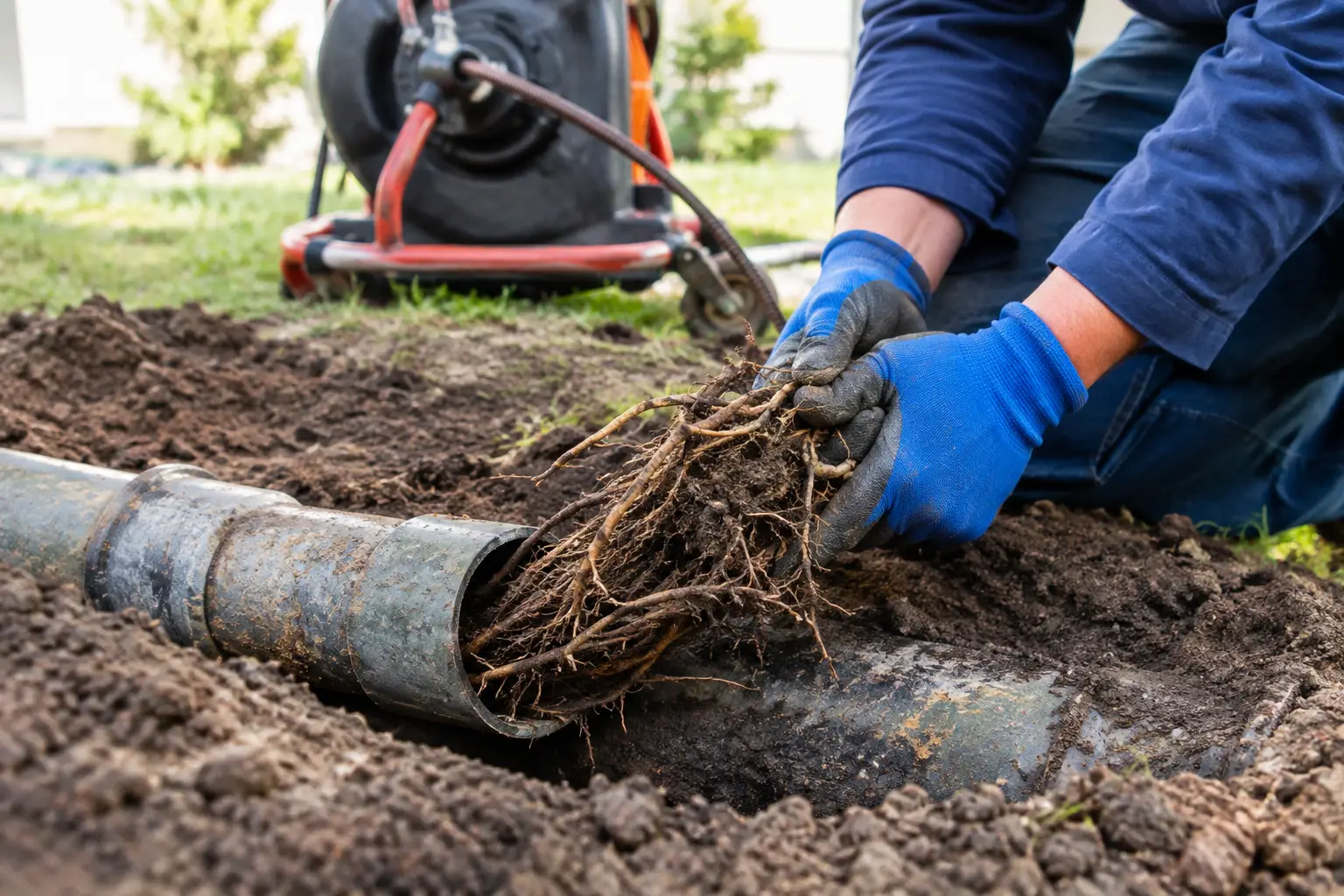
A sewer backup that appears without warning often started much earlier with a single fine tree root finding its way through a loose joint or hairline crack. Once roots reach the moisture and nutrients inside a sewer pipe, they expand rapidly. The best root removal methods clear the immediate blockage, but the right long-term solution also addresses the opening that allowed roots into the line.
For Denver-area homes and commercial properties, root intrusion is especially common in older sewer systems with clay tile, cast iron, Orangeburg, or aging concrete pipe. Mature trees, shifting soils, and decades of joint movement can turn a small defect into a recurring drain emergency. A professional camera inspection is the fastest way to identify the location, extent, and condition of the damage before choosing a removal method.
Best Root Removal Methods for Sewer Lines
There is no single method that fits every sewer line. The best option depends on the pipe material, root mass, accessibility, severity of the backup, and whether the pipe is still structurally sound. A line with light root intrusion may only need professional cleaning. A pipe with separated joints or heavy deterioration may require trenchless rehabilitation or replacement.
Mechanical root cutting
Mechanical root cutting is often the first response when roots have formed a dense obstruction inside the sewer. A trained technician feeds a specialized cable machine into the line. A cutting head rotates through the pipe, breaking apart roots and restoring flow so wastewater can move freely again.
This method is effective for active stoppages and can be the right choice when the pipe needs immediate relief. It is also useful before a video inspection because it creates enough clearance to see the pipe walls and joints. However, cutting removes the roots inside the pipe, not the defect outside it. If water can still escape through a joint or crack, roots will eventually return.
Mechanical cutting must be matched carefully to the pipe. Aggressive cutting equipment can damage fragile, collapsed, or badly corroded lines. That is why a qualified sewer specialist evaluates the pipe condition rather than treating every root blockage the same way.
Hydro jetting
Hydro jetting uses high-pressure water delivered through a purpose-built hose and nozzle. As the nozzle moves through the sewer line, water scours the pipe interior and flushes loose roots, grease, sludge, scale, and accumulated debris toward the main connection.
For many properties, hydro jetting provides a more complete cleaning than a standard drain cable. It is especially valuable in restaurants, multi-unit properties, hotels, and facilities where grease and debris can combine with roots to create severe restrictions. A clean pipe also gives the inspection camera a clearer view of underlying cracks, offsets, or failed joints.
Jetting is not appropriate for every damaged pipe. If a camera inspection shows a major break, collapse, or severely weakened material, high-pressure water may not be the right first step. Proper pressure selection and experienced operation matter. The goal is to clean the line thoroughly without adding stress to a pipe that is already near failure.
Root treatment products
Certain root-inhibiting treatments can slow regrowth after mechanical cutting or hydro jetting. These products are typically applied as a foam or liquid that reaches the roots at pipe joints and openings. They can be a maintenance tool for a line that is otherwise functional and scheduled for future repair.
Treatment is not a substitute for fixing damaged pipe. It will not close a separated joint, repair a crack, or restore a collapsed section. Property owners should also avoid relying on consumer chemical drain cleaners. Harsh chemicals may not reach the root mass effectively, can create safety concerns, and may cause additional problems in older plumbing systems.
A professional should recommend any root treatment based on the pipe material, root location, local requirements, and the planned repair strategy. In a line with frequent backups, spending repeatedly on temporary treatment can cost more over time than a permanent trenchless solution.
Why Root Removal Alone Often Fails
Roots do not break into a properly sealed sewer line for no reason. They enter through existing weaknesses: failed connections, shifted sections, cracked pipe walls, corrosion holes, or deteriorated joints. Removing the roots restores flow, but the pipe remains vulnerable until those entry points are sealed or the damaged section is replaced.
This distinction matters for homeowners and facility managers making a repair decision. If roots have returned after prior cleaning, or if inspections show multiple defects along the line, the problem is not simply a blockage. It is an infrastructure issue. Repeated cleaning may keep the line operating for a period, but it does not eliminate the cause of the recurring disruption.
Warning signs that a line may need more than cleaning include repeated backups, slow drains throughout the building, sewage odors, wet areas in the yard, sinkholes, or roots visible at several locations during a camera inspection. These conditions call for a clear repair plan, not guesswork.
Trenchless Repairs That Stop Root Intrusion
When the existing pipe has enough structural stability, cured-in-place pipe lining, or CIPP, can create a new pipe inside the old one. A resin-saturated liner is installed through an access point, then cured to form a continuous, jointless pipe. The finished liner seals cracks, joints, and root entry points while minimizing disruption to landscaping, driveways, floors, and customer-facing areas.
CIPP lining is often an excellent option for long runs of pipe with widespread joint failure or cracks. It can reduce excavation, labor, restoration work, and downtime compared with conventional dig-and-replace work. It is particularly beneficial for properties where excavation would disrupt mature landscaping, parking areas, sidewalks, historic features, or daily operations.
Pipe bursting is another trenchless replacement method. A bursting head pulls a new pipe through the path of the existing line while breaking apart the failed pipe. This approach is a strong option when the original sewer is too damaged, undersized, or structurally compromised for lining. It provides a full new pipe while typically requiring only limited access points rather than an open trench across the property.
Neither approach should be selected from symptoms alone. Video inspection identifies whether the pipe is a candidate for lining, whether a localized repair is sufficient, or whether pipe bursting offers the more dependable outcome. That diagnostic step protects the property owner from paying for a temporary solution when the line needs a lasting repair.
Choosing the Right Method for Your Property
The best decision starts with the condition of the sewer line, not the most visible symptom. A single light root intrusion in a stable pipe may be resolved with cutting, jetting, and a maintenance plan. A line with roots at every joint, scale buildup, cracking, and recurring backups may be better served by trenchless lining. A collapsed or heavily offset line may require replacement through pipe bursting or targeted excavation.
Access and property use also matter. A homeowner may prioritize protecting a landscaped yard or newly paved driveway. A restaurant may need fast service that avoids closing during operating hours. Hospitals, schools, municipal facilities, and industrial sites need a repair strategy that protects operations and limits risk. The right sewer contractor considers all of these factors alongside the camera findings.
At All Sewer and Plumbing Services, LLC, experienced technicians use video sewer inspection and proven trenchless methods to identify the source of root intrusion and recommend the most practical repair. The objective is not just to get water moving again. It is to provide a solution that protects the property and reduces the chance of another emergency.
If roots are already causing slow drains or backups, avoid waiting for a complete blockage. Prompt inspection can show whether professional cleaning is enough or whether sealing the line now will prevent a larger, more disruptive sewer failure later.
FREE Estimates
How can we help you?

our services


contact our team today
Contact a service professional at All Sewer and Plumbing Services LLC today. We are here to answer all your questions.
OPEN 24 hours 7 days a week