Sewer Monitoring: Catch Failures Before Damage
A sewer line rarely fails without warning. The warning signs may be hidden below a lawn, parking lot, kitchen floor, or landscaped courtyard, but they are usually there: recurring slow drains, unexplained odors, isolated backups, growing root intrusion, or a camera-visible crack that has not yet become a collapse. Sewer monitoring gives property owners and facility leaders a way to find those changes early and act on facts rather than assumptions.
For a Denver homeowner, that may mean avoiding a wastewater backup in a finished basement. For a restaurant, school, hospital, hotel, or commercial facility, it can mean preventing an outage that affects customers, staff, residents, and daily operations. The right monitoring plan does not create unnecessary repair work. It provides a clear record of pipe condition, identifies what is changing, and helps determine when cleaning, trenchless repair, or replacement is actually warranted.
What Sewer Monitoring Really Means
Sewer monitoring is the ongoing evaluation of a sewer system’s condition and performance. It is not always a permanent electronic sensor installed in a pipe. In many residential and commercial applications, the most useful approach combines scheduled video sewer inspections with maintenance records, drain-cleaning history, and follow-up evaluations of known problem areas.
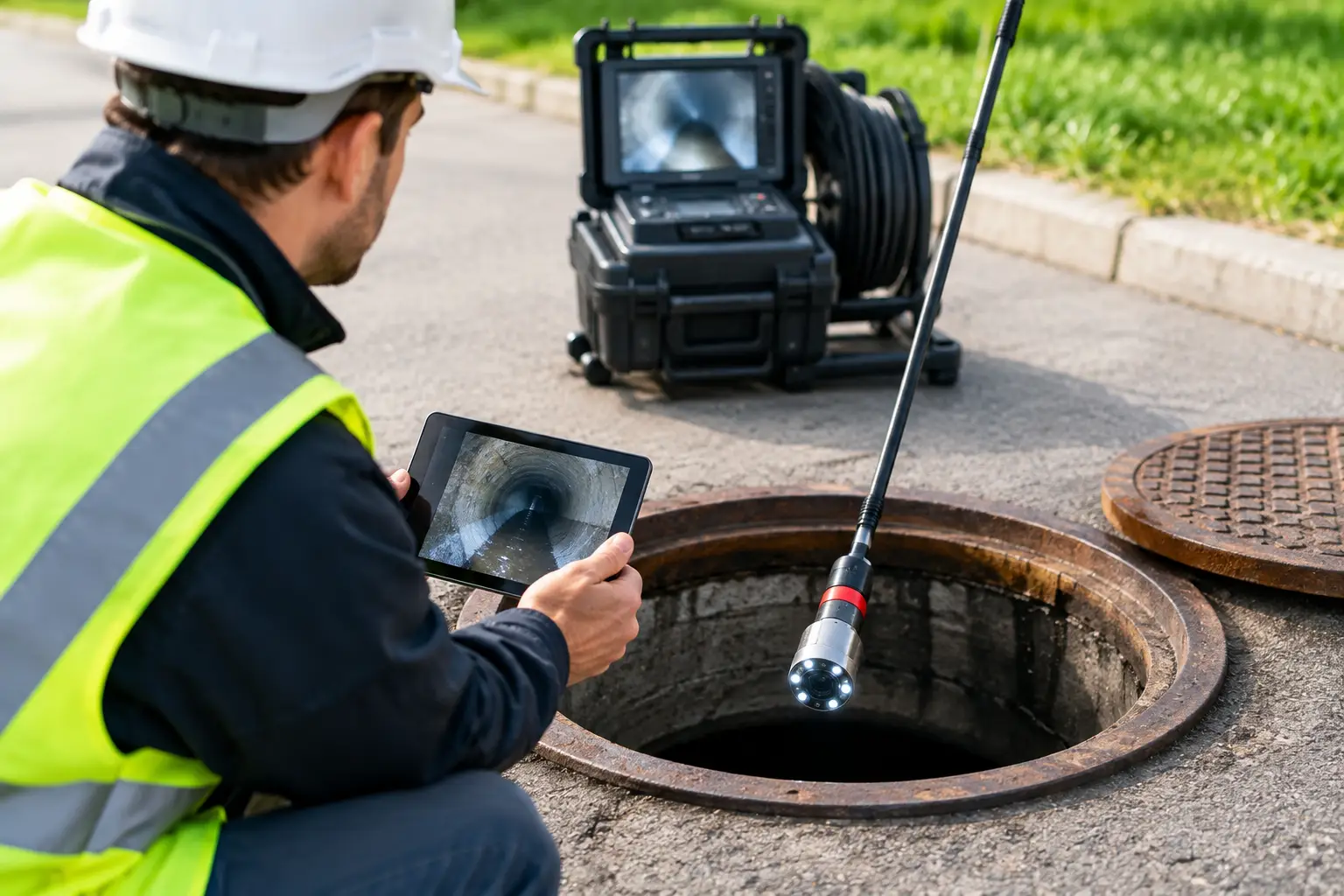
A high-resolution sewer camera is sent through an accessible cleanout or drain line. The inspection can show root growth, grease accumulation, offset joints, cracks, corrosion, bellies that hold water, scale buildup, broken sections, and deteriorating pipe material. When the line is measured and recorded, future inspections can compare the same locations to see whether a condition is stable or progressing.
For larger sites, municipal systems, and facilities with critical operations, monitoring may also include flow observation, manhole inspection, lift-station data, or specialized equipment that identifies abnormal flow conditions. The right level of monitoring depends on the pipe’s age, material, use, access, failure history, and the consequences of an interruption.
Why Sewer Problems Are Often Missed
Underground pipe defects do not always affect every fixture at once. A partial blockage may first appear as a slow shower drain, a toilet that bubbles, or a floor drain that backs up only during heavy use. A cracked clay pipe can admit roots for years before the opening becomes large enough to block solids. A sagging section may drain acceptably most days, then create a backup when paper, grease, or debris collects in the low spot.
This is why waiting for a complete blockage is expensive. By that point, the pipe may have caused water damage, sanitation concerns, business interruption, emergency cleanup costs, or damage to surrounding soil. Monitoring shifts the decision from emergency response to planned maintenance or targeted rehabilitation.
Colorado properties also face conditions that make early diagnosis valuable. Many older buildings have clay tile, cast iron, Orangeburg, or aging galvanized components. Mature trees can aggressively seek moisture at pipe joints. Freeze-thaw movement, soil conditions, and long-term settlement can contribute to shifting or separated connections. None of these conditions automatically requires full excavation, but each deserves a precise inspection.
Signs That Call for Sewer Monitoring
A single slow drain can be a local fixture issue. Repeated symptoms throughout a building are different. Property owners should arrange a professional sewer evaluation when multiple drains slow down, toilets gurgle, wastewater appears at a lower-level drain, or backups return soon after conventional drain cleaning.
Monitoring is also smart after a line has been cleared of roots. Clearing restores flow, but it does not repair the opening where roots entered. A follow-up camera inspection can establish whether the pipe wall and joints remain serviceable, whether roots are returning quickly, and whether the line is a candidate for epoxy pipe lining or pipe bursting.
For commercial and institutional properties, a monitoring plan is especially useful when the sewer line serves high-volume restrooms, kitchens, laundry areas, cafeterias, or tenant spaces. These systems may function close to capacity for long periods. A small restriction can become a serious operational problem during peak use, when shutting down service is least acceptable.
Video Inspection Creates a Defensible Repair Plan
A camera inspection should do more than confirm that a line is blocked. It should identify the reason for the blockage and the exact location of the defect. That distinction matters because different conditions call for different solutions.
Roots at otherwise sound joints may call for cleaning and scheduled maintenance. A cracked, separated, or deteriorated section may be better addressed with trenchless pipe lining. Pipe lining creates a new, jointless epoxy pipe within the existing host pipe, sealing many cracks, gaps, and root-entry points without digging up the full line.
If the existing pipe has collapsed, has severe offsets, or is too damaged to serve as a reliable host for lining, trenchless pipe bursting may be the stronger option. Pipe bursting replaces the old line by pulling a new pipe through the same underground path while breaking apart the failed pipe. In some cases, excavation remains necessary, particularly where access is limited or a connection needs to be rebuilt. A credible recommendation explains why one method fits the specific pipe condition rather than treating every sewer problem the same way.
The inspection record also helps facility managers make decisions with owners, tenants, boards, insurers, or capital-planning teams. Instead of reporting that a sewer line is “bad,” they can document the pipe material, defect locations, degree of blockage, and likely next steps.
How Often Should a Sewer Line Be Checked?
There is no single inspection interval for every property. A newer sewer line with no symptoms and no known defects may only need evaluation when a problem develops or before a major property transaction. An older home with mature trees, prior root intrusion, or cast-iron deterioration deserves more attention.
For properties with recurring root issues, annual or seasonal inspection after cleaning may be reasonable. Restaurants and commercial kitchens may need more frequent drain and sewer maintenance because grease and food waste can create restrictions quickly. Multi-unit buildings, hotels, schools, and healthcare facilities benefit from a documented inspection schedule because a backup can affect many occupants at once.
A practical plan considers risk, not just time. Ask how costly a backup would be, how quickly the affected area could be taken out of service, whether the line runs beneath finished spaces or valuable landscaping, and whether previous repairs indicate an ongoing weakness. The higher the consequence of failure, the more value there is in routine monitoring.
What Monitoring Can and Cannot Prevent
Sewer monitoring can identify developing defects before they become emergencies. It can show where roots are entering, confirm whether cleaning restored full flow, and document whether a damaged section is getting worse. It also helps prevent unnecessary digging by showing when a trenchless solution is feasible.
It cannot guarantee that a line will never fail. A sudden collapse, foreign object blockage, or damage from nearby construction can occur between inspections. Monitoring is also only as useful as the response to the findings. If a camera shows active root intrusion, a broken joint, or substantial corrosion, postponing the recommended work may allow the problem to advance.
The objective is not to repair every imperfection immediately. It is to separate manageable maintenance issues from defects that threaten the line’s reliability. That gives homeowners and property managers the ability to schedule work, protect budgets, and avoid making decisions during a sewage emergency.
Choosing a Contractor for Sewer Monitoring
The value of an inspection depends on the experience behind it. A contractor should be able to interpret camera findings, locate defects accurately, explain the condition in plain language, and offer more than one path forward when the pipe allows it. A basic camera image without a diagnosis does not answer whether the line needs cleaning, lining, bursting, spot repair, or observation.
Look for a sewer specialist with proven trenchless capability as well as diagnostic experience. That combination matters because the contractor understands what pipe conditions can be rehabilitated without major excavation and when replacement is the more dependable choice. All Sewer and Plumbing Services approaches inspections with that repair knowledge in mind, helping customers move from uncertainty to a practical plan that protects the property.
For any property, the most useful time to learn about a sewer defect is before wastewater reaches the floor. A clear monitoring record turns an unseen underground risk into a decision you can make on your own schedule.
FREE Estimates
How can we help you?

our services


contact our team today
Contact a service professional at All Sewer and Plumbing Services LLC today. We are here to answer all your questions.
OPEN 24 hours 7 days a week