A Municipal Sewer Renewal Case Study in Colorado
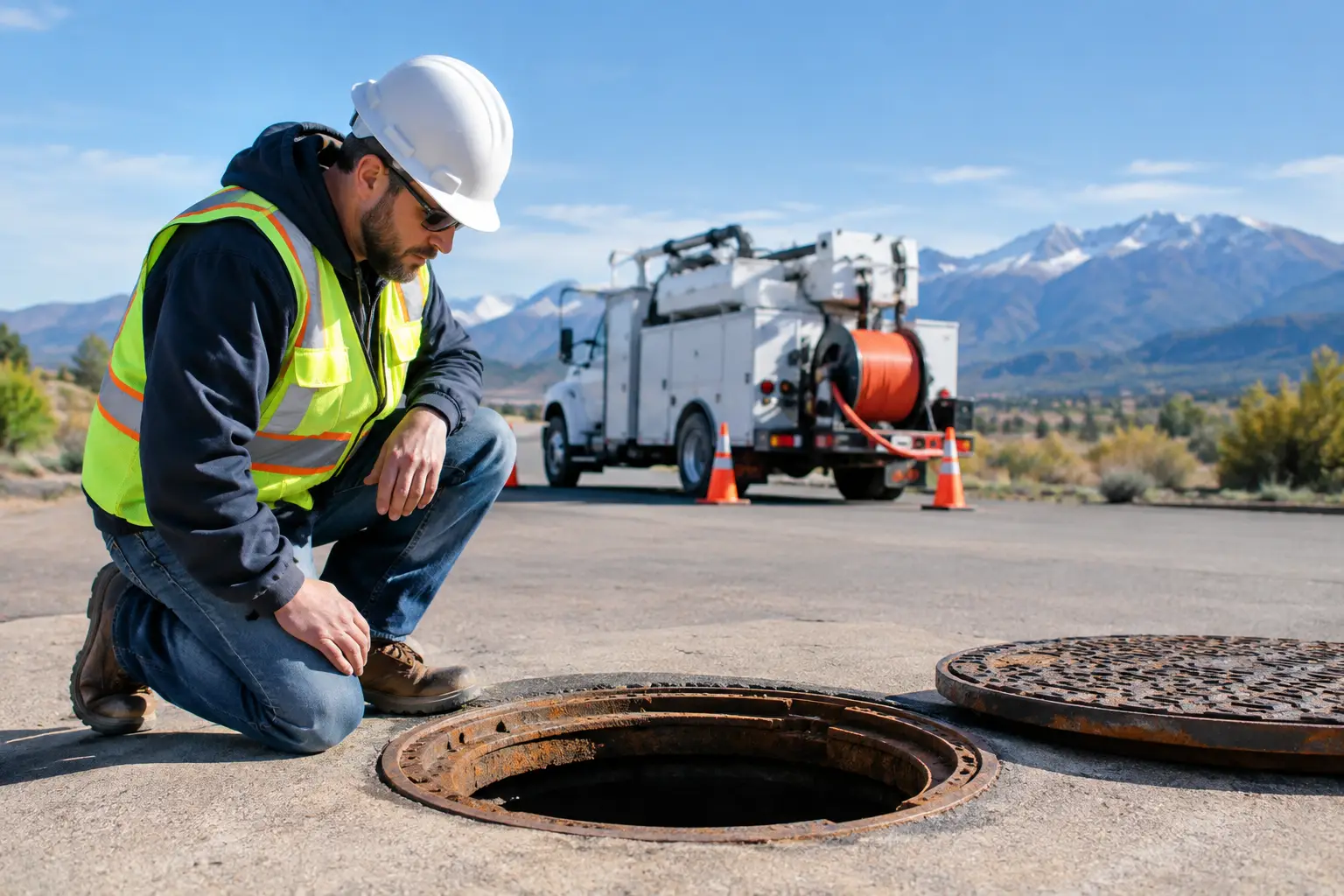
A municipal sewer renewal case study is most useful when it answers the questions public works teams actually face: Can the line be restored without closing a street? Will the repair hold up? What happens to traffic, nearby businesses, landscaping, and the project budget? For aging municipal sewer systems, trenchless rehabilitation can often provide a practical answer without turning a focused pipe repair into a major excavation project.
The following representative Colorado scenario reflects the type of planning, diagnosis, and execution required when a municipality needs to renew a failing gravity sewer line beneath an active public corridor. Every system has different conditions, but the decision process is consistent: inspect first, define the failure, select the right rehabilitation method, and verify the completed work.
The Problem: A Failing Sewer Beneath an Active Street
A municipal maintenance department received repeated reports of slow drainage and intermittent backups from a low-lying section of its collection system. The affected sewer served a small commercial area, several residential blocks, and a public facility. The line ran beneath a paved street with mature trees, sidewalks, utility crossings, and limited room for staging equipment.
Initial maintenance efforts removed roots and cleared accumulated debris, but the problem returned. That pattern matters. Cleaning is necessary when a pipe is obstructed, yet it is not a permanent fix when the pipe itself has structural defects. Recurring root intrusion usually points to open joints, cracks, offset connections, or deteriorated pipe walls.
A video sewer inspection provided the evidence needed for a renewal decision. The inspection identified multiple joint separations, root infiltration, moderate corrosion, and localized cracking along an approximately 300-foot segment of aging vitrified clay pipe. The line still had enough shape and grade to convey flow, but its condition was declining. Waiting for a collapse would have increased the likelihood of emergency excavation, service interruptions, and pavement restoration costs.
Why Open Excavation Was Not the First Choice
Conventional replacement was technically possible. It would have required trenching through the street, managing traffic control, exposing existing utilities, removing pavement, replacing the pipe, backfilling, and restoring the roadway. That approach remains the correct option when a line has collapsed, lost grade, or has severe structural damage that cannot support rehabilitation.
In this case, however, excavation carried substantial secondary costs. The municipality would need to coordinate lane closures, protect nearby utilities, manage noise and access for businesses, and restore the street surface after the work. Colorado weather also created a scheduling concern. A project that extends into freezing conditions can complicate paving, site restoration, and traffic management.
The inspection showed that a trenchless cured-in-place pipe, or CIPP, liner was a viable option. Rather than remove the existing pipe, the contractor could install a resin-saturated liner through access points, cure it in place, and create a new pipe within the host pipe. This approach would address the cracks, separated joints, and root entry points while avoiding continuous excavation.
Evaluating the Right Renewal Method
Trenchless technology is not a one-size-fits-all answer. A municipality should not choose pipe lining simply because it minimizes digging. The existing pipe must first be evaluated for diameter, access, flow conditions, offsets, collapse, service connections, groundwater influence, and structural integrity.
For this project, the pipe retained its alignment and had no major sections of collapse. That made CIPP lining a strong fit. The liner would form a continuous, jointless pipe that could improve flow characteristics and seal the defects allowing roots and groundwater into the system.
Pipe bursting was also considered. This method uses a bursting head to break apart the old pipe while pulling a new replacement pipe into place. It is often an excellent option when the old pipe is too damaged to line or when upsizing is required. But pipe bursting still requires entry and exit pits, and the existing line did not need a larger diameter. CIPP lining offered the least disruptive path for this specific condition.
The municipality also planned for flow management. Because the sewer could not simply be taken out of service during the work, the project included temporary bypass pumping. Proper bypass design is not a minor detail. It protects public health, prevents overflows, and gives the installation crew a dry, controlled work area.
The Municipal Sewer Renewal Case Study: Project Execution
Before installation, the contractor cleaned the line thoroughly using high-pressure water jetting and mechanical root removal. Cleaning is critical because the liner must conform to the pipe wall. Remaining roots, scale, grease, or debris can interfere with the installation and affect the final result.
The crew then completed a pre-installation camera inspection to confirm the line was ready. Access was gained through existing manholes, eliminating the need to excavate a long trench across the roadway. After temporary bypass pumping was activated, the liner was installed from one access point to the next.
The resin-saturated liner was positioned within the host pipe and expanded against the pipe wall. Controlled curing hardened the material into a structural, continuous pipe. Once cured, the ends were trimmed, the bypass was removed, and the system was returned to service.
A final video inspection verified the installation. The finished liner showed a smooth interior, sealed joints, and no visible pathways for root intrusion. Service connections were reopened as required, and the municipality received inspection documentation for its maintenance records.
The most visible outcome was what did not happen: there was no open trench running down the street, no large-scale pavement replacement, and no extended loss of access for surrounding properties. The work still required careful traffic planning and temporary operational adjustments, but disruption was significantly lower than a full excavation approach.
Results That Matter to Public Works Teams
The project restored the affected sewer segment before it reached an emergency failure point. It also reduced the risk of infiltration and inflow entering the system through failed joints. Limiting excess groundwater in a collection system can help reduce unnecessary treatment volumes and lessen strain during wet-weather events.
Just as important, the municipality preserved the road surface and avoided the additional restoration work that comes with trench excavation. That does not mean trenchless renewal is always the lowest initial price. Site access, pipe diameter, depth, bypass requirements, and the extent of preparation all affect cost. Its value is often found in the total project impact: fewer restoration demands, shorter disruption periods, reduced traffic complications, and less risk around congested underground utilities.
For commercial corridors, school zones, hospital campuses, and historic areas, those indirect costs can be substantial. A repair method that keeps entrances open and limits construction noise may be the better operational decision even when the direct construction price is similar.
What This Case Study Teaches About Sewer Asset Planning
The strongest municipal renewal programs do not wait for a sinkhole or sanitary sewer overflow to reveal a failing line. They use camera inspections, maintenance records, and repeat blockage data to identify segments that are becoming unreliable. A line that needs root cutting every few months is not simply a maintenance issue. It may be a capital planning signal.
Condition assessment should also distinguish between defects that can be managed and defects that require immediate action. Minor surface wear may justify monitoring. Repeated backups, active infiltration, missing pipe sections, major offsets, and structural deterioration require a faster response. The goal is to apply the right method before an avoidable emergency forces a more disruptive and expensive decision.
A qualified trenchless contractor should be involved early enough to review access points, confirm pipe condition, evaluate bypass needs, and identify whether lining, pipe bursting, or excavation is the appropriate solution. All Sewer and Plumbing Services, LLC provides video inspection and trenchless sewer rehabilitation services for public, commercial, and residential infrastructure throughout the Denver area and Colorado.
For municipal leaders, the practical next step is not to assume every old sewer needs replacement. Start with a clear camera inspection and an honest condition assessment. When the host pipe is a candidate for rehabilitation, trenchless renewal can protect the system, the public right-of-way, and the budget at the same time.
FREE Estimates
How can we help you?

our services


contact our team today
Contact a service professional at All Sewer and Plumbing Services LLC today. We are here to answer all your questions.
OPEN 24 hours 7 days a week