Epoxy Pipe Lining vs Slip Lining: Comparison Guide
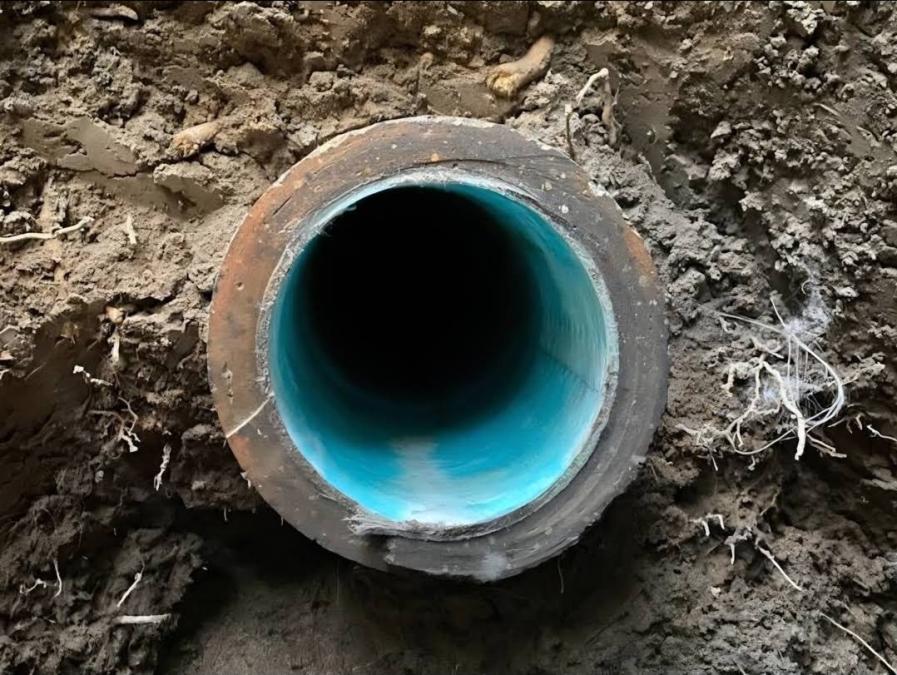
Table of Contents
- What is Cured-in-Place Pipe (CIPP) Epoxy Lining?
- What is Slip Lining?
- Key Differences Between Epoxy Pipe Lining and Slip Lining
- Epoxy Pipe Lining Installation Process
- Slip Lining Installation Process
- CIPP Lining Lifespan and Durability
- Trenchless Sewer Repair Cost Considerations
- Which Method is Right for Your Situation?
- Frequently Asked Questions
Last Updated: August 27, 2026
What is Cured-in-Place Pipe (CIPP) Epoxy Lining?
Cured-in-place pipe (CIPP) epoxy lining is a trenchless rehabilitation method that creates a new structural pipe inside an existing damaged sewer line by saturating a flexible liner with epoxy resin and curing it in place. A resin-impregnated liner, typically made from felt or fiberglass, is inserted through an access point and inflated or pulled tight against the interior walls of the damaged pipe. The epoxy resin then cures through ambient temperature exposure (several hours) or accelerated steam curing (as little as 20 minutes), forming a jointless, seamless new pipe bonded to the host structure.
The epoxy-lined pipe becomes structurally independent of the original pipe. Even if the host pipe has significant cracks, missing sections, or severe corrosion, the new epoxy liner carries the load and prevents infiltration. The cured epoxy forms a non-porous surface that resists acids, alkalis, and root penetration. CIPP works across many pipe diameters, from small 2-inch residential laterals to large municipal mains exceeding 12 inches, and adapts to different pipe materials, clay, cast iron, PVC, concrete, because the new epoxy liner creates an independent structural system inside.
What is Slip Lining?
Slip lining is a trenchless rehabilitation technique where a smaller-diameter structural pipe, typically made from high-density polyethylene (HDPE) or PVC, is inserted into an existing damaged pipe and secured in place. The slip lining process begins at an access point, where the new structural liner is carefully fed or jacked into the host pipe. For larger-diameter applications, jacking equipment provides the force needed to push the liner through the full length of the deteriorated pipe, sometimes spanning hundreds of feet in a single run.
Slip lining excels in applications where the host pipe remains physically intact enough to guide the new liner through. One trade-off is that the new pipe’s internal diameter is smaller than the original, typically 1 to 2 inches smaller. A 6-inch sewer line rehabilitated with slip lining might effectively become a 4-inch or 5-inch line, affecting flow rates and the system’s ability to handle peak flows.
Slip lining’s proven service life exceeds 150 years based on independent testing, making it a long-term solution for critical infrastructure (peer-reviewed research).
Key Differences Between Epoxy Pipe Lining and Slip Lining
The choice between epoxy pipe lining and slip lining hinges on three core factors: how the new pipe is created, the impact on internal diameter, and which situations each method handles best.
Structural Integrity and Load Bearing
Epoxy pipe lining creates a new structural system in place. The resin-impregnated liner is inserted, inflated, and cured while inside the host pipe. The resulting epoxy forms a rigid, load-bearing structure that becomes independent of the original pipe. For pipes with severe structural damage, missing sections, or extreme corrosion, epoxy lining is often the only viable trenchless option because it doesn’t rely on the host pipe to guide or support the new structure.
Slip lining depends on the host pipe’s structural integrity. The new liner is inserted through the existing pipe and secured at insertion points. While the new HDPE or PVC pipe itself is structurally sound, the process requires the host pipe to remain intact enough to allow insertion and prevent excessive deflection during jacking. If the host pipe has collapsed sections, severe deformation, or significant breaks, slip lining becomes impractical or impossible.
Pipe Diameter and Flow Capacity Impact
Epoxy pipe lining preserves the original internal diameter. Because the liner cures in place inside the host pipe, the new epoxy pipe maintains the original diameter minus only the thickness of the liner itself (typically 1/8 to 1/4 inch). For a 6-inch sewer line, you retain nearly the full 6-inch internal diameter. This preservation of hydraulic capacity is critical for systems already operating at or near design capacity.
Slip lining reduces the internal diameter by 1 to 2 inches. A 6-inch line becomes 4 to 5 inches; an 8-inch line becomes 6 to 7 inches. This reduction is permanent and directly impacts flow capacity. For residential laterals with modest flow requirements, the reduction is often acceptable. For municipal mains or commercial systems handling high volumes, the loss of hydraulic capacity can create bottlenecks during peak flow events.
|
Factor |
CIPP Epoxy Lining |
Slip Lining |
|---|---|---|
|
Internal Diameter Retained |
~95-98% of original |
75-85% of original |
|
Flow Capacity Impact |
Minimal (1-2% reduction) |
Moderate (15-25% reduction) |
|
Best For |
Capacity-constrained systems |
Systems with flow headroom |
|
Hydraulic Modeling Required |
Recommended |
Essential |
Epoxy Pipe Lining Installation Process
The installation of epoxy pipe lining follows a systematic sequence designed to minimize disruption while ensuring the new pipe bonds correctly to the host structure.
Step 1: Access Point Preparation and Cleaning
Installation begins by identifying and accessing the section of pipe requiring rehabilitation. The technician performs a video inspection to map the extent of damage, identify lateral connections, and determine liner length requirements. The host pipe must be cleaned to remove debris, sediment, roots, and grease using high-pressure water jetting. This step is critical, any remaining debris prevents the liner from seating properly against the host pipe and compromises the epoxy bond.
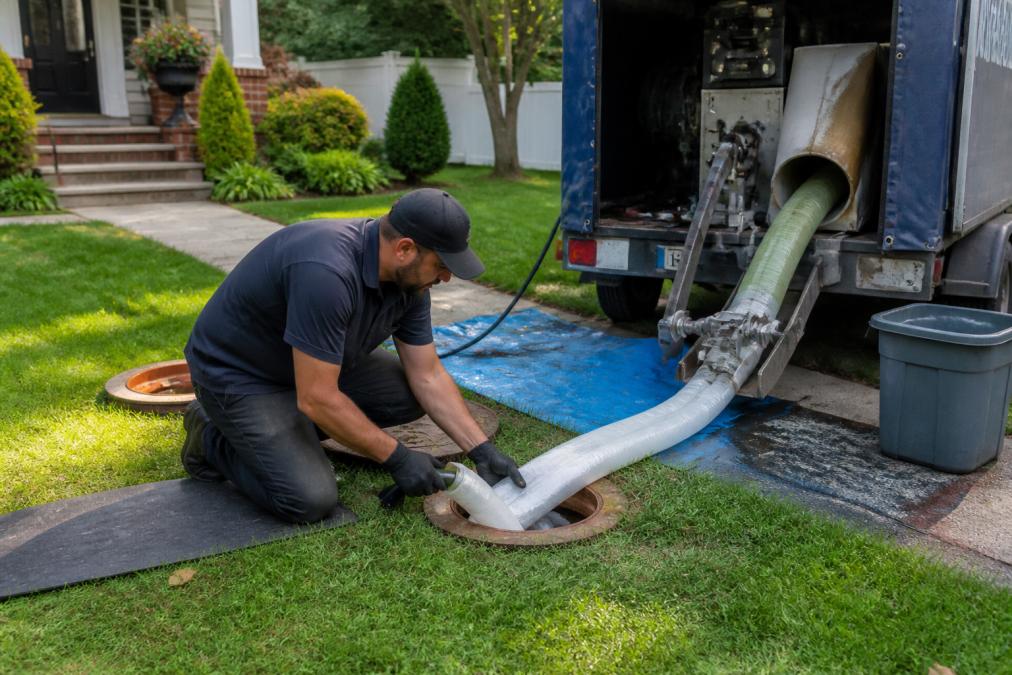
Step 2: Liner Selection and Resin Saturation
The technician selects a felt or fiberglass liner sized to match the host pipe’s diameter and required repair length. The liner is then saturated with epoxy resin, typically a 100% solids formulation that cures without volatile organic compounds (VOCs).
Step 3: Liner Insertion and Positioning
The resin-saturated liner is carefully inserted through the access point and advanced to the far end of the section requiring repair. For longer runs, specialized winches or inversion systems pull the liner into position. The liner must be centered within the host pipe to ensure uniform epoxy thickness around the entire circumference.
Step 4: Curing Process
Once positioned, the liner cures through ambient curing (4 to 8 hours) or steam curing (20 to 45 minutes). Steam curing is preferred for commercial and municipal projects where downtime must be minimized.
Step 5: Inspection and Final Grouting
After curing, the technician performs a video inspection to verify the new pipe is properly seated and free of defects. Lateral connections must be reopened by cutting or coring through the cured epoxy. The annular space may be grouted with high-strength material for additional structural support.
The entire process typically requires 1 to 3 days depending on the length of pipe being rehabilitated and the curing method selected.
Slip Lining Installation Process
Slip lining installation differs fundamentally from epoxy lining because the new pipe is pre-manufactured and simply inserted into the host pipe. The process is more mechanical and less chemistry-dependent.
Step 1: Access Point Preparation and Host Pipe Assessment
The technician begins by identifying suitable access points, typically existing clean-outs or newly created access locations. A video inspection of the host pipe is essential to confirm it’s suitable for slip lining. The inspection maps the pipe’s internal condition, identifies obstacles, and assesses whether the host pipe can guide the new liner without excessive deflection or binding.
Step 2: Liner Selection and Preparation
The new structural liner, typically HDPE or PVC, is selected based on the host pipe’s diameter and required repair length. For residential laterals, the liner is usually supplied in coiled sections that are straightened and joined at the site.
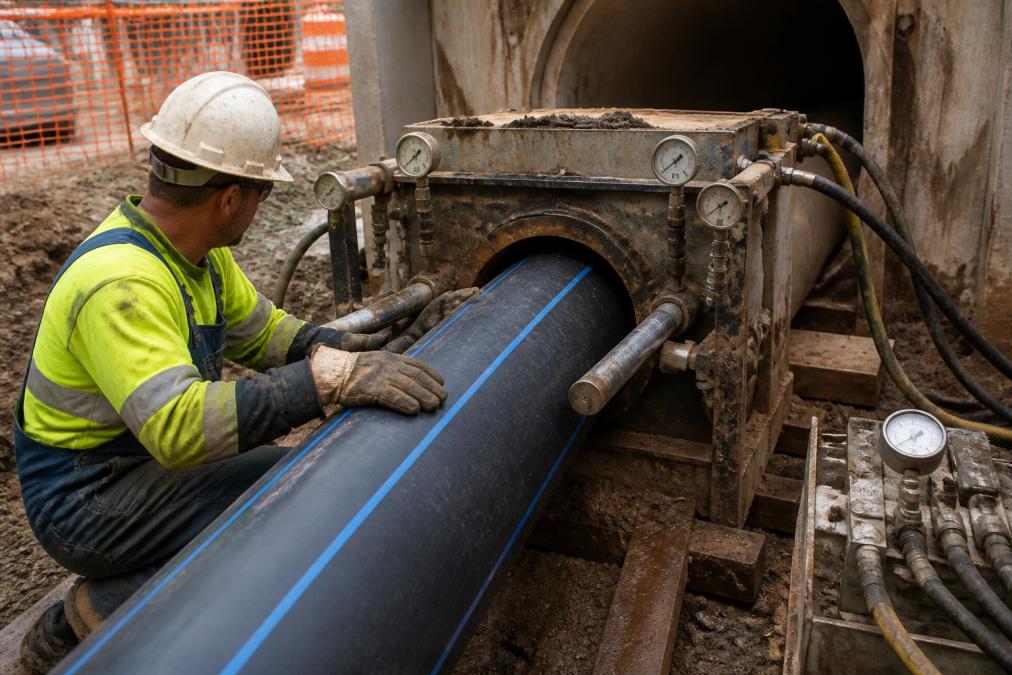
Step 3: Jacking and Insertion
For longer runs or larger-diameter pipes, jacking equipment provides the force needed to push the liner through the host pipe. The liner is positioned at the insertion point and advanced using synchronized hydraulic jacks. Insertion must be controlled and deliberate to prevent damage to the liner or misalignment.
Step 4: Securing and Grouting
Once the liner reaches its final position, it’s secured at the insertion point using mechanical couplings, flanges, or specialized grout collars. The annular space is then grouted with high-strength material to prevent water infiltration and provide additional structural support.
Step 5: Lateral Reconnection and Final Inspection
If the original pipe had lateral connections, they must be re-established by drilling or coring through the new liner. A final video inspection confirms proper positioning, full grouting, and correct lateral alignment.
Slip lining installation typically requires 2 to 5 days depending on pipe length, diameter, and whether jacking equipment is needed.
CIPP Lining Lifespan and Durability
When installed correctly using high-quality epoxy resins, CIPP liners typically last 50 to 75 years. The epoxy resin itself is chemically inert and highly resistant to the corrosive environments typical in sewer systems. Acidic conditions, hydrogen sulfide gas, root acids, and bacterial attack have minimal effect on properly cured epoxy. The seamless, jointless structure eliminates weak points where traditional repairs often fail.
However, epoxy liners do have vulnerabilities. If the curing process is incomplete or compromised due to inadequate temperature, improper resin mixing, or environmental contamination, the liner may develop weak spots that fail prematurely. Quality control during installation is essential. Additionally, the epoxy-to-host-pipe bond is only as strong as the surface preparation. If the host pipe wasn’t properly cleaned before liner insertion, adhesion can be compromised.
All Sewer and Plumbing Services, LLC prioritizes meticulous installation practices to maximize liner longevity through complete host pipe cleaning, precise liner positioning, and controlled curing conditions.
Trenchless Sewer Repair Cost Considerations
The cost of trenchless sewer repair varies significantly based on pipe length, diameter, degree of damage, and accessibility. Pipe length is the primary cost driver for both epoxy lining and slip lining. Pipe diameter also affects cost, larger-diameter pipes require more material and specialized equipment. The degree of pipe damage influences method selection and total cost. Minor cracks and corrosion can be addressed with non-structural coating systems at lower cost. Severe structural damage, root intrusion, or collapsed sections require full-structural solutions like CIPP epoxy lining or slip lining.
Trenchless repair requires specialized equipment, trained technicians, and high-quality materials. However, the upfront cost is offset by avoiding excavation, landscaping restoration, street repairs, and business interruption. A temporary fix like snaking typically requires repeat treatments every 2 to 5 years. A permanent trenchless solution costs more initially but eliminates the problem for decades, making it more economical over time.
All Sewer and Plumbing Services, LLC offers free estimates that include video inspection, damage assessment, and a detailed quote for the recommended repair method.
Which Method is Right for Your Situation?
Choosing between epoxy pipe lining and slip lining requires evaluating your pipe’s condition, your system’s flow requirements, and your priorities regarding cost, timeline, and long-term durability.
Choose CIPP Epoxy Lining if:
Your pipe has severe structural damage, significant corrosion, root intrusion, or missing sections. You need to preserve internal diameter and hydraulic capacity, making it essential for systems already operating at or near capacity. Your pipe is made from clay, cast iron, or other materials prone to corrosion. You want a seamless, jointless solution that eliminates weak points where roots penetrate or sediment accumulates.
Choose Slip Lining if:
Your host pipe is structurally intact but has cracks, minor corrosion, or joint leaks. Your system has flow headroom and can accommodate a slightly smaller internal diameter. Your budget is constrained and you want the lowest cost per linear foot.
The Real Decision Framework:
In practice, the choice often comes down to pipe condition. If the host pipe is severely damaged, epoxy lining is your only trenchless option. If the host pipe is structurally sound, both methods are viable, and the decision hinges on flow capacity needs and budget. For homeowners with residential clay pipes experiencing backups or slow drainage, epoxy lining is typically the better choice. For municipalities managing mixed-material infrastructure with capacity constraints, epoxy lining is often preferred.
All Sewer and Plumbing Services, LLC assesses your specific pipe condition and system requirements to recommend the method that delivers the best long-term value. A video inspection reveals the actual damage and structural integrity, eliminating guesswork from the decision.
When you’re facing a failing sewer line, the choice between epoxy pipe lining and slip lining determines whether your repair lasts 50 years or becomes a problem again in a few years. All Sewer and Plumbing Services, LLC brings over two decades of experience diagnosing pipe damage and selecting the rehabilitation method that actually solves your problem. We provide free video inspections and detailed quotes so you understand exactly what’s wrong and what your options are. Schedule your inspection now and get a clear recommendation backed by professional assessment.
=== FAQ ANSWERS (audit these too, same rules) ===
[1] Q: How long does epoxy pipe lining actually last? A: CIPP epoxy lining creates a durable, jointless liner that resists corrosion and root intrusion. The resin-impregnated liner cures to form a structural bond with the host pipe, providing protection against acids, alkalis, and abrasion. Most epoxy pipe lining systems are engineered to last 50+ years, with some formulations rated for service lives exceeding industry standards. The exact lifespan depends on pipe material, flow conditions, and installation quality. Your service provider can give you a specific durability estimate based on your pipe’s condition and the epoxy system used.
[2] Q: What are the main disadvantages of CIPP epoxy lining? A: Epoxy pipe lining requires thorough cleaning and preparation of the host pipe before installation, debris, grease, or sediment can compromise the bond. The curing process (whether ambient or steam-cured) adds time to the project, though modern systems cure in hours rather than days. For severely deformed or structurally failed pipes, epoxy lining may not restore full strength, a structural liner like slip lining may be necessary. Additionally, epoxy lining reduces the internal diameter slightly, which can impact flow capacity in pipes already experiencing restrictions.
[3] Q: How does trenchless sewer repair cost compare to traditional excavation? A: Trenchless sewer repair cost depends on pipe diameter, length, accessibility, and the method chosen. Both epoxy pipe lining and slip lining eliminate excavation costs, avoiding damage to landscaping, driveways, and structures. This saves money on restoration and reduces business interruption for commercial properties. However, trenchless methods require specialized equipment and trained technicians. For a specific quote tailored to your situation, contact a provider for a free estimate, pricing varies based on your unique pipe configuration and repair scope.
[4] Q: Can epoxy pipe lining and slip lining work on old clay pipes? A: Yes, both methods can rehabilitate clay pipes. Epoxy lining bonds to clay and creates a protective barrier against root intrusion and corrosion, common failures in older clay sewer lines. Slip lining also works on clay pipes, using the existing pipe as a host to guide the new structural liner. The choice depends on the pipe’s current condition: if the clay is cracked or has minor deformation, epoxy lining is often sufficient and less disruptive. If the clay pipe is severely collapsed or deformed, a structural liner like slip lining may be required to restore full load-bearing capacity.
[5] Q: Will trenchless repair work if the pipe is severely damaged? A: It depends on the type and extent of damage. Epoxy pipe lining works well for cracks, root intrusion, corrosion, and minor deformation, it seals the pipe and prevents further deterioration. Slip lining is designed for structural failure: collapsed sections, severe deformation, and large missing areas. Before recommending a method, professionals use camera inspection to assess the host pipe’s condition. If the pipe is too damaged for epoxy lining, slip lining provides a structural solution. A pre-repair camera inspection clarifies which method will actually work for your situation.
Frequently Asked Questions
How long does epoxy pipe lining actually last?
CIPP epoxy lining creates a durable, jointless liner that resists corrosion and root intrusion. The resin-impregnated liner cures to form a structural bond with the host pipe, providing protection against acids, alkalis, and abrasion. Most epoxy pipe lining systems are engineered to last 50+ years, with some formulations rated for service lives exceeding industry standards. The exact lifespan depends on pipe material, flow conditions, and installation quality. Your service provider can give you a specific durability estimate based on your pipe’s condition and the epoxy system used.
What are the main disadvantages of CIPP epoxy lining?
Epoxy pipe lining requires thorough cleaning and preparation of the host pipe before installation—debris, grease, or sediment can compromise the bond. The curing process (whether ambient or steam-cured) adds time to the project, though modern systems cure in hours rather than days. For severely deformed or structurally failed pipes, epoxy lining may not restore full strength—a structural liner like slip lining may be necessary. Additionally, epoxy lining reduces the internal diameter slightly, which can impact flow capacity in pipes already experiencing restrictions.
How does trenchless sewer repair cost compare to traditional excavation?
Trenchless sewer repair cost depends on pipe diameter, length, accessibility, and the method chosen. Both epoxy pipe lining and slip lining eliminate excavation costs, avoiding damage to landscaping, driveways, and structures. This saves money on restoration and reduces business interruption for commercial properties. However, trenchless methods require specialized equipment and trained technicians. For a specific quote tailored to your situation, contact a provider for a free estimate—pricing varies based on your unique pipe configuration and repair scope.
Can epoxy pipe lining and slip lining work on old clay pipes?
Yes, both methods can rehabilitate clay pipes. Epoxy lining bonds to clay and creates a protective barrier against root intrusion and corrosion—common failures in older clay sewer lines. Slip lining also works on clay pipes, using the existing pipe as a host to guide the new structural liner. The choice depends on the pipe’s current condition: if the clay is cracked or has minor deformation, epoxy lining is often sufficient and less disruptive. If the clay pipe is severely collapsed or deformed, a structural liner like slip lining may be required to restore full load-bearing capacity.
Will trenchless repair work if the pipe is severely damaged?
It depends on the type and extent of damage. Epoxy pipe lining works well for cracks, root intrusion, corrosion, and minor deformation—it seals the pipe and prevents further deterioration. Slip lining is designed for structural failure: collapsed sections, severe deformation, and large missing areas. Before recommending a method, professionals use camera inspection to assess the host pipe’s condition. If the pipe is too damaged for epoxy lining, slip lining provides a structural solution. A pre-repair camera inspection clarifies which method will actually work for your situation.
This article was written using GrandRanker
FREE Estimates
How can we help you?

our services

contact our team today
Contact a service professional at All Sewer and Plumbing Services LLC today. We are here to answer all your questions.
OPEN 24 hours 7 days a week