How to Hire a Trenchless Sewer Repair Contractor

Table of Contents
- What Is Trenchless Sewer Repair and Why It Matters
- Trenchless Sewer Repair vs Traditional Excavation
- Signs You Need Sewer Line Repair
- The Trenchless Sewer Repair Process Steps
- How to Evaluate and Hire the Right Contractor
- Understanding Trenchless Sewer Repair Cost Estimates
- Permitting, Long-Term Maintenance, and Insurance
- Conclusion
- Frequently Asked Questions
Last Updated: September 1, 2026
What Is Trenchless Sewer Repair and Why It Matters
Trenchless sewer repair fixes broken sewer lines without excavating your property. Technicians use specialized equipment to restore pipe integrity from inside the existing line, protecting your landscape and reducing disruption. The two primary technologies are CIPP (cured-in-place pipe) lining, which hardens a resin-coated tube inside the damaged pipe, and pipe bursting, which fractures the old pipe while pulling a new one into place. Both restore structural integrity and stop leaks, backups, and root intrusion.
Trenchless Sewer Repair vs Traditional Excavation
Traditional excavation digs down to the damaged pipe, removes the broken section, and installs new pipe. It works for any damage, including complete collapses, but requires heavy machinery, damages landscaping and hardscaping, and takes weeks for restoration.
Trenchless repair works when the pipe has structural damage but hasn’t completely collapsed and when the pipe diameter is accessible to equipment (typically 4 inches or larger). Your yard stays intact, work takes 1-3 days, and the sewer line is restored to like-new condition. The trade-off is that trenchless requires specialized equipment and trained technicians.
For properties with mature trees, trenchless repair eliminates the risk of killing them by severing roots or destabilizing soil. For commercial properties and municipal infrastructure, trenchless technology is often the only viable option since businesses and municipalities can’t afford weeks of disruption.
Signs You Need Sewer Line Repair
Recurring drain backups in your lowest-level drains (basement, first-floor bathroom, or laundry room) are the most common warning sign. One backup could be a clog; three backups in six months suggests structural damage or root intrusion.
Soggy patches in your yard indicate a broken sewer line leaking raw sewage into the soil. You might notice patches of unusually lush grass or areas where grass dies despite adequate water. Foul odors near these patches confirm the diagnosis.
Cracks in your foundation or settling in your home can result from a broken sewer line eroding soil beneath the foundation. If your home was built before 1980, your sewer line is likely made of clay tile, cast iron, or Orangeburg pipe, all materials prone to deterioration (the EPA). A sewer scope inspection takes 30-60 minutes, costs far less than repair, and gives you definitive information about whether you need work done now or can plan for it later.
The Trenchless Sewer Repair Process Steps
Step 1: Sewer Camera Inspection
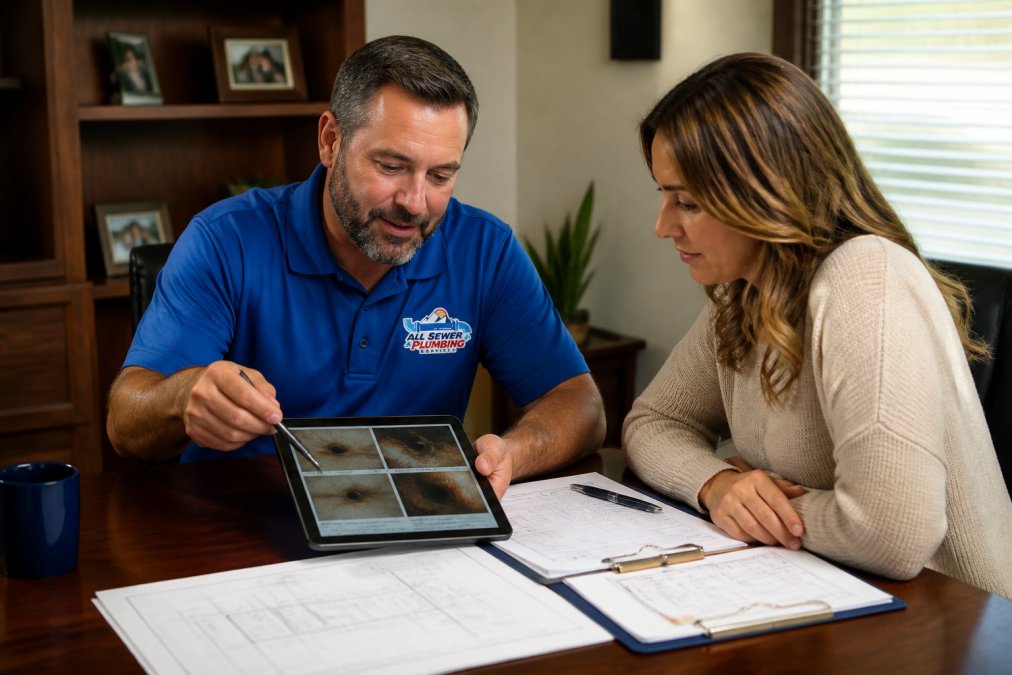
A NASSCO-certified technician threads a waterproof camera through your sewer line, capturing video from your home’s cleanout to the municipal connection. The camera shows cracks, collapses, root intrusion, offset joints, and buildup. The technician documents findings using NASSCO standards, which classify defects by severity and location.
Step 2: Pipe Cleaning and Assessment
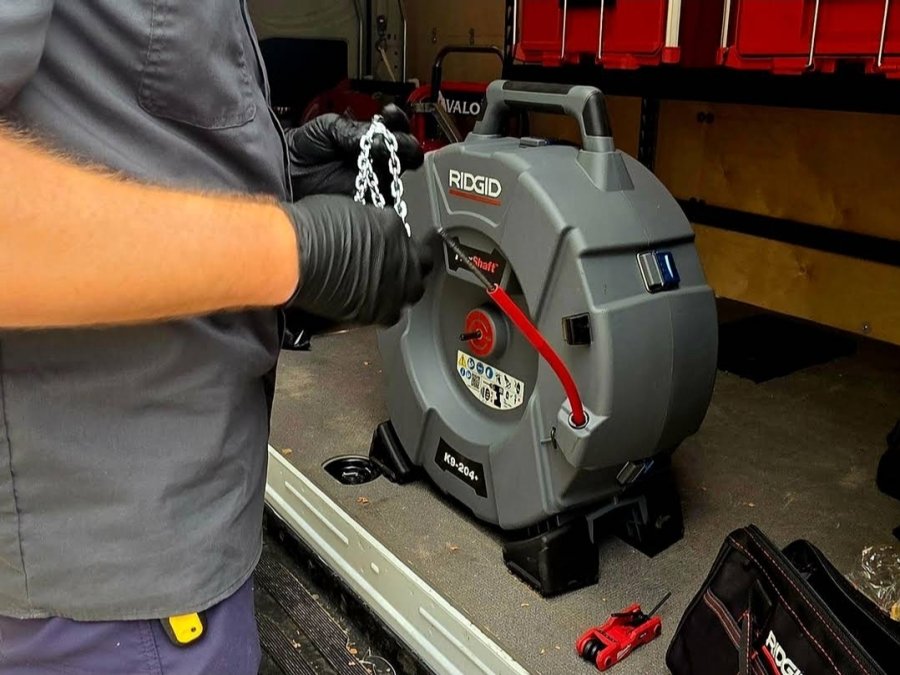
Before repair work begins, the sewer line must be cleaned. Debris, grease, roots, and sediment are removed using hydro-jetting or mechanical cleaning. Hydro-jetting uses high-pressure water (3,000-4,000 psi) to scour the pipe interior (peer-reviewed research). For dense root masses, mechanical cutting may be necessary first. Once clean, a final camera pass confirms the pipe is ready for repair.
Step 3: Choosing Your Repair Method
CIPP is the most common approach. A felt tube saturated with epoxy resin is inverted into the damaged pipe using air or water pressure. The resin hardens, creating a new structural pipe inside the old one. CIPP works for cracks, root intrusion, joint separation, and minor collapses. Installation takes 1-2 days, and epoxy cures fully in 24-48 hours.
Pipe bursting is used when the old pipe is severely damaged or when you want to restore the original pipe diameter. A bursting head fractures the old pipe while a new HDPE (high-density polyethylene) pipe is simultaneously pulled through. Pipe bursting is faster (often one day) and fully restores the original pipe size but requires more space at access points.
Step 4: Installation and Curing
For CIPP, the resin-saturated tube is positioned at the start of the damaged section. Air or water pressure inverts it into the pipe, pressing it firmly against the damaged walls. The epoxy resin hardens, bonding the new pipe to the old one. The process takes a few hours for most residential lines.
After curing (24-48 hours), a final camera inspection confirms the repair is complete and the pipe is fully restored. The new pipe has structural integrity equal to or better than the original and is root-resistant because epoxy creates a smooth, impermeable surface.
How to Evaluate and Hire the Right Contractor
Hiring the wrong contractor for trenchless repair is expensive and stressful. The work requires specialized training, equipment, and experience.
Verify Credentials and Certifications
Ask your contractor directly: Are they NASSCO-certified for sewer inspection? Do they hold certifications from the equipment manufacturers they use? NASSCO certification means the technician has passed an exam on pipe condition assessment standards. Manufacturer certifications matter too, CIPP resin systems are proprietary, and a contractor trained by the resin manufacturer knows specific requirements for temperature, curing time, and pressure.
Ask how long they’ve been doing trenchless work specifically, not just plumbing generally. You want someone with substantial trenchless experience, ideally 5+ years.
Request References and Past Projects
Ask for at least three references from trenchless repair projects completed in the last two years. Call them and ask specific questions: Did the work stay on schedule? Were there unexpected costs? How’s the repair holding up?
Ask to see photos or video of completed projects. Legitimate contractors document their work with before-and-after camera footage showing the damaged pipe and the finished repair.
Compare Estimates and Service Terms
Get at least three estimates. A proper estimate includes a detailed scope of work, the repair method recommended with explanation, the timeline, and what’s included in the price. Ask what’s covered by warranty, reputable contractors warranty the repair for 5-10 years against defects in workmanship.
Clarify what happens if the contractor discovers unexpected damage during the work. Will there be additional charges? Is there a cap? A contractor who can’t answer these questions clearly is hiding something.
Understanding Trenchless Sewer Repair Cost Estimates
The length of the damaged section is the primary cost driver. A 20-foot repair costs less than a 100-foot repair. The pipe diameter also matters, larger pipes (8-12 inches) cost more than standard residential pipes (4-6 inches).
The type of damage influences the method chosen. Simple cracks and joint separation are straightforward CIPP jobs. Dense root masses require cleaning before repair, adding time and cost. Access to the sewer line affects cost, if your cleanout is easily accessible and near the damaged section, work is faster.
Rather than guessing at pricing, request a detailed estimate from your contractor. The estimate should break down materials, labor, equipment rental, and any additional services.
All Sewer and Plumbing Services, LLC provides free estimates for trenchless sewer repair. We assess your specific situation, recommend the best repair method, and provide transparent pricing with no hidden costs.
Permitting, Long-Term Maintenance, and Insurance
Most municipalities require a permit for sewer line repair. Your contractor should handle the permit application as part of their service. A contractor unfamiliar with local permitting requirements is a red flag.
After repair, your sewer line requires minimal maintenance. The new CIPP or burst pipe is resistant to root intrusion and doesn’t corrode like old clay or cast iron. However, avoid pouring grease, flushing non-flushable items, or planting trees directly over the sewer line. Consider a preventative camera inspection every 5-10 years if you have an older home or are prone to backups.
Most standard homeowners policies exclude sewer line damage unless you’ve purchased a separate sewer line endorsement. Check your policy. If you’re uninsured, a single repair could cost thousands. Some insurance companies offer affordable sewer line coverage as an add-on.
Conclusion
Hiring a trenchless sewer repair contractor is a significant decision that affects your property, your budget, and your peace of mind. The right contractor brings expertise, transparent communication, and proven results.
All Sewer and Plumbing Services, LLC has spent over two decades perfecting trenchless sewer repair for residential, commercial, and municipal clients. We use advanced CIPP epoxy pipe lining and pipe bursting technologies to restore your sewer system while protecting your landscape. Our team is NASSCO-certified, fully licensed, and committed to delivering results that last. Schedule your free sewer inspection and estimate today and discover why homeowners and property managers across the region trust us to handle their most critical sewer repairs.
|
Evaluation Criteria |
What to Look For |
Why It Matters |
|---|---|---|
|
Certifications |
NASSCO-certified inspectors, manufacturer training |
Ensures proper standards and expertise |
|
Experience |
5+ years in trenchless methods specifically |
Complex work requires specialized skill |
|
References |
Recent projects with verifiable homeowners |
Proves track record and customer satisfaction |
|
Warranty |
5-10 year workmanship warranty on repair |
Protects your investment long-term |
|
Transparency |
Detailed estimates with itemized costs |
Prevents surprise charges and hidden fees |
|
Local Knowledge |
Familiarity with permitting and code requirements |
Ensures compliance and avoids delays |
Frequently Asked Questions
How do I know if trenchless sewer repair will actually work for my sewer line?
A NASSCO-certified sewer camera inspection is the definitive answer. The camera shows the exact location, severity, and type of damage—whether it’s root intrusion, collapsing pipes, or joint sealing issues. This inspection determines if your pipe diameter, structural integrity, and damage pattern are suitable for CIPP epoxy lining or pipe bursting. If the damage is too severe, the contractor will recommend full sewer line replacement. This is why the camera inspection is non-negotiable before any quote.
What should I expect in a trenchless sewer repair cost estimate?
A comprehensive estimate should include the camera inspection fee, pipe cleaning and preparation costs, the specific repair method (CIPP lining or pipe bursting), lateral sewer line footage, required permits, and any additional work if complications arise. It should also specify warranty terms and long-term maintenance recommendations. Request itemized quotes from multiple contractors so you can compare what’s included. Avoid estimates that seem unusually low—they often hide add-on costs once work begins.
How long does trenchless epoxy pipe lining actually last?
Properly installed CIPP epoxy lining typically lasts 50+ years, making it a permanent solution rather than a temporary fix like snaking. The epoxy forms a structural pipe within your existing pipe, restoring it to functioning order without traditional excavation. Longevity depends on proper installation, correct epoxy formulation for your pipe diameter, and post-repair maintenance. Ask your contractor for warranty details and what maintenance steps (like regular hydro-jetting) will extend the lifespan.
Is trenchless sewer repair worth the cost compared to traditional excavation?
Yes, when you factor in landscape restoration, business downtime, and long-term durability. Trenchless methods preserve your landscaping, complete work in one day, and cost less to repair than traditional excavation when you add restoration expenses. However, trenchless isn’t always the best option—older clay pipes or severely collapsed sections may require full replacement. A qualified contractor will recommend the right method for your specific situation, not the most expensive one.
This article was written using GrandRanker
FREE Estimates
How can we help you?

our services


contact our team today
Contact a service professional at All Sewer and Plumbing Services LLC today. We are here to answer all your questions.
OPEN 24 hours 7 days a week