Sectional Repair Versus Full Relining Compared
A sewer camera inspection may show a single cracked joint, a root-damaged connection, or a pipe that is deteriorating from one end of the property to the other. That is why sectional repair versus full relining is not simply a price comparison. The right choice depends on the condition of the entire line, the location of the damage, the pipe material, and how long the solution needs to perform.
For Denver-area homeowners and facility managers, the goal is usually clear: stop backups, protect the property, and avoid unnecessary excavation. Trenchless technology can accomplish that, but only when the repair scope matches what the camera inspection reveals.
What Is a Sectional Sewer Repair?
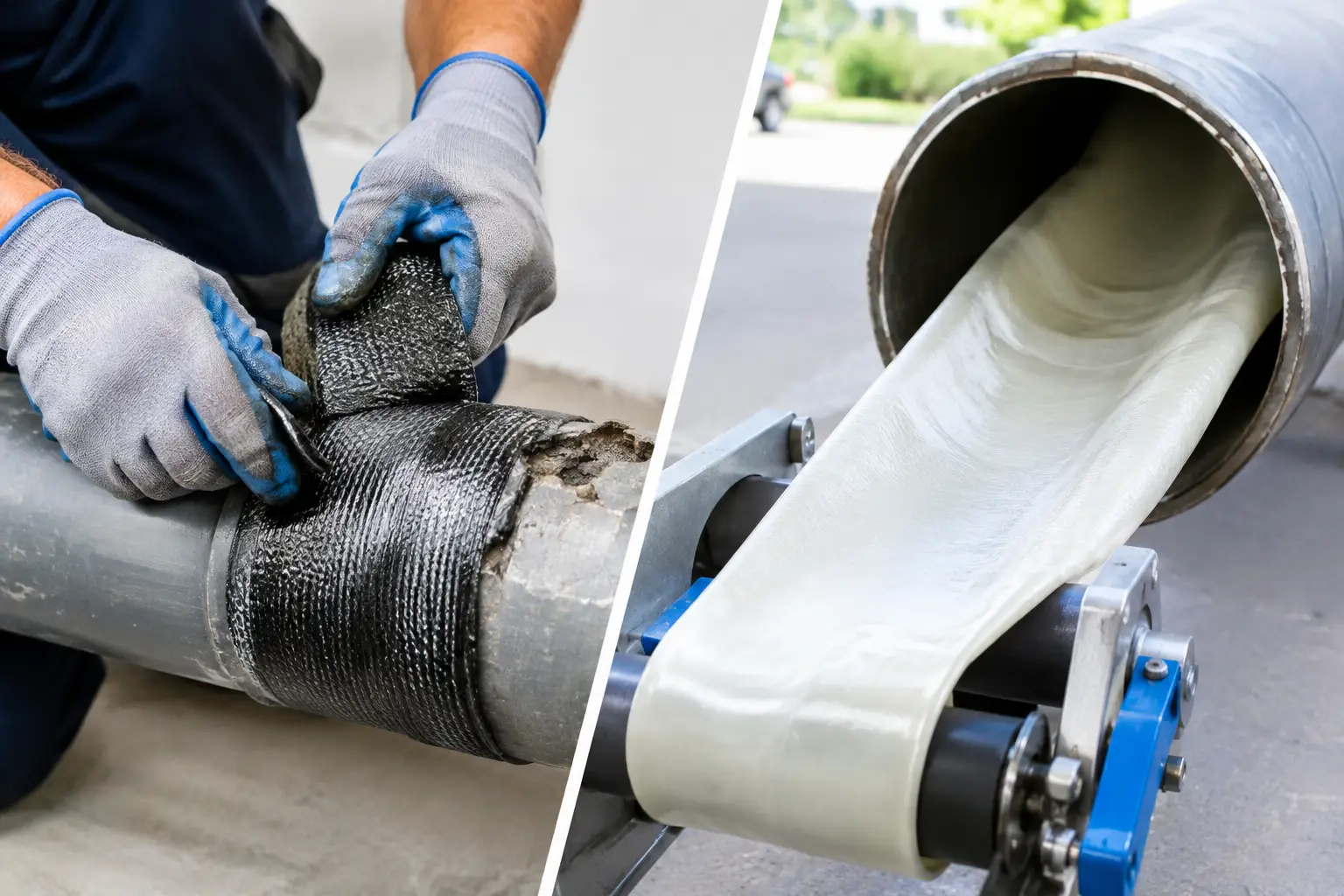
A sectional repair, often called a spot repair or sectional liner, restores a defined damaged area inside an existing sewer pipe. A contractor identifies the failed section through video inspection, prepares the pipe, and installs a resin-saturated liner over the affected area. Once cured, the liner creates a durable, watertight pipe-within-a-pipe at that location.
This method is well suited to isolated failures. Common examples include a separated joint, a localized crack, a small offset, root intrusion at one connection, or damage caused by a limited settlement area. Rather than excavating through a lawn, driveway, finished basement, parking area, or landscaped courtyard, access can often be gained through an existing cleanout or a small entry point.
A sectional liner does not rehabilitate the entire sewer lateral. It fixes the known defect and reinforces a limited length of pipe around it. That distinction matters when evaluating its value.
What Is Full Pipe Relining?
Full relining rehabilitates most or all of a sewer line using cured-in-place pipe, commonly called CIPP. After the line is cleaned and inspected, a flexible liner saturated with epoxy resin is installed through the host pipe and cured. The finished liner forms a continuous new interior pipe that seals cracks, joints, and other defects along the rehabilitated length.
Full relining is generally the stronger option when deterioration is widespread. Cast iron with internal scaling, clay pipe with repeated root intrusion, Orangeburg pipe that is beginning to deform, and older lines with multiple cracks or open joints often require more than a single spot repair. A new liner can restore the line without the disruption of traditional replacement in many situations.
The result is not a patchwork of isolated repairs. It is a continuous rehabilitation strategy designed to extend the useful life of the entire line.
Sectional Repair Versus Full Relining: The Real Decision Factors
The camera inspection drives the decision. A visible defect may be the source of the current backup, but it may not be the only issue in the line. Treating one damaged area while overlooking widespread deterioration can create a short-term fix followed by another service call months later.
The extent of pipe damage
Sectional repair makes sense when the rest of the pipe is structurally sound. If a video inspection shows one compromised joint and otherwise stable pipe walls, a localized trenchless repair can be efficient and cost-conscious.
Full relining becomes more appropriate when defects appear in several places or when the pipe has reached the end of its dependable service life. Multiple root entry points, repeated cracks, corrosion, heavy scaling, channeling at the bottom of cast iron, or recurring offsets are signs that the system may need comprehensive rehabilitation.
A sewer line can still be flowing while its condition is declining. Waiting until a complete collapse or severe backup occurs often limits options and raises the cost of emergency work.
Long-term performance expectations
A sectional repair is designed to solve a localized problem. It can provide a durable correction at that precise location, but the original pipe before and after the repair remains in service. If that surrounding pipe is old or vulnerable, other failures can develop independently.
Full relining addresses the line as a system. It eliminates joints along the lined section, creates a smooth interior surface, and helps block root intrusion through cracks and failed connections. For property owners who plan to keep a building for years, or facilities teams that need predictable maintenance budgets, that broader protection can justify the greater initial investment.
The decision should reflect risk tolerance. A homeowner preparing to sell may prioritize a documented correction to one known defect. A hotel, school, restaurant, hospital, or multifamily property may place a higher value on minimizing the chance of repeated disruptions.
Cost beyond the initial estimate
A sectional repair typically costs less than relining an entire sewer lateral because it uses less material and labor. It can be the most economical solution when the damage is truly confined to one area.
However, the lowest upfront estimate is not always the lowest ownership cost. If an aging pipe develops new failures in unlined sections, the property may incur additional camera inspections, drain cleaning, spot repairs, restoration costs, and operational interruptions. Full relining often costs more at the start, but it can reduce the likelihood of repeated repair work across the same line.
This is especially relevant where excavation would be expensive. A line beneath mature landscaping, decorative concrete, a building addition, a commercial kitchen, or a high-traffic parking lot has surface restoration costs that should be part of the calculation.
Access, layout, and pipe condition
Trenchless methods depend on the existing pipe being a suitable host for the selected repair. A camera inspection confirms the pipe diameter, material, depth, layout, and condition. It also identifies offsets, bellies, collapses, and obstructions that may affect the installation.
Sectional liners can be valuable where access is limited and one specific defect needs attention. Full CIPP relining is effective for long runs with recurring defects, provided the line can be cleaned and prepared properly. In some cases, a severely collapsed pipe, major grade issue, or extensive deformation may require excavation or trenchless pipe bursting instead of lining.
A qualified contractor should not recommend relining simply because it is less disruptive. The pipe must be a viable candidate, and the repair plan must address the reason the line failed.
When a Hybrid Repair Plan Is the Best Option
The choice is not always sectional lining or full relining. Some sewer systems benefit from a combined approach. For example, a line may have one collapsed section that needs targeted excavation or pipe bursting, while the remaining accessible pipe can be rehabilitated with CIPP lining.
A property may also have a main sewer lateral in fair condition with one branch connection that needs sectional repair. Commercial and institutional facilities often have complex underground piping systems where different sections have different ages, materials, and failure patterns.
The right scope should be based on documented conditions rather than assumptions. High-quality video inspection provides the evidence needed to prioritize urgent defects, identify future risks, and avoid repairing the wrong section of pipe.
Questions to Ask Before Approving Sewer Work
Before choosing a repair method, ask to review the video inspection and understand the exact location of each defect. A dependable proposal should explain whether the issue is isolated or recurring, how much pipe will be rehabilitated, and what work remains outside the repaired area.
Also ask whether the line has been properly cleaned before evaluation. Heavy debris, roots, or scale can hide defects and make a pipe look better or worse than it is. For full relining, confirm how the contractor will handle branch connections and whether any access pits are necessary. For sectional work, ask whether the surrounding pipe shows signs of deterioration that could lead to another failure.
For commercial properties, include operational impact in the decision. A planned trenchless rehabilitation during a controlled maintenance window is often far easier to manage than an unplanned backup that closes restrooms, interrupts food service, affects tenants, or creates sanitation concerns.
Choose the Scope That Protects the Property
Sectional repair is a smart, efficient answer to isolated sewer damage. Full relining is often the better investment when the pipe has widespread defects or a long history of backups, roots, and repairs. Neither method is automatically the best option. The right method is the one supported by a clear inspection, sound technical judgment, and the condition of the entire line.
All Sewer and Plumbing Services, LLC uses trenchless inspection and rehabilitation methods to help Colorado property owners make that decision with confidence. If a sewer line is backing up, showing repeated root intrusion, or approaching the end of its service life, schedule a camera inspection before a small failure turns into a disruptive excavation project.
FREE Estimates
How can we help you?

our services


contact our team today
Contact a service professional at All Sewer and Plumbing Services LLC today. We are here to answer all your questions.
OPEN 24 hours 7 days a week