Trenchless Sewer Repair for Businesses: A 2026 Guide

Table of Contents
- What Is Trenchless Sewer Repair and Why Businesses Need It
- How Trenchless Technology Works: CIPP Lining and Pipe Bursting
- Commercial Sewer Repair Downtime: Minimizing Business Interruption
- CIPP Epoxy Pipe Lining Benefits for Commercial Properties
- Cost of Trenchless Sewer Repair for Businesses: ROI and Long-Term Savings
- Camera Inspection and Compliance: Assessing Your Sewer System
- Signs Your Business Needs Trenchless Sewer Repair
- Preventative Maintenance Programs to Avoid Future Repairs
- Frequently Asked Questions
Last Updated: August 30, 2026
What Is Trenchless Sewer Repair and Why Businesses Need It
Trenchless sewer repair restores sewer lines from the inside out, keeping your facility operational while work happens beneath the surface. For business owners, this matters because downtime equals lost revenue. A broken sewer line means potential closure, tenant complaints, regulatory complications, and escalating costs when contractors must excavate through concrete, asphalt, or maintained grounds. All Sewer and Plumbing Services, LLC has spent over two decades solving this exact problem for commercial clients who need solutions protecting both infrastructure and bottom line.
Most commercial sewer failures stem from root intrusion, pipe collapse, structural cracks, or blockages accumulated over decades. Traditional excavation-based repairs require shutting down affected areas for days or weeks. Trenchless methods, primarily CIPP epoxy pipe lining and pipe bursting, complete the same repairs in a fraction of the time, often without closing your doors. Minimal landscaping damage means no restoration costs, no tenant displacement means no revenue loss, and faster completion means your operations return to normal quickly.
How Trenchless Technology Works: CIPP Lining and Pipe Bursting
Trenchless sewer repair relies on two proven technologies: CIPP (Cured-in-Place Pipe) epoxy lining and pipe bursting. Both eliminate major excavation but solve different problems.
CIPP Epoxy Pipe Lining: Process and Application
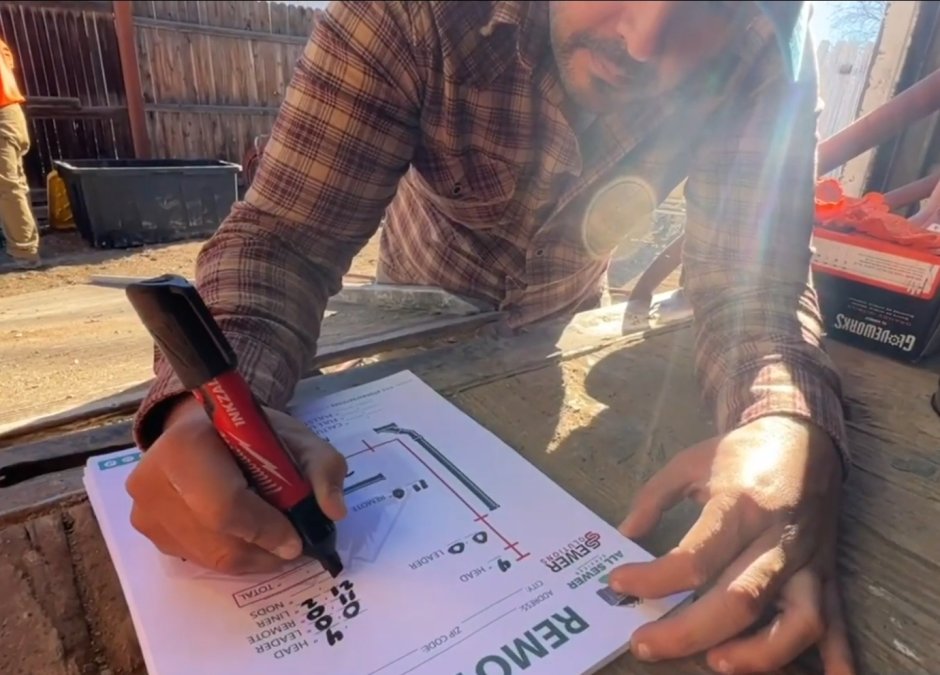
CIPP epoxy pipe lining is the most common trenchless rehabilitation method. The process begins with a camera inspection to map damage, identify cracks or collapses, and confirm pipe diameter and material. Technicians then clean the line using hydro-jetting, high-pressure water that removes debris, roots, and buildup without damaging the existing pipe.
The lining process involves inserting a resin-impregnated fabric tube into the damaged pipe. This liner is saturated with epoxy resin and pulled or inverted into place, conforming to the interior walls of the existing pipe. Once positioned, the resin hardens through hot water circulation, steam, or ambient curing, creating a new structural interior pipe inside the old one.
The result is a pipe-within-a-pipe that restores structural integrity while reducing the internal diameter slightly (typically 1-2 inches). For most commercial applications, this reduction is negligible. CIPP works on cracks, small collapses, root intrusion, and corrosion, essentially any damage that hasn’t completely severed the line.
The timeline is typically 1-3 days, with minimal access points (usually one or two clean-outs), so parking lots, landscaping, and tenant spaces remain untouched.
Pipe Bursting: When and Why It’s the Better Choice
Pipe bursting is the solution when the existing pipe is too damaged for lining. A special head fractures the old pipe from the inside while simultaneously pulling a new HDPE (high-density polyethylene) pipe into place.
This method works for complete pipe collapse, severe root intrusion that can’t be cleared, or lines so deteriorated that a liner won’t hold. Pipe bursting maintains the original pipe diameter, so there’s no reduction in flow capacity. The new HDPE pipe lasts 50+ years with virtually no maintenance (peer-reviewed research).
Pipe bursting requires slightly more surface access than CIPP, typically 1 day and only122excavation points instead of 1-2, but often completes in 1-2 days, faster than CIPP for longer runs.
Both methods preserve your landscape, avoid tenant disruption, and cost significantly less than excavation-based replacement. The choice depends on damage assessment: if the pipe structure can be salvaged, CIPP is usually first choice. If the pipe is beyond that point, pipe bursting is the definitive solution.
Commercial Sewer Repair Downtime: Minimizing Business Interruption
The hidden cost of traditional sewer repair is operational impact. A restaurant loses service during lunch rush. A retail facility closes for three days during excavation. A medical office can’t operate if water service is interrupted. These scenarios cost far more than the repair bill itself.
Trenchless sewer repair is designed around this reality. Because work happens inside the existing pipe, above-ground disruption is minimal. Most projects require only one or two access points at existing clean-outs or small excavations. Parking remains available, landscaping stays intact, and water service is usually maintained throughout.
A traditional excavation-based sewer replacement on a 100-foot commercial lateral might take 5-7 days of active work plus restoration. The same repair using CIPP typically takes 1-day. This speed translates directly to business continuity: tenants don’t relocate, employees don’t work around construction, and customers don’t avoid your location because of excavation barriers.
From a facility management perspective, this means predictability. You can plan around a 2-day repair window much more easily than a 7-day excavation project.
CIPP Epoxy Pipe Lining Benefits for Commercial Properties
CIPP epoxy pipe lining delivers specific advantages for commercial sewer systems beyond the basic “no excavation” appeal.
First, structural integrity is restored. The epoxy resin hardens into a rigid pipe stronger than many older original pipes. If your property was built in the 1950s or earlier, the original sewer line is likely clay, cast iron, or Orangeburg pipe, materials that degrade over decades. The new epoxy interior restores the line to like-new condition.
Second, root intrusion is permanently eliminated. Roots cleared during hydro-jetting cannot penetrate the new epoxy pipe. For properties with mature landscaping or adjacent trees, this solves the underlying problem permanently. commercial drain pipes.
Third, the line is immediately usable. Unlike traditional replacement requiring curing time before service restoration, CIPP lines are ready for full flow within hours of completion.
Fourth, CIPP creates a smooth interior surface. Older pipes accumulate scale, corrosion deposits, and root debris that restrict flow. The new epoxy interior improves drainage efficiency and reduces backup incidents.
Finally, a properly installed CIPP line lasts 50+ years, making this a permanent solution rather than a temporary fix (astm.org).
Cost of Trenchless Sewer Repair for Businesses: ROI and Long-Term Savings
Pricing depends on line length, damage severity, accessibility, and local market rates. Request a free estimate from All Sewer and Plumbing Services, LLC, which includes a camera inspection to assess your specific needs.
What matters more than upfront cost is total cost of ownership. Traditional excavation-based sewer replacement includes the repair itself, plus excavation labor, site restoration, landscaping replacement, and potential business interruption. If your property has a parking lot or finished landscaping, restoration alone can equal 30-50% of the repair cost. If your facility must close during repair, revenue loss often exceeds the repair bill itself.
Trenchless repair eliminates most secondary costs. No excavation means no restoration. Minimal downtime means no closure. The result is a total project cost often 40-60% lower than traditional replacement, even before accounting for revenue preservation (nastt.org).
A CIPP-lined sewer system lasting 50 years is a permanent solution. For commercial properties, the ROI is immediate and measurable.
Camera Inspection and Compliance: Assessing Your Sewer System
Before any repair begins, you need to know exactly what you’re dealing with. A sewer line camera inspection uses a waterproof camera on a flexible rod to visually map the entire line, identifying cracks, collapses, root intrusion, offset joints, and blockages with precision. The recorded footage creates a permanent record of the line’s condition before and after repair.
For commercial properties, this documentation matters for permits, inspections, property sales, refinancing, and insurance claims. The camera inspection also determines which repair method is appropriate: if the pipe structure is intact but cracked or infiltrated, CIPP lining is the solution. If the pipe is collapsed or severely damaged, pipe bursting is necessary.
Many municipalities now require camera inspection documentation for sewer repairs. All Sewer and Plumbing Services, LLC includes this as standard practice, ensuring your repair meets local requirements.
Signs Your Business Needs Trenchless Sewer Repair
Persistent backups or slow drains are the most common indicator. If multiple fixtures are draining slowly or backing up, the problem is likely in the main sewer line. Building-wide drainage issues point to line damage or blockage.
Frequent clogs suggest structural damage, cracks, roots, or collapse trapping debris. If you’re calling a plumber every few months to clear the same line, snaking only clears the immediate blockage without addressing the underlying problem.
Sewage backups into your facility indicate severe line compromise requiring immediate attention. Unusual odors around your property, particularly near clean-outs, suggest a leak. Wet spots or soft ground in landscaping indicate a cracked sewer line. Foundation cracks or settling can sometimes relate to sewer line failure if the line is leaking significantly.
If you’re experiencing any of these signs, a camera inspection is the next step. It costs far less than an emergency repair and provides the information needed to plan the right solution.
Preventative Maintenance Programs to Avoid Future Repairs
The best repair is the one you never need. Regular camera inspections every 3-5 years create a baseline understanding of your line’s condition and allow you to track changes over time.
Hydro-jetting every 2-3 years removes buildup, roots, and debris, keeping the line flowing efficiently and preventing blockages that stress the pipe. For properties with mature trees near the sewer line, regular jetting removes roots before serious infiltration occurs.
Grease management is critical for food service operations. Regular grease trap cleaning and proper disposal protocols prevent blockages and stress on sewer lines. Proper use education for tenants and staff reduces foreign object blockages.
Documentation of all maintenance and repairs creates a valuable history for compliance, property sales, and future planning. The cost of preventative maintenance, a few hundred dollars per year, is trivial compared to emergency repairs or business interruption.
Sewer line failure always seems to hit at the worst possible time. With trenchless sewer repair for businesses, you don’t have to choose between fixing the problem and keeping your operation running. All Sewer and Plumbing Services, LLC specializes in CIPP epoxy pipe lining and pipe bursting solutions that restore your sewer system with minimal disruption. With over two decades of experience serving commercial properties, we provide camera inspection, damage assessment, and expert repair, all with free estimates and a commitment to minimal downtime. Schedule your inspection today and discover how trenchless technology can solve your sewer problem without shutting down your business.
Frequently Asked Questions
Is trenchless sewer repair a permanent solution for commercial sewer lines?
Yes, when performed correctly, trenchless sewer repair is a permanent solution. CIPP epoxy pipe lining creates a new structural pipe within the damaged one, restoring full integrity. Pipe bursting replaces the old pipe entirely with new material. Both methods address the root cause of failure rather than providing a temporary fix. The durability depends on proper installation by qualified contractors and regular preventative maintenance inspections to catch any issues early.
How does CIPP lining minimize business downtime during sewer repairs?
CIPP epoxy pipe lining eliminates the need for excavation, allowing repairs to happen without disrupting your property, parking areas, or tenant access. Installation typically takes one to three days depending on pipe length and complexity, compared to weeks of excavation-based repairs. Because there’s no digging, your business operates normally throughout the process. No landscaping restoration is needed afterward, and tenants experience minimal to no service interruption when the work is scheduled during off-hours.
What types of pipe damage can be fixed with trenchless technology?
Trenchless repair handles root intrusion, pipe collapse, structural cracks, corrosion, and sewer line blockages. CIPP lining works well for pipes with moderate damage, while pipe bursting is better for severely collapsed or deteriorated sections. Camera inspection determines which method suits your specific damage. Not every situation qualifies—if the pipe is completely crushed or has multiple major breaks in different sections, traditional excavation may be necessary, though trenchless contractors can assess this during the inspection phase.
Why is trenchless sewer repair more expensive than traditional pipe replacement?
Trenchless methods cost more upfront because they require specialized equipment, trained technicians, and advanced materials like epoxy-impregnated liners. However, when you factor in avoided excavation costs, landscaping restoration, parking lot repair, and business downtime, trenchless repair often delivers better overall ROI. For commercial properties, the value of keeping your facility operational during repairs justifies the higher initial cost. Request a detailed quote from your contractor to compare total project costs, not just the repair price.
This article was written using GrandRanker
FREE Estimates
How can we help you?

our services

contact our team today
Contact a service professional at All Sewer and Plumbing Services LLC today. We are here to answer all your questions.
OPEN 24 hours 7 days a week