Epoxy Pipe Lining for Clay Pipes: A How-To Guide
Table of Contents
- What Is Epoxy Pipe Lining for Clay Pipes?
- How the CIPP Lining Process Steps Work
- Epoxy Lining vs. Traditional Pipe Replacement
- Clay Pipe Root Intrusion Repair With Epoxy Lining
- Understanding Trenchless Sewer Repair Cost Factors
- Durability and Service Life of Epoxy-Lined Clay Pipes
- Common Myths About Epoxy Lining for Clay Pipes
- Frequently Asked Questions
Last Updated: August 28, 2026
What Is Epoxy Pipe Lining for Clay Pipes?
Epoxy pipe lining for clay pipes is a trenchless rehabilitation method that restores damaged or deteriorating clay sewer lines by inserting a resin-impregnated liner into the host pipe and curing it to create a new structural layer. This cured-in-place pipe (CIPP) technology allows homeowners and property managers to repair failing sewer systems without excavation. At All Sewer and Plumbing Services, LLC, we utilize advanced CIPP epoxy pipe lining and pipe bursting technologies to restore sewer lines with minimal excavation.
The process works by coating a fabric or felt tube with two-part epoxy resin, then inverting or pulling it through the damaged clay pipe. Once positioned, the liner is cured through hot water, steam, or UV light, creating a seamless, epoxy-coated barrier that seals cracks, stops root intrusion, and restores structural integrity.
Clay pipes, common in homes built before 1970, are particularly vulnerable to root intrusion, scaling, and corrosion. Traditional replacement requires digging up your yard, driveway, or street. Epoxy pipe lining bypasses all that disruption, protecting your landscape, minimizing business downtime, and costing significantly less than full replacement in most cases.
How the CIPP Lining Process Steps Work
The cured-in-place pipe process follows four critical stages, each requiring precision to ensure the final liner performs as designed.
Step 1: Video Inspection and Assessment
Before any work begins, a technician inserts a CCTV sewer camera into your line to document the pipe’s condition, identify damage, measure the pipe diameter, and locate problem areas. This video inspection prevents costly surprises and determines whether epoxy lining is the right solution.
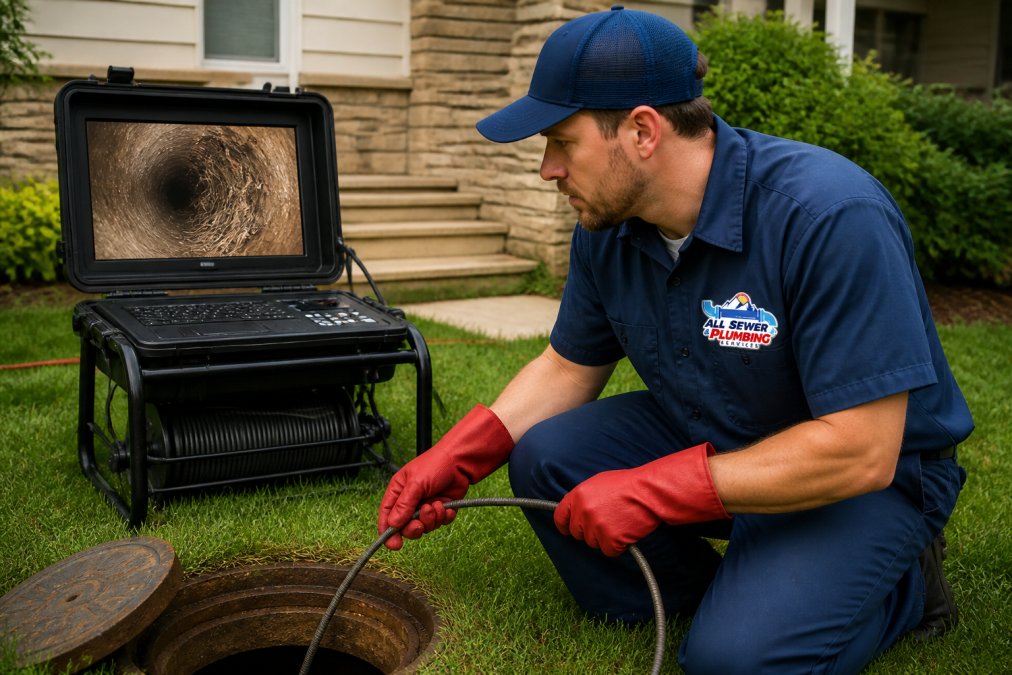
The camera footage reveals the extent of root intrusion, cracks, scaling, and pipe wall deterioration. The technician notes the pipe diameter, the length of the damaged section, and any obstacles like tree roots or sediment buildup. This data determines the liner size, resin type, and curing method. If the damage is too severe, such as complete pipe collapse, traditional replacement may be necessary. But in most cases involving clay pipes with root damage or structural cracks, video inspection confirms that lining is viable.
Step 2: Hydro-Scrubbing and Cleaning
Once you’ve approved the lining plan, the pipe must be cleaned thoroughly. Hydro-scrubbing uses high-pressure water jets to remove debris, roots, scaling, and biofilm from the pipe walls. This step is critical because any remaining material can prevent the resin-impregnated liner from bonding properly to the host pipe.
The cleaning process typically takes 2-4 hours for residential lines, with water pressure ranging from 1,500 to 4,000 PSI depending on the pipe material and condition (wef.org). For clay pipes with heavy root intrusion, technicians may use mechanical cutting tools in addition to water pressure to remove stubborn roots.
Skipping or rushing this step is a common cause of premature lining failure. A poorly cleaned pipe can trap moisture or air pockets beneath the liner, leading to corrosion of the host pipe and potential structural failure within 5-10 years instead of the expected 25-40 year service life.
Step 3: Resin-Impregnated Liner Insertion
The epoxy liner, a felt or fiberglass tube saturated with two-part epoxy resin, is now prepared and inserted into the cleaned pipe. The liner is either inverted (pulled backward through the pipe) or winched forward, depending on the pipe configuration and the contractor’s equipment.
For residential clay pipes, the liner is typically inverted using water or air pressure. A bladder inside the liner inflates as it moves through the pipe, pressing the resin-saturated material against the walls of the host pipe. The technician monitors the process via CCTV camera to ensure the liner seats properly and covers all damage. This insertion phase usually takes 1-3 hours.
Step 4: Curing Process
Once the liner is in place, it must cure to harden the epoxy and create the final structural layer. Three primary curing methods exist: hot water circulation, steam injection, or UV light. Hot water curing involves circulating heated water (typically 140-180°F) through the liner for 2-4 hours (astm.org). Steam curing is faster (30 minutes to 2 hours) but requires more equipment. UV curing is used for shorter sections and can take 4-8 hours depending on light intensity.
During curing, the two-part epoxy polymerizes, creating a rigid, corrosion-resistant coating bonded to the host pipe. The structural integrity of the clay pipe is restored, and the epoxy creates a barrier against root intrusion, water infiltration, and further deterioration.
Epoxy Lining vs. Traditional Pipe Replacement
The choice between epoxy pipe lining for clay pipes and traditional excavation-based replacement hinges on cost, timeline, landscape impact, and damage severity.
Traditional replacement requires digging a trench along the entire length of the damaged pipe, often 30, 50, or even 100+ feet. For residential properties, this means excavating your yard, driveway, or street. For commercial properties, it means closing parking areas, disrupting tenant access, and potentially halting business operations for days or weeks.
Epoxy lining avoids excavation almost entirely. Access points are typically limited to existing cleanouts or a small pit at the problem area. The trenchless approach preserves your landscape, allows your business to stay open, and completes the repair in days instead of weeks.
The cost difference is substantial. Traditional replacement for a 50-foot clay sewer line can run two to three times the cost of epoxy lining, when you factor in excavation labor, pipe material, backfill, and landscape restoration. However, epoxy lining isn’t suitable for every situation. If the pipe has collapsed completely or has structural failure beyond the resin’s capacity to reinforce, traditional replacement may be the only option.
|
Aspect |
Epoxy Lining |
Traditional Replacement |
|---|---|---|
|
Excavation Required |
Minimal (access points only) |
Extensive (full trench) |
|
Timeline |
1-3 days |
2-4 weeks |
|
Landscape Damage |
Minimal |
Significant |
|
Suitable for Clay Pipes |
Yes (most cases) |
Yes (all cases) |
|
Cost |
Lower (in most cases) |
Higher |
|
Service Life |
25-40 years |
50+ years |
|
Root Intrusion Prevention |
Excellent |
Permanent |
Epoxy lining is the practical choice for most homeowners with clay pipes experiencing root intrusion, cracks, or scaling. Traditional replacement is reserved for cases where the damage is too severe or where a permanent solution justifies the excavation cost.
Clay Pipe Root Intrusion Repair With Epoxy Lining
Root intrusion is the most common problem affecting clay pipes. Tree and shrub roots seek moisture and nutrients, exploiting even tiny cracks in clay pipe joints. Once inside, roots grow and accumulate, eventually blocking the pipe entirely or causing backups into your home.
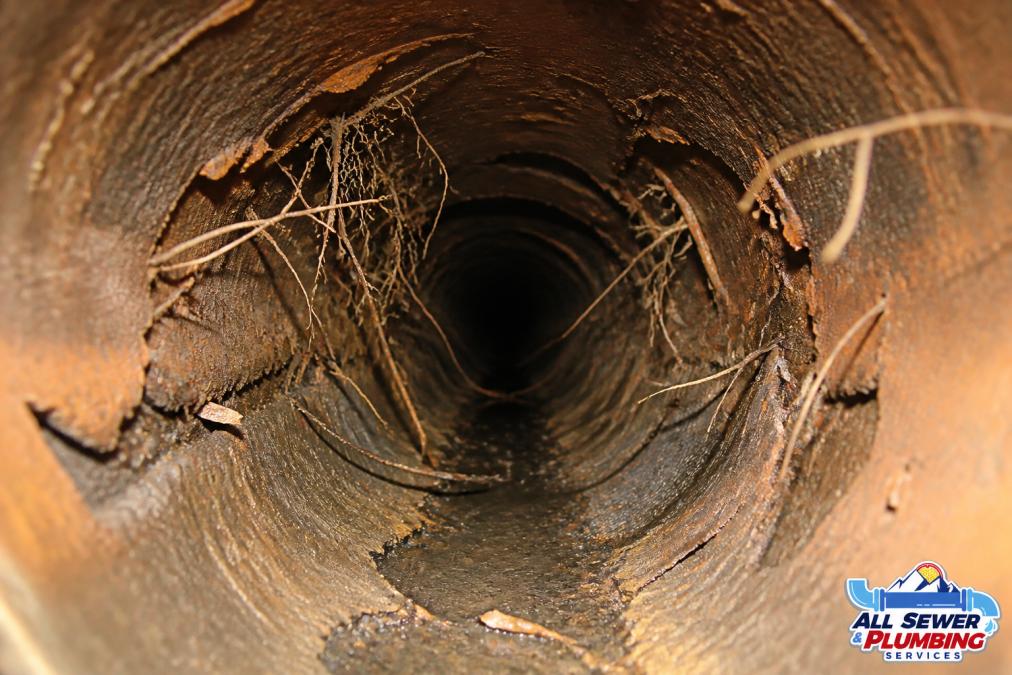
Epoxy lining addresses root intrusion by sealing the pipe wall and creating a barrier that roots cannot penetrate. Unlike snaking, which removes roots mechanically but leaves the cracks intact, epoxy lining prevents roots from re-entering the pipe. The resin-impregnated liner fills cracks and voids, and the cured epoxy coating is impervious to root growth.
For clay pipes with moderate root intrusion, epoxy lining is highly effective. The process works best when roots haven’t caused complete collapse or severe structural failure. After curing, the roots are sealed out permanently. The epoxy coating also prevents future root entry through new cracks that might develop in the underlying clay pipe.
Understanding Trenchless Sewer Repair Cost Factors
The cost of epoxy pipe lining for clay pipes varies widely based on several factors.
Pipe length and diameter are the primary cost drivers. A 30-foot residential line costs significantly less than a 100-foot line. A 4-inch residential drain costs less to line than a 6-inch or 8-inch pipe.
Damage severity affects the cleaning and preparation phase. A pipe with light scaling and a few cracks requires less aggressive hydro-scrubbing than one with heavy root intrusion and biofilm buildup. Severe root intrusion may require mechanical cutting in addition to water pressure, adding labor and time.
Access and site conditions matter significantly. If your cleanout is easily accessible and located near the damaged section, costs are lower. If the technician must dig an access pit or navigate around obstacles, labor increases.
Curing method influences the total cost. Hot water curing is typically the most economical. Steam curing is faster but requires specialized equipment. UV curing is suitable only for short sections.
Rather than comparing dollar amounts across quotes, focus on what’s included: Does the quote cover video inspection, hydro-scrubbing, liner installation, curing, and post-curing video verification? Does it include a warranty? All Sewer and Plumbing Services, LLC provides free estimates and detailed breakdowns so you understand exactly what you’re paying for.
Durability and Service Life of Epoxy-Lined Clay Pipes
One of the strongest advantages of epoxy pipe lining for clay pipes is longevity. A properly installed epoxy liner can last 25-40 years or more, depending on the resin formulation, curing method, and the underlying condition of the host pipe.
The epoxy coating itself is highly durable. It resists corrosion, root intrusion, and most chemical attacks. The resin creates a smooth, non-porous surface that prevents scaling and biofilm buildup. This smoothness also improves flow capacity and hydraulic efficiency compared to the original clay pipe.
The structural integrity of the host clay pipe beneath the liner is key to long-term performance. If the clay pipe is severely damaged or has large voids, the epoxy liner may not provide full structural support. This is why hydro-scrubbing and video inspection are so critical.
ASTM standards govern epoxy pipe lining materials and installation practices. Liners meeting ASTM D8059 specifications have been tested for durability and performance. When selecting a contractor, verify that they use ASTM-compliant materials and follow industry best practices.
Common Myths About Epoxy Lining for Clay Pipes
Several misconceptions circulate about epoxy pipe lining for clay pipes.
Myth 1: Epoxy lining is just a temporary fix, like snaking. Reality: Epoxy lining addresses the root cause of most clay pipe problems by sealing cracks and preventing root intrusion. A properly installed liner lasts 25-40 years, not months.
Myth 2: Epoxy lining won’t work on clay pipes because they’re too old. Reality: Age doesn’t prevent epoxy lining. The process works on clay pipes from any era, as long as the pipe hasn’t completely collapsed. Video inspection determines whether lining is viable.
Myth 3: The epoxy will eventually peel off inside the pipe. Reality: Modern epoxy resins bond chemically to the pipe wall during curing. Once cured, the epoxy is fused to the host pipe and will not peel or separate under normal conditions.
Myth 4: Epoxy lining reduces pipe diameter and flow capacity. Reality: The epoxy liner is typically 1/8 to 1/4 inch thick, a minimal reduction in diameter. The smoother epoxy surface actually improves flow compared to the original rough clay pipe.
Myth 5: You need to excavate the entire line to install epoxy lining. Reality: Epoxy lining is a trenchless process. Access is limited to existing cleanouts or small pits at problem areas.
Myth 6: Epoxy lining is only for pipes with minor damage. Reality: Epoxy lining works on pipes with moderate to significant damage, including extensive root intrusion, cracks, and scaling. Most clay pipe problems fall within the range that epoxy lining can address.
Epoxy pipe lining for clay pipes offers a practical, cost-effective alternative to excavation-based sewer repair. The trenchless approach protects your landscape, minimizes downtime, and provides decades of reliable service. If you’re dealing with root intrusion, cracks, or deterioration in a clay sewer line, a professional video inspection will determine whether epoxy lining is right for your situation. All Sewer and Plumbing Services, LLC has over two decades of experience with CIPP technology and trenchless sewer repair. We offer free estimates to help you understand your options. Schedule an inspection today and discover how trenchless rehabilitation can restore your sewer system without destroying your property.
Frequently Asked Questions
Q: Can you really reline clay pipes with epoxy, or do they need full replacement?
A: Epoxy pipe lining works on clay pipes when structural integrity remains intact. The CIPP (cured-in-place pipe) process creates a new pipe within the old one, sealing cracks and stopping root intrusion without excavation. However, if the clay pipe has collapsed sections or severe structural failure, full replacement may be necessary. A video inspection determines whether your clay pipe qualifies for epoxy lining rehabilitation.
Q: How long does epoxy lining actually last on clay pipes?
A: Properly installed epoxy linings typically provide 25-40 years of service life, significantly extending the usable lifespan of aging clay pipes. The cured epoxy creates a corrosion-resistant barrier that protects the host pipe from further deterioration, scaling, and flaking. Service life depends on installation quality, water chemistry, and soil conditions. ASTM standards guide the material specifications to ensure durability in both sanitary and potable water applications.
Q: Is epoxy pipe lining a permanent fix for root intrusion in clay pipes?
A: Epoxy lining stops active root intrusion by sealing the pipe wall and creating a structural barrier that roots cannot penetrate. The resin-impregnated liner provides structural repair and joint sealing, eliminating infiltration from roots entering through cracks. For long-term protection, combine epoxy lining with root barriers or regular maintenance inspections.
Q: What factors affect the cost of epoxy pipe lining versus traditional excavation?
A: Trenchless sewer repair cost depends on pipe diameter, damage severity, accessibility, and local labor rates. Epoxy lining typically costs less than full excavation because it minimizes landscape restoration, road repairs, and extended downtime. However, pricing varies by project specifics. Contact a professional for a video inspection and detailed estimate to compare epoxy lining costs against traditional replacement for your specific situation.
This article was written using GrandRanker
FREE Estimates
How can we help you?

our services


contact our team today
Contact a service professional at All Sewer and Plumbing Services LLC today. We are here to answer all your questions.
OPEN 24 hours 7 days a week